Something New Is Happening in Lebanon
TL;DR
레바논 정부가 헤즈볼라의 군사 활동을 불법으로 규정하고 무장 해제를 명령하며 역사적으로 처음으로 직접적으로 대립하고 있습니다. 헤즈볼라의 약화와 국제적 합의가 이 변화를 촉발했지만, 시행 과정은 어려울 것으로 예상됩니다.
Key Takeaways
- •레바논 정부가 헤즈볼라의 군사 활동을 불법으로 선언하고 무장 해제를 명령하며 역사상 처음으로 직접 대립하고 있습니다.
- •헤즈볼라의 약화와 레바논이 국가 이익과 무관한 전쟁에 휘말리는 것을 막으려는 국제적 합의가 이 조치를 가능하게 했습니다.
- •무장 해제 시행은 어렵고 장기적인 과정이 될 것이며, 헤즈볼라는 이미 이 명령을 거부하고 이스라엘과의 군사적 교전을 계속하고 있습니다.
- •이스라엘의 정책이 레바논 정부의 성공을 좌우할 수 있으며, 헤즈볼라 타겟에 집중하는 것이 국내 합의 유지에 중요합니다.
- •이 조치는 레바논이 실패 국가에서 벗어나 무력 사용과 전쟁 결정에 대한 독점권을 회복하려는 시도입니다.
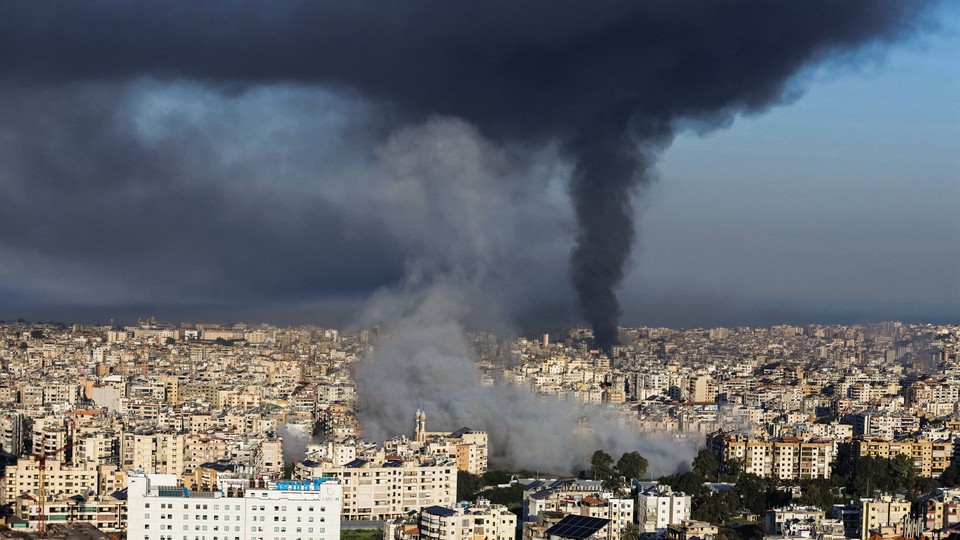
Like thousands here in the Lebanese capital of Beirut, I was jolted awake just before 3 a.m. Monday morning by the unmistakable sounds of explosions resulting from Israeli air strikes. Hezbollah had launched a salvo of missiles and drones into Israel, supposedly in solidarity with the slain Iranian supreme leader Ali Khamenei. Now Israel was retaliating. Lebanon had once again been plunged into a war that had nothing to do with its national interests, by a militia group that has retained a private army and run its own foreign policy for decades.
The Lebanese people are used to this dynamic. What happened after the Israeli strike, however, was surprising. Following an emergency cabinet meeting on Monday, the government declared that Hezbollah’s military activities were illegal and therefore banned. The military was instructed to confiscate the organization’s weapons. The government had never confronted Hezbollah this directly before—not when Hezbollah was formed, following the 1982 Israeli invasion; not after the Taif agreement, which ended the Lebanese civil war in 1989 and led to the disarmament of all other militia groups; not even after Israel ended its occupation of southern Lebanon, in May 2000.
Hezbollah’s rationale for maintaining its weapons in 1989 was that Israel continued to occupy a large chunk of southern Lebanon, and this was widely accepted even by many who did not care for the organization. After Israel’s withdrawal, Hezbollah argued that it still needed its guns in order to liberate small disputed areas in the border region. This was accepted more grudgingly, largely because of the organization’s military power. Even after Hezbollah turned its firepower inward in 2008, battling other Lebanese militias after the government tried to get control of its private military communications network, the government never flatly told the organization it must disarm, nor did it threaten to disarm it by force if necessary. As part of a 2024 cease-fire agreement with Israel, the government said Hezbollah would be disarmed—eventually, perhaps only in the south, and without the state declaring the group’s weapons illegal or banning further military activities. Monday’s statement by Prime Minister Nawaf Salam, reiterated the next day by President Joseph Aoun, for the first time pits the power and authority of the state completely against Hezbollah. The gauntlet has been decisively thrown down.
Why now? The answer is partly that Hezbollah is much weaker than it used to be. After Hezbollah launched rockets at Israel following the Hamas attacks of October 7, 2023, Israel initiated a devastating campaign that took out most of Hezbollah’s leadership. This seems to have emboldened the Lebanese government to finish the job by disarming the group. Even more important, the current U.S.-Iran conflict has helped solidify a consensus that Lebanon must no longer be dragged into catastrophic wars that have zero relevance to any of its national interests.
Robert F. Worth: ‘The Iranian period is finished’The breadth and depth of this consensus are nearly total. Even many Lebanese Shiites who previously had maintained some sympathy for the organization have gotten fed up with Hezbollah. Indeed, Parliament Speaker Nabih Berri, the most prominent Shiite politician in the country and Hezbollah’s most important ally, backed the disarmament declaration.
Enforcing the ban is going to be a difficult and lengthy process. The government began this week by arresting 27 people on weapons charges. Hezbollah has already denounced and defied the ban, continuing to engage militarily with Israel, which has sent troops into southern Lebanon and is still pounding the organization from the air—including in a new round of strikes in Beirut this morning. The Lebanese state is going to have to proceed with both determination and caution. Much of the Shiite community is still traumatized from the most recent war with Israel and could overreact to any perceived threats to its security. Preventing Hezbollah from rebuilding systems and weapons that it has lost is one thing. Actively taking weapons away is another—but this is what the state has committed to doing. It has no choice. If the Lebanese government cannot reassert its monopoly on the use of force and decisions of war and peace, it will remain a failing state—the host of a cancerous growth that turns the body politic against itself.
Israel will be crucial in determining whether Lebanon succeeds. On the one hand, the damage that Israel inflicts in the coming days and weeks will further weaken Hezbollah and increase the chances of successful disarmament. On the other hand, Israeli policies could undermine the Lebanese government’s program. If Israel carries through on its stated aim of establishing a “buffer zone” in Lebanon—resuming a large occupation in the south of the country—this will provide Hezbollah with a fresh rationale for remaining armed and keeping up its fight against the Israelis. A perhaps even bigger threat is that Israel may seek to force Lebanon into Israel’s own sphere of influence. Few Lebanese would regard this as remotely acceptable. Pax Israelica wouldn’t be any more stable or viable than the Pax Syriana of the 1990s and early 2000s proved to be.
Fortunately, the Israelis seem to recognize their opportunity to pull in the same direction as the Lebanese government. They had threatened to target vital infrastructure, including the all-important airport, in any renewed conflict, but they have not done so. Instead, they seem to be focusing exclusively on Hezbollah-related targets. This is essential to maintaining the national consensus against Hezbollah’s status as an armed militia group. After decades of conflict, the two sides have a rare chance to secure a common goal: a Lebanon freed from Iranian domination and Hezbollah’s independent military force.