The Atlantic introduces a newsletter course exploring 250 years of American history through a special issue, using an unfinished portrait of George Washington as a metaphor for the nation's ongoing evolution. It features contributions from journalists and historians on the Revolution's complexities and enduring ideals.
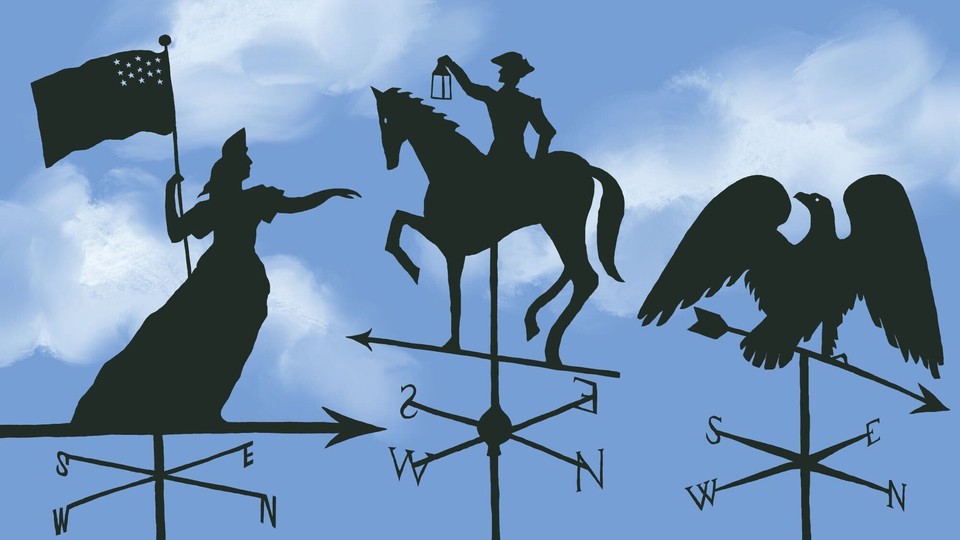
Introducing a newsletter course from The Atlantic Illustration by Corey CorcoranSign up for The Unfinished Revolution, our newsletter course in which Atlantic writers and editors explore 250 years of the American experiment.
In 1796, in the waning months of his presidency, George Washington traveled to Germantown, Pennsylvania, to sit for a portrait by the artist Gilbert Stuart. Stuart had painted the president before, and Martha Washington was so entranced by the result that she persuaded her husband to pose for him again, on the condition that she would ultimately be able to own the completed work. Stuart never kept his promise: Recognizing that he could make a fortune selling copies of the portrait, he filled in the details of Washington’s face but left his canvas otherwise unfinished. He called the painting his “hundred-dollar bill,” referring to the price he charged Washington’s many admirers for a print.
Today, Stuart’s unfinished painting, known as the Athenaeum portrait, has become one of the most memorable images of America’s first president. (The painting, in a surprising instance of deflation, later came to adorn the one-dollar bill.) In ways Stuart perhaps never intended, the blank corners of his canvas call attention to the unfinished nature of Washington’s lifework, to an expanding nation that was still deciding what it wanted to be.
In our November 2025 issue, The Atlantic revisited Washington and his associates, amassing a team of 24 journalists, historians, and critics to fill in the blank corners of American history and add texture to the parts of its canvas one might think they know well. Our newsletter course The Unfinished Revolution explores this special issue and features original conversations from around our newsroom.
“You will see that we are not simplistic, jingoistic, or uncritical in our approach,” editor in chief Jeffrey Goldberg wrote in his introduction to the issue, “but we are indeed motivated by the idea that the American Revolution represents one of the most important events in the history of the planet, and its ideals continue to symbolize hope and freedom for humankind.”
We hope you’ll join us. Sign up to begin the course here. You’ll receive one edition every week for five weeks, with each edition focused on a different chapter of our special issue.
Like Stuart’s portrait of Washington, the project of the United States “is still unfinished, and troubled,” Goldberg concludes. “But it remains a project worth pursuing.”