‘Aren’t We Supposed to Be the Good Guys Here?’
TL;DR
Senator Mark Kelly discusses the Trump administration's threats to demote him and reduce his pension after he released a video reminding service members they can refuse illegal orders. He also criticizes plans to potentially use military force to take Greenland, warning it would be a historic mistake and undermine U.S. values and global stability.
Key Takeaways
- •Senator Kelly faces administrative punishment from the Defense Department for a video advising service members to refuse illegal orders, which he sees as an attack on free speech and a warning to dissenters.
- •Kelly strongly opposes using military force to acquire Greenland, calling it a reckless move that would mirror authoritarian tactics and destabilize international alliances like NATO.
- •He expresses deep concerns about the qualifications of Defense Secretary Pete Hegseth and the administration's broader use of the military, including questionable actions in Venezuela.
- •Kelly warns that such actions could set dangerous precedents globally, potentially justifying aggression by countries like China or Russia and eroding U.S. moral standing.
- •He emphasizes the need for congressional checks on presidential power and highlights personal risks, including increased death threats against him and his wife, Gabby Giffords, but vows to continue speaking out.
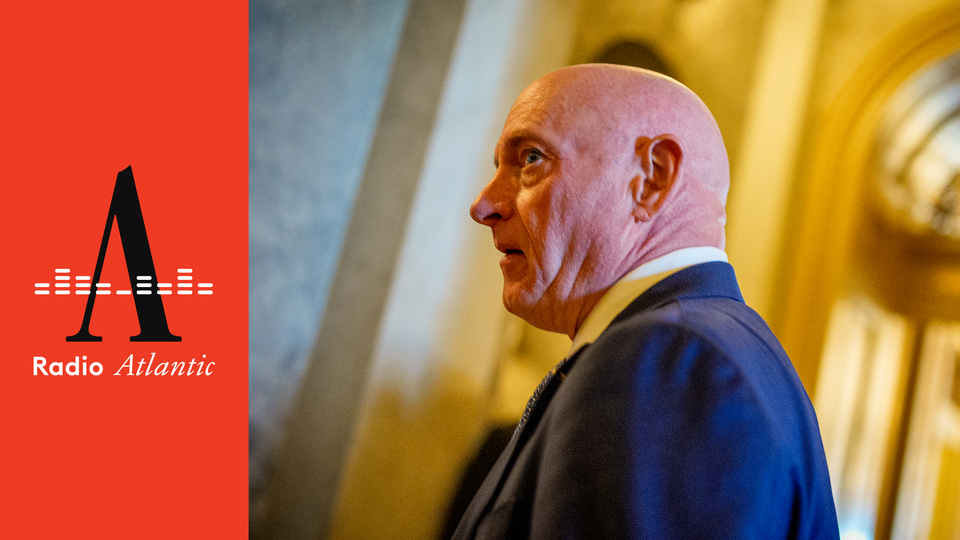
Democratic Senator Mark Kelly is fluent in insult, particularly when it comes to Defense Secretary Pete Hegseth: “unqualified,” like “a 12-year-old playing army.” In November, Kelly and five other Democratic lawmakers—all of them military or intelligence veterans—released a video telling current service members, “Our laws are clear. You can refuse illegal orders.”
President Donald Trump was predictably furious, writing on Truth Social, “SEDITIOUS BEHAVIOR, punishable by DEATH.” This week, Hegseth announced that his department had initiated proceedings to demote Kelly and reduce his pension pay.
Senator Kelly joined Radio Atlantic to discuss the implications of this brand of revenge: If the president can punish a sitting senator for making a video he doesn’t like, what could that mean for the average dissenting American? Or the average service member if asked to do something they don’t believe is lawful? Kelly elaborated on the personal reprisal but seemed equally exercised about the plight of the whole world.
This week, the White House pointedly said that using the military to take Greenland is an option. “That would probably be the biggest mistake any president has made in the history of this country,” Kelly said. “For us to threaten them, especially with force. That we’re just gonna take your stuff; we’re gonna take your territory. I mean, is that who we’ve become? That’s Russia. We are not that kind of a nation.”
This week on Radio Atlantic, we talk to Kelly about Hegseth, Greenland, Venezuela, the evolving role of the military under Trump, and the 15th anniversary of the shooting of his wife, the former congresswoman Gabby Giffords.
The following is a transcript of the episode:
Hanna Rosin: Democratic Senator Mark Kelly can be blunt, particularly on subjects he knows about. He served decades in the Navy, flying dozens of combat missions. Also, he’s an astronaut. So he has had a lot to say over the last few months about how the Trump administration has been using the military, at home and abroad—little of it positive.
[Music]
I’m Hanna Rosin. This is Radio Atlantic. We could start in a lot of different places with Mark Kelly on the subject of [Donald] Trump and the U.S. military: appointing Pete Hegseth as the defense secretary, actions in Venezuela. But we’ll start with this week’s news: the Trump administration saying that using the military to take Greenland is an option.
Senator Mark Kelly: It would probably be the biggest mistake any president has made in the history of this country.
For us to threaten them, especially with force, that we’re just gonna take your stuff; we’re gonna take your territory—is that who we’ve become? That’s Russia. We are not that kind of a nation.
Rosin: Kelly had his own personal run-in with the U.S. military this week—or at least with Hegseth. It concerned a video that Kelly made, along with five other Democratic lawmakers who had also served in the military or the intelligence community.They released it a couple of months ago, and its intended audience was people who are currently serving.
Kelly (from the lawmakers’ video): (Music plays.) This administration is pitting our uniformed military—
Senator Elissa Slotkin: —and intelligence-community professionals—
Representative Chris Deluzio: —against American citizens.
Kelly: Like us, you all swore an oath—
Rosin: The video came out two months into the U.S. military’s strikes on alleged drug boats, strikes that many have called illegal.In the video, Kelly and others say that “threats to our Constitution aren’t just coming from abroad, but from right here at home.”
Kelly: Our laws are clear: You can refuse illegal orders.
Slotkin: You can refuse illegal orders—
Rosin: Well, someone did not like the sound of that.[Music]
News anchor: Now, that is the statement right there from the president. It says, in part, “It’s called SEDITIOUS BEHAVIOR AT THE HIGHEST LEVEL. Each one of these traitors to our Country should be ARRESTED AND PUT ON TRIAL.”
Kelly issued a joint statement—
Rosin: On Truth Social, Trump kept posting and wrote, “SEDITIOUS BEHAVIOR, punishable by DEATH!”Senator Kelly responded—
Kelly (from press conference): President Trump is trying to silence me, threatening to kill me for saying what is true. And he sent his secretary of defense after me.
Rosin: This week, Hegseth sent the details of the intended punishment. He announced that his department had initiated proceedings to reduce Kelly’s retirement grade, which could mean a reduction in rank and pension pay. Echoing Trump, Hegseth called Kelly’s remarks “seditious.”So I started my interview with Kelly by talking about that.
Rosin (in interview): There are people who can look at what the administration has done and say, What’s the big deal? A senator made this video, the president didn’t like it, and they’re docking his pension pay. So why is it a big deal? What’s unusual about this action?
Kelly: Well, first of all, he said I should be hanged, executed. If you’re looking for evidence why we needed to put out that video, that’s one valid point: We have a president who is rather unhinged and doesn’t like people speaking out in a way that he does not agree.
And in this case, we were just reminding service members of what is lawful, telling them that they should not follow illegal orders. It’s something we’re all trained on. We may not be reminded of it frequently.
And we had some serious concerns about what this president might do. In 2016, he called for the U.S. military—as a candidate—he said the U.S. military should be killing the family members of terrorists. That means killing women and children who are not involved. How horrific is that? And then started talking about shooting U.S. citizens who were protesters in the legs, sending troops into U.S. cities, and using those cities for training for the U.S. military.
These are things that are dangerous. So we put this video out as a friendly reminder that you do not follow illegal orders. When the law and orders are in conflict, you stick with the law; it’s a pretty simple message.
So getting to the point about demoting me, taking away part of my pension, I guess what they realize is they would not do well in front of a jury—because for a while there, they were threatening to court-martial me. They figured out that wasn’t a good option because they probably knew they would lose. So this is an administrative option.
But I’m gonna fight this with everything I have because it’s wrong. And,by the way, it sends a powerful and chilling message to retired service members, to ex-military, to people on active duty that you cannot say anything about this government.
Rosin: Or what? So that’s why the average American should care?
Kelly: Absolutely. We all have First Amendment constitutional rights of not only freedom of speech, but freedom to speak out against the U.S. government and to its leadership. And they don’t like that.
They’re trying to send a message—this isn’t just about me anymore. This is a message to the American people: Shut up, or there are consequences. And we cannot let that stand. So I’ll fight this with everything I have.
Rosin: Now, you and your colleagues published that video back in November. The secretary announced this reprisal against you two days after the U.S. bombed Venezuela, captured [Nicolás] Maduro. Do you think there’s any message in the timing of that?
Kelly: Well, here’s something interesting on timing, right—this wasn’t just about the video. If you read their censure letter to me, they go all the way back to June and said there were things that I said that they didn’t like.
They are pointing to my criticism of them for firing admirals and generals, and here’s why I was critical: They fired people that I confirmed, and they fired them because of the color of their skin or because they were women. That’s pretty clear to people, and I criticized Pete Hegseth and the administration over that. They point to that as a reason why I am now censured and I should be demoted—because I said something.
They also pointed to the fact that I said I will always stand up for the Constitution, as if that’s an objectionable thing for them. So, yeah, this is not just about me anymore. This is about all of our rights under the Constitution.
Rosin: So you’re a senator, and you have some power. I wanna put you in the mind of, say, when you were a younger person in the military. If you were young and in the military now, would you have refused any of the administration’s orders?
Kelly: Well, it depends on what the order was, right? I flew 39 combat missions in the first Gulf War. I was almost shot down multiple times, had a missile blow up next to my airplane.
On two occasions, I was ordered to sink ships, and I knew at the time that that was the right thing to do. It was legal for me to go into Kuwait harbor and sink this Osa II missile patrol boat, or in the case of the second one, this Polnocny troop carrier that was Iraqi—they were both Iraqi ships; it was very clear. I had no question about that.
If, under different circumstances, I was given an order to do something that any reasonable person would understand as illegal, yeah, I would’ve said, I’m not gonna do that. That’s what we’re all trained to do.
Rosin: So what about what actually happened, which is the second shot against the Venezuelan boat that killed the two sailors? Is it clear that was an illegal order? Is that an order—
Kelly: So I saw that video. I’ve been in a brief in a classified setting on the details of that second strike on that first boat, and I still have a lot of questions.
It would be a positive thing for the American people to see that video and to get briefed on it by the United States military, because transparency of what our Department of Defense is doing is—I think it’s something that is fundamental to the way we do things. Aren’t we supposed to be the good guys here?
I continue to have questions about that decision to strike that boat a second time. When you look at the rules of warfare—one of the examples that is cited in the manual of war, the law of Armed conflict, is that, for shipwrecked crew members, that you have an obligation to rescue them. And in this circumstance, that did not happen.
Now, DOD gives their rationale for why they did not do that. And it is questionable at best.
Rosin: And do you know what, in the moment, you would’ve done, as a person who served for a long time? ’Cause it’s different in retrospect, looking at it.
Kelly: It’s always different, right? And for somebody who’s been in that environment, where the bullets are flying and the missile’s blowing up next to your airplane, it is dynamic; it is chaotic; you have to make decisions quickly.
What myself and my colleagues were talking about were those obvious things, where a reasonable person in those circumstances would know that what you are asking to be done is unlawful—not the stuff that’s, like, on the line.
Rosin: Mm-hmm. So is there anything—
Kelly: Now, we all have the—
Rosin: —that you would count as clearly unlawful, of the many things that have happened over these last few months?
Kelly: I continue to have a lot of questions about how this Department of Defense, under the leadership of Pete Hegseth—and let me repeat something I’ve said multiple times: This guy is not qualified for this job. I did not vote for him.
We had to have the vice president come over to break a tie to get him across the finish line—by the way, after a lot of arm-twisting, I think that’s very fair to say, by the White House of my Republican colleagues who were hesitant, very hesitant, for good reasons.
He shouldn’t be anywhere near the front office of the Pentagon. I even question whether he should be in the building.
Rosin: You know what? I’ve heard you say he’s unqualified a lot of times. Can I ask you something I’m really curious about? What is—
Kelly: Yeah.
Rosin: Say you and your Navy people were talking about him. How would you talk about him—internally, privately? How would people describe someone like that who are military guys? What would they say about him?
Kelly: Well, he is a guy who served in multiple Guard units. I thank him for his service to this country. He doesn’t have the experience to run an organization of this size. He doesn’t have management experience at a high level. He doesn’t have policy experience—creating policy.
It’s hard to find somebody that checks all the boxes to be secretary of Defense ’cause it’s, perhaps, after being president of the United States, the hardest job in the country. It’s hard to find somebody that checks every box.
The problem with Pete Hegseth—he doesn’t check any of the boxes, zero. I’m shocked that the president nominated him for this. Why would you put this guy in this job?
[Music]
Rosin: When we come back, what happens if the U.S. were to take Greenland by force? That’s after the break.
[Break]
Rosin: I wanna talk to you about how this administration is using the military. This week, the White House put out a statement that, in the range of options to acquire Greenland, utilizing the military is an option. How concerned are you about these threats to Greenland?
Kelly: Months ago, I was not concerned at all. I thought it was just typical bluster from Donald Trump, wanting to show people he’s a strong man, and he can do what he wants and take what he wants.
After seeing what happened in Venezuela and the latest comments not only by Donald Trump, but people in the administration, and now even some of my colleagues, talking about why Greenland should be under the control of the United States.
First of all, Denmark is a member of NATO and an ally of ours. If we have concerns about security in the Arctic, we currently have U.S. service members based in Greenland. One option for us would be to go to Denmark and say, Hey, we want to increase our posture on Greenland for security reasons, and negotiate some sort of a deal with them to make sure that our national-security needs are met—which, by the way, also helps Denmark and Greenland.
But for us to threaten them, especially with force, that we’re just gonna take your stuff; we’re gonna take your territory—is that who we’ve become? That’s Russia. We are not that kind of a nation. This doesn’t make any sense.
So to answer your question, yeah, right now, I’m really concerned—when you listen to Stephen Miller and what he has said about this issue. But now some of my Republican colleagues in the Senate start talking about how, Well, sure. Why not?
Well, I’ll tell you why not: We’re the United States of America. We follow the rules. We uphold a standard of morality and an ethical code, and we just don’t go around and take other territories from other countries, or threaten to do that.
So, yeah, right now, I am rather concerned about where this is heading.
Rosin: Can you play the scenario out? What if we do go through with this, in the same way that the administration went through with Venezuela? Then what is happening (a) to the military and (b) to our standing in the world?
Kelly: Well, you’re putting members of the military into an uncomfortable position, and we’ll get into constitutional issues about what power the president has.
Certainly, the president has the ability at any moment to take action to protect U.S. territory and U.S. citizens and U.S. assets. Does that extend to just seizing territory from an ally? I don’t think so. He should come to Congress if he wants to do that, and let’s have a vote. Let’s see how many of my Republican colleagues are gonna vote to allow the president of the United States to use military force against a NATO ally.
But I’ll tell you what it would mean if we did this: It would mean NATO—which, I think it’s fair to say, has been a driver of peace in the world since World War II—as an organization, that is done if the United States takes Greenland by force.
Well, this has huge consequences. And I doubt the president listens to The Atlantic podcast, but the message I would wanna send to him is: You are making a huge strategic mistake here that will reverberate in a negative way for the United States of America for decades if you try to take Greenland by force.
Rosin: And reverberate how?
Kelly: Well, taking that kind of action is possibly the justification that the People’s Republic of China would need to go in there and say, Well, you took Greenland; we’re gonna take Taiwan. They make a claim that Taiwan’s part of the People’s Republic of China—that’s their claim—and they think that they need to bring it back into the fold. So if we go and use the military against Denmark in taking their territory of Greenland, I think that’s a justification that the Chinese would like to have.
And how about Russia, by the way—hhas already attacked Ukraine. What if they say, Well, Kazakhstan, that was part of the Soviet Union before. And, oh, they also have a lot of oil and mineral wealth. Why can’t we go and take Kazakhstan?
So you’re creating an environment that puts us, strategically, in a very, very uncomfortable position, and it will last for decades.
Rosin: It sounds like worldwide chaos you’re describing; it’s more than uncomfortable.
Kelly: It would probably be the biggest mistake any president has made in the history of this country, to do something like that.
Rosin: The executive actions you’re describing are unprecedented; the use of the military is dangerous—you’ve laid that out. And yet, very few people in Congress seem to be doing anything. What do you say to people who look at Congress and think they’ve given up; there’s no resistance?
Kelly: Well, I’ll say, Republicans in the United States Congress have given up and ceded all of their power to the White House, to the president, to the people around him, to Stephen Miller. They basically said, Here you go. We’re not gonna stop you from doing anything.
The levers of power we have here in the United States Congress are substantial, but they reside with the majority, not with the minority, and Democrats are currently in the minority. So we win back the House or the Senate in November of 2026, and when we swear in a new Congress about a year—I actually think it’s probably a year from today or a couple days ago—then we have the levers we would need to really put a check on the lawlessness of this president.
And it extends beyond the military. This guy is enriching himself and his family and his friends in a way we have never seen before, the corruption from Donald Trump and his family. In the last year, he has increased his wealth by—I don’t think it’s fair to say an order of magnitude, but he has—multiple times, through meme coins and stablecoins and deals with foreign nations and selling people a bunch of crap, like tennis shoes and gold watches.
This is something like we’ve never seen before—so when we win back the House and/or the Senate, we’ll have the levers we need to do something about it.
Rosin: I’m taking it you don’t have those gold Trump sneakers in your closet.
Kelly: I—
Rosin: (Laughs.) No.
Kelly: Nor will I ever have anything with the name of Donald Trump on it.
Rosin: I’ll just ask you: Are you gonna run for president in 2028?
Kelly: I haven’t made a decision.
Rosin: You haven’t made a decision, okay. If you were gonna run for president, what would be a Democratic nominee’s positioning that you think would be effective pushback to everything we’ve just described, which is big?
Kelly: One thing here is that this guy is trying to distract from all the problems that the American people have, right? This is a big distraction—and problems that he has personally. When was the last time somebody talked about all the [Jeffrey] Epstein information that DOJ has and when that’s gonna be released, right? That’s gone away. He has successfully moved that to the back burner for, I don’t know, days or weeks.
But we need people in charge of this country that are gonna address the issues that the American people care about. That’s the cost of their rent and their mortgage and their groceries and health care—he’s destroyed health care for millions of Americans. My constituents, some of ’em who are paying hundreds of dollars now have to pay thousands of dollars to get health care off the exchange.
So we need leadership that are focused on the things that matter, and this president is causing these distractions that occupy a tremendous amount of his time and his effort and his staff, and he doesn’t seem to care about the other stuff.
Rosin: I know you said many times you’re not gonna let the administration distract you, stop you, but this week is the 15th anniversary of your wife Gabby Giffords’s shooting. Your family knows better than most that it can be devastating to put yourself out there, and this moment feels way more dangerous than 15 years—
Kelly: Yeah, it could be deadly too.
Rosin: Yeah. So do you have real conversations about this?
Kelly: With my wife?
Rosin: Yeah.
Kelly: With Gabby? Sure. This is 15 years—we were just up in New York City the other day; we did Good Morning America. She’s here now, in Washington; we’ll be together for the 15th anniversary of when she was nearly assassinated and took a bullet into the left side of her head. Yeah, we realize that this is a dangerous business.
I used to fly the space shuttle, right? I thought I had the dangerous job—I flew in combat. It was my wife, Gabby, who nearly lost her life serving this country. But neither of us are quitters. We do not give up. Neither of us are gonna be intimidated.
Because of what Donald Trump has said about me and what Pete Hegseth continues to do in going after me, the threats against me, my life, have gone up significantly. You know who they’ve also gone up for is my wife, Gabby. She now gets death threats because of Donald Trump saying I should be hanged. This is somebody who went through hell.
Rosin: And she says, Keep going?
Kelly: Of course, she’s gonna keep going. She’s not backing down. She doesn’t back down to anybody—
Rosin: But she tells you to keep going?
Kelly: Absolutely. One hundred percent.
Rosin: Well, Senator Kelly, good luck to both of you, and thank you for talking with me today.
Kelly: Thank you.
[Music]
Rosin: This episode of Radio Atlantic was produced by Rosie Hughes and Jinae West. It was edited by Kevin Townsend and fact-checked by Sam Fentress. Rob Smierciak engineered and composed original music. Claudine Ebeid is the executive producer of audio at The Atlantic, and Andrea Valdez is our managing editor.
Listeners, if you enjoy the show, you can support our work and the work of all Atlantic journalists when you subscribe to The Atlantic at TheAtlantic.com/Listener.
I’m Hanna Rosin. Thank you for listening.