Revealing competitive interfacial reactions in high-energy Li–S batteries
Abstract
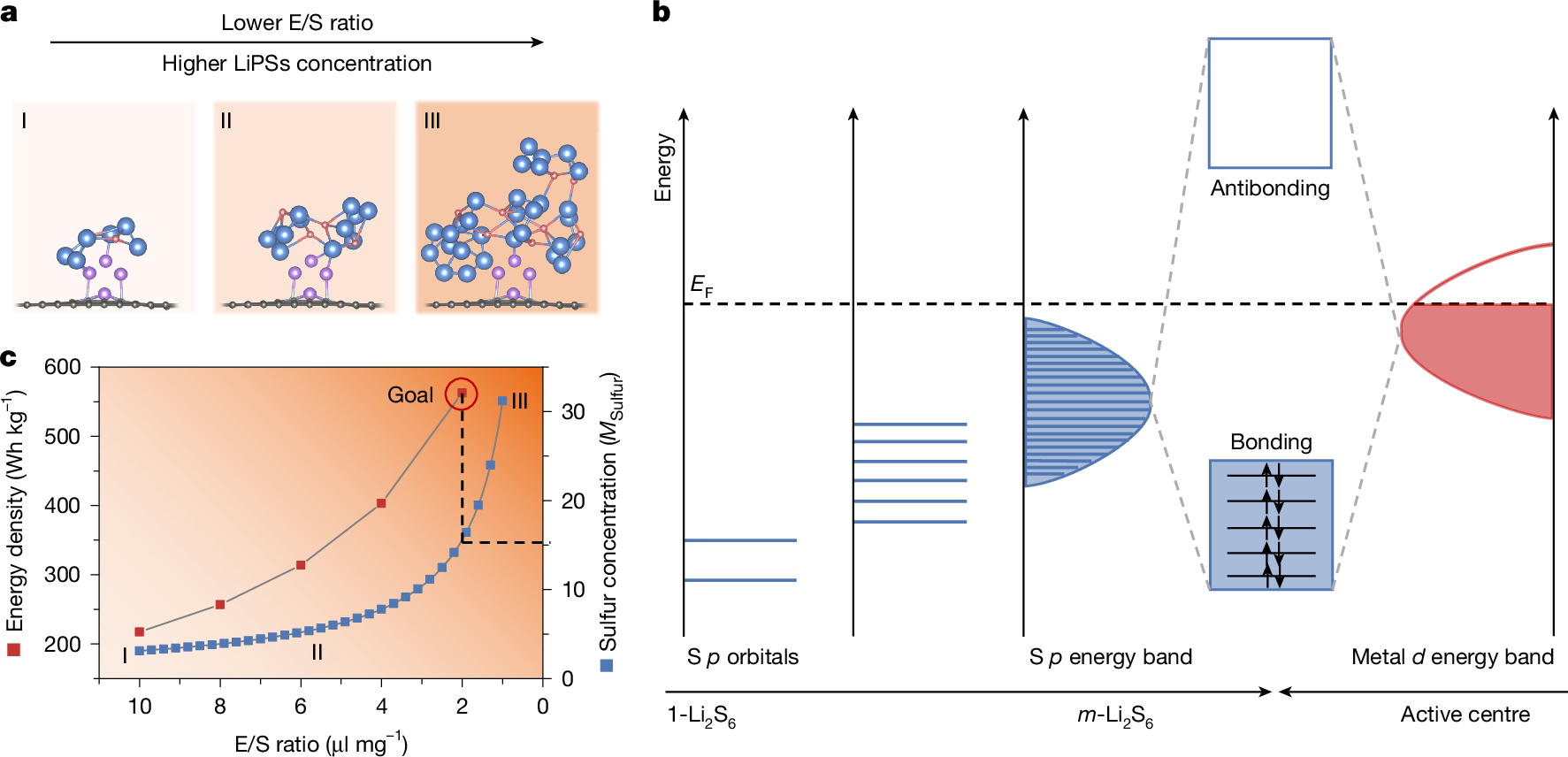
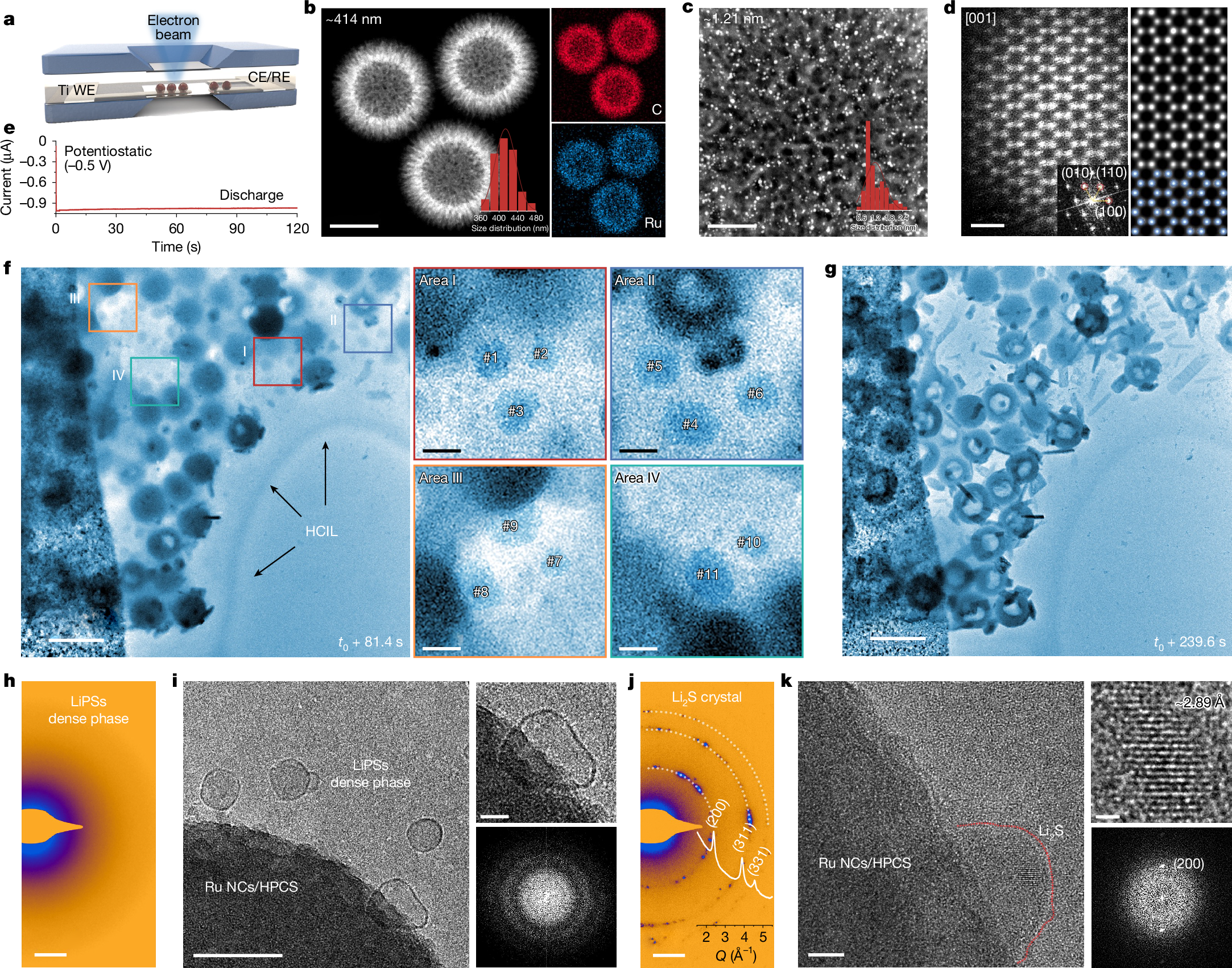
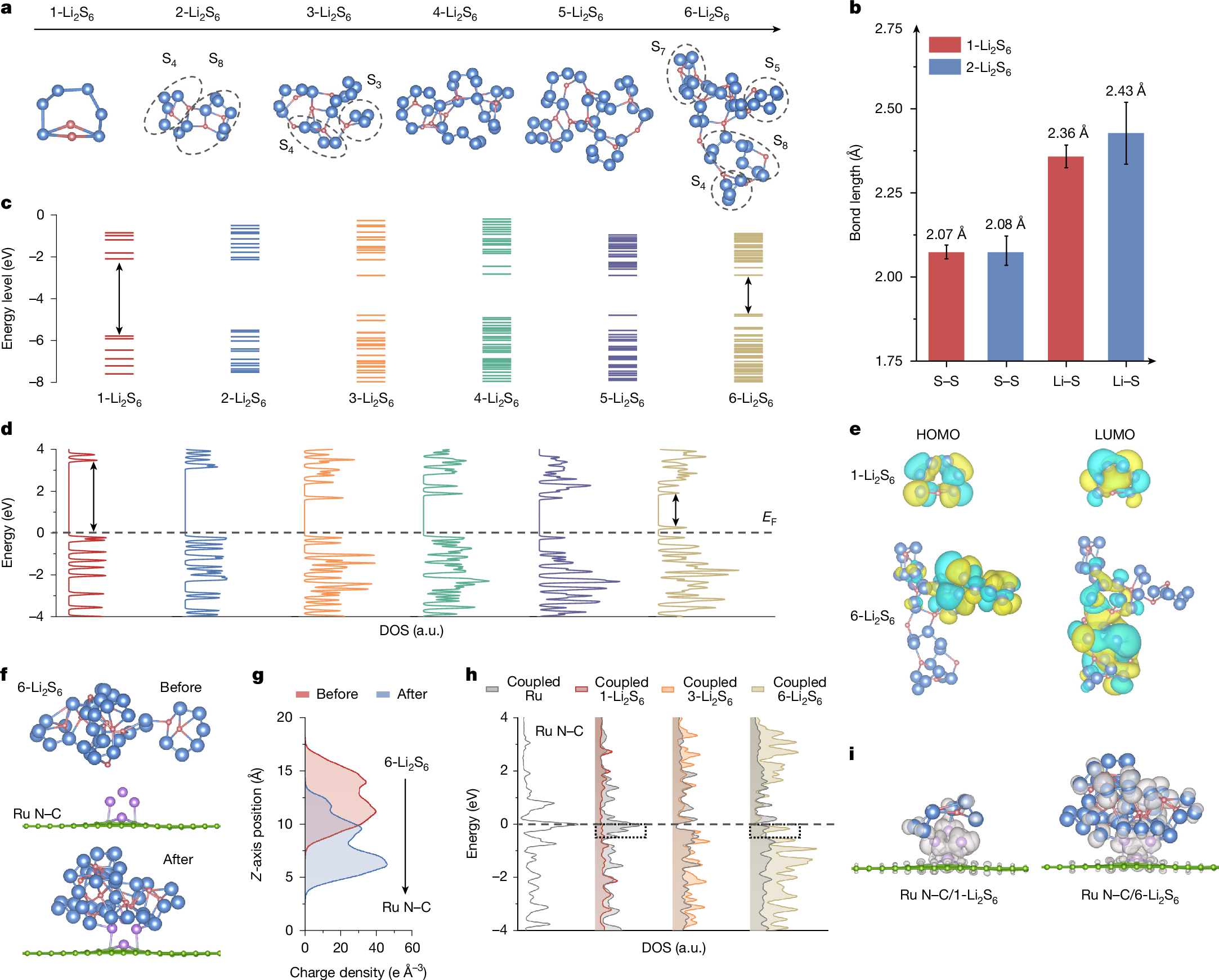
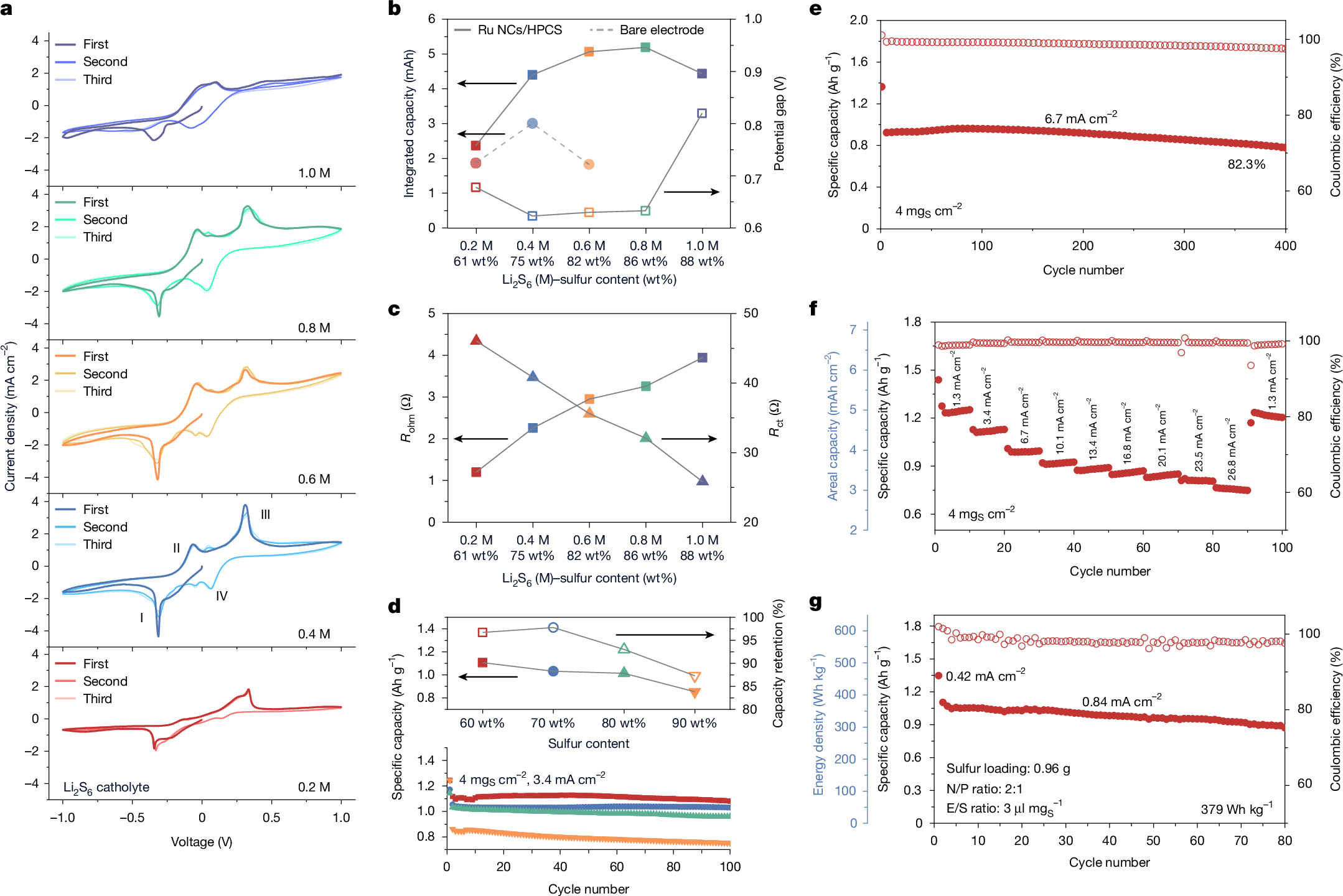
Charge transfer at solid–liquid interfaces plays a critical role in various energy-storage systems1, particularly under dynamically varying reactant concentrations. Deciphering these intricate reaction pathways remains a substantial challenge, notably in lithium–sulfur (Li–S) batteries, in which achieving high energy density requires efficient conversion of highly concentrated lithium polysulfides (LiPSs)2,3. However, the mechanisms governing lithium sulfide (Li2S) deposition and dissolution under lean electrolyte conditions remain poorly understood. Here, using in situ liquid-cell electron microscopy, we directly visualize concentration-driven phase segregation at the electrode–electrolyte interface. Within these high-concentration interfacial layers (HCILs), competitive surface and solution dictate the charge-transfer dynamics and ultimately govern Li2S deposition at different phase boundaries. Density functional theory (DFT) calculations reveal that the aggregation of LiPSs alters molecular geometry, electronic properties and orbital hybridization, collectively facilitating charge transfer through highly concentrated LiPSs clusters. Guided by these insights, we design optimized electrodes that balance interfacial reaction pathways, enabling fast charging (4 C, 26.8 mA cm−2) and achieving high energy densities exceeding 400 Wh kg−1. These findings provide mechanistic understanding of interfacial reactions under practical working conditions and offer a design strategy to advance Li–S batteries.
Access Nature and 54 other Nature Portfolio journals
Get Nature+, our best-value online-access subscription
$32.99 / 30 days
cancel any time
Subscribe to this journal
Receive 52 print issues and online access
$199.00 per year
only $3.83 per issue
Buy this article
- Purchase on SpringerLink
- Instant access to the full article PDF.
USD 39.95
Prices may be subject to local taxes which are calculated during checkout
 The alternative text for this image may have been generated using AI.
 The alternative text for this image may have been generated using AI.
 The alternative text for this image may have been generated using AI.
 The alternative text for this image may have been generated using AI.
 The alternative text for this image may have been generated using AI.
Data availability
The data that support the findings of this study are available from the corresponding authors on request. Source data are provided with this paper.
References
Bard, A. J. et al. The electrode/electrolyte interface - a status report. J. Phys. Chem. 97, 7147–7173 (1993).
Yao, W. et al. Rechargeable metal-sulfur batteries: key materials to mechanisms. Chem. Rev. 124, 4935–5118 (2024).
Ji, X., Lee, K. T. & Nazar, L. F. A highly ordered nanostructured carbon–sulphur cathode for lithium–sulphur batteries. Nat. Mater. 8, 500–506 (2009).
Xu, K. Interfaces and interphases in batteries. J. Power Sources 559, 232652 (2023).
Choi, S., Yoon, I., Nichols, W. T. & Shin, D. Carbon-coated Li2S cathode for improving the electrochemical properties of an all-solid-state lithium–sulfur battery using Li2S-P2S5 solid electrolyte. Ceram. Int. 44, 7450–7453 (2018).
Lin, Z., Liu, Z., Dudney, N. J. & Liang, C. Lithium superionic sulfide cathode for all-solid lithium–sulfur batteries. ACS Nano 7, 2829–2833 (2013).
Sun, J. et al. Will lithium–sulfur batteries be the next beyond-lithium ion batteries and even much better? InfoMat 4, e12359 (2022).
Fan, F. Y., Carter, W. C. & Chiang, Y. M. Mechanism and kinetics of Li2S precipitation in lithium–sulfur batteries. Adv. Mater. 27, 5203–5209 (2015).