Accurate determination of the 3D atomic structure of amorphous materials
TL;DR
Atomic electron tomography (AET) enables accurate 3D atomic mapping of amorphous materials, overcoming challenges from lack of periodicity. A workflow with preprocessing, reconstruction, and refinement achieves high positional precision and elemental classification in materials like Si, SiGeSn, and CoPdPt.
Key Takeaways
- •AET provides a direct method for 3D atomic structure determination in amorphous materials, which lack long-range order.
- •The workflow includes robust image preprocessing, denoising, tomographic reconstruction, atom tracing, and atomic position refinement.
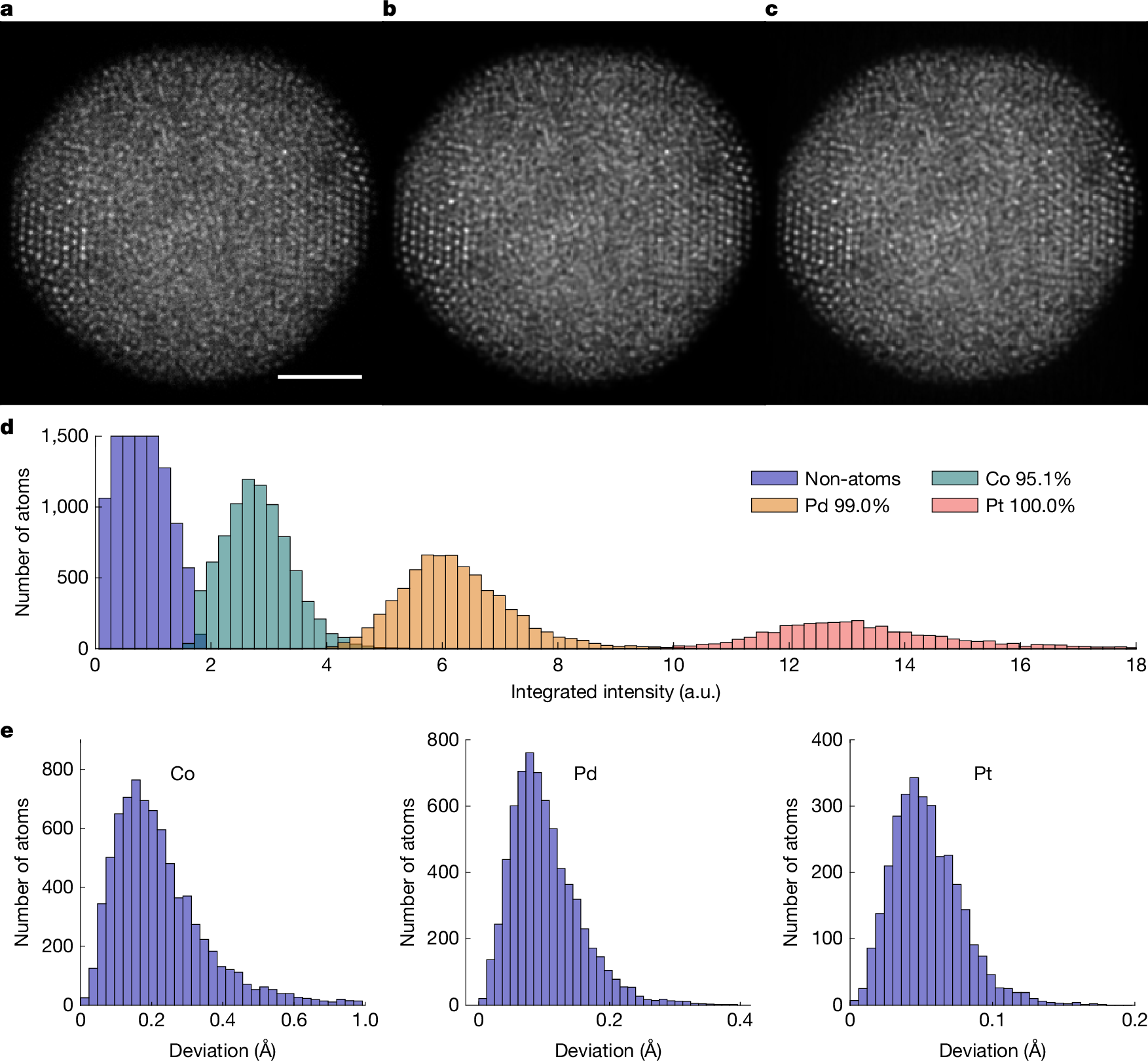
- •High accuracy is demonstrated with 95.1% Co, 99.0% Pd, and 100% Pt atom identification and precise 3D coordinates in CoPdPt nanoparticles.
- •Results offer practical guidelines and benchmarks for applying AET to non-crystalline materials and other imaging modalities.
Tags
Abstract
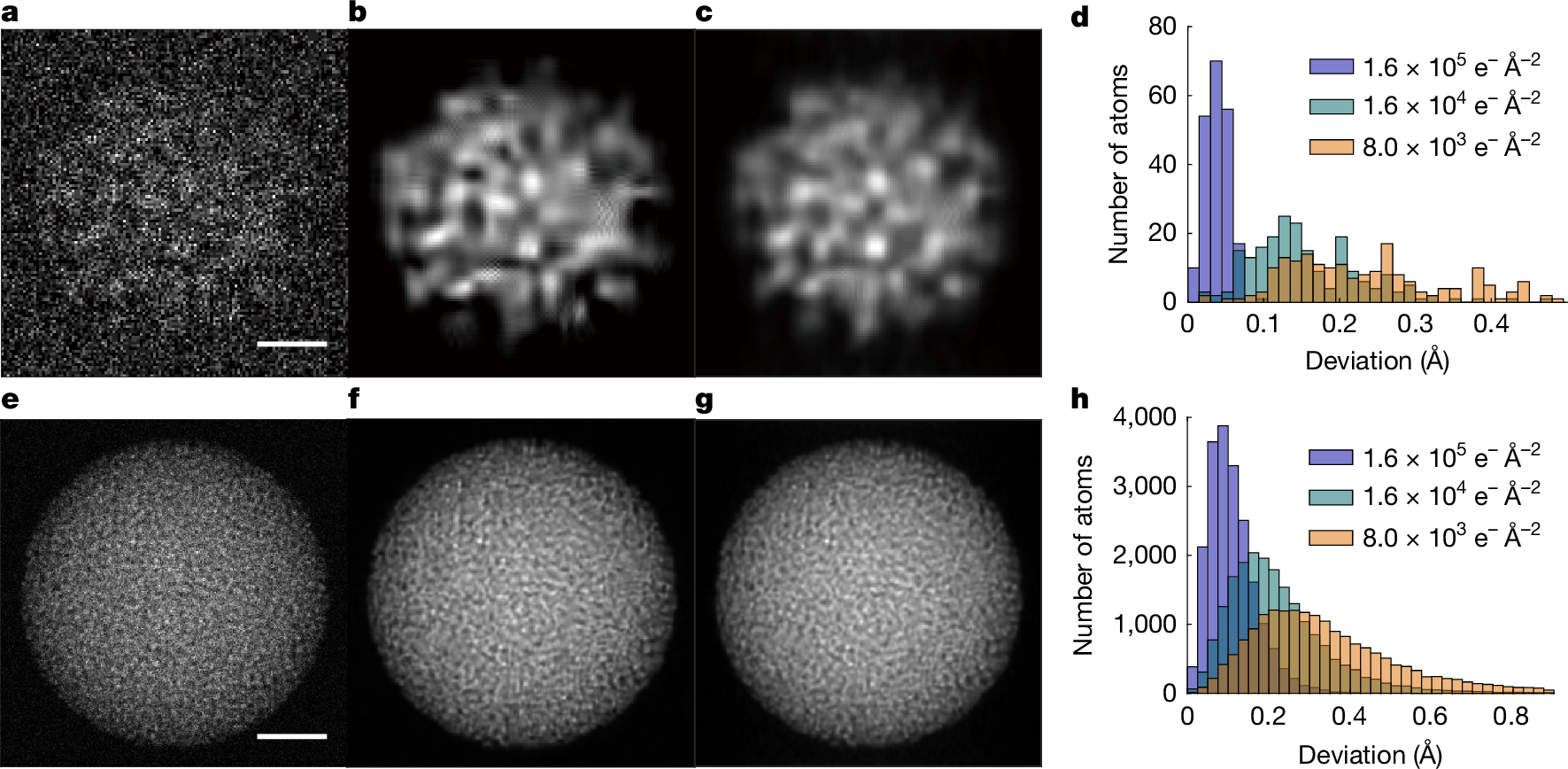
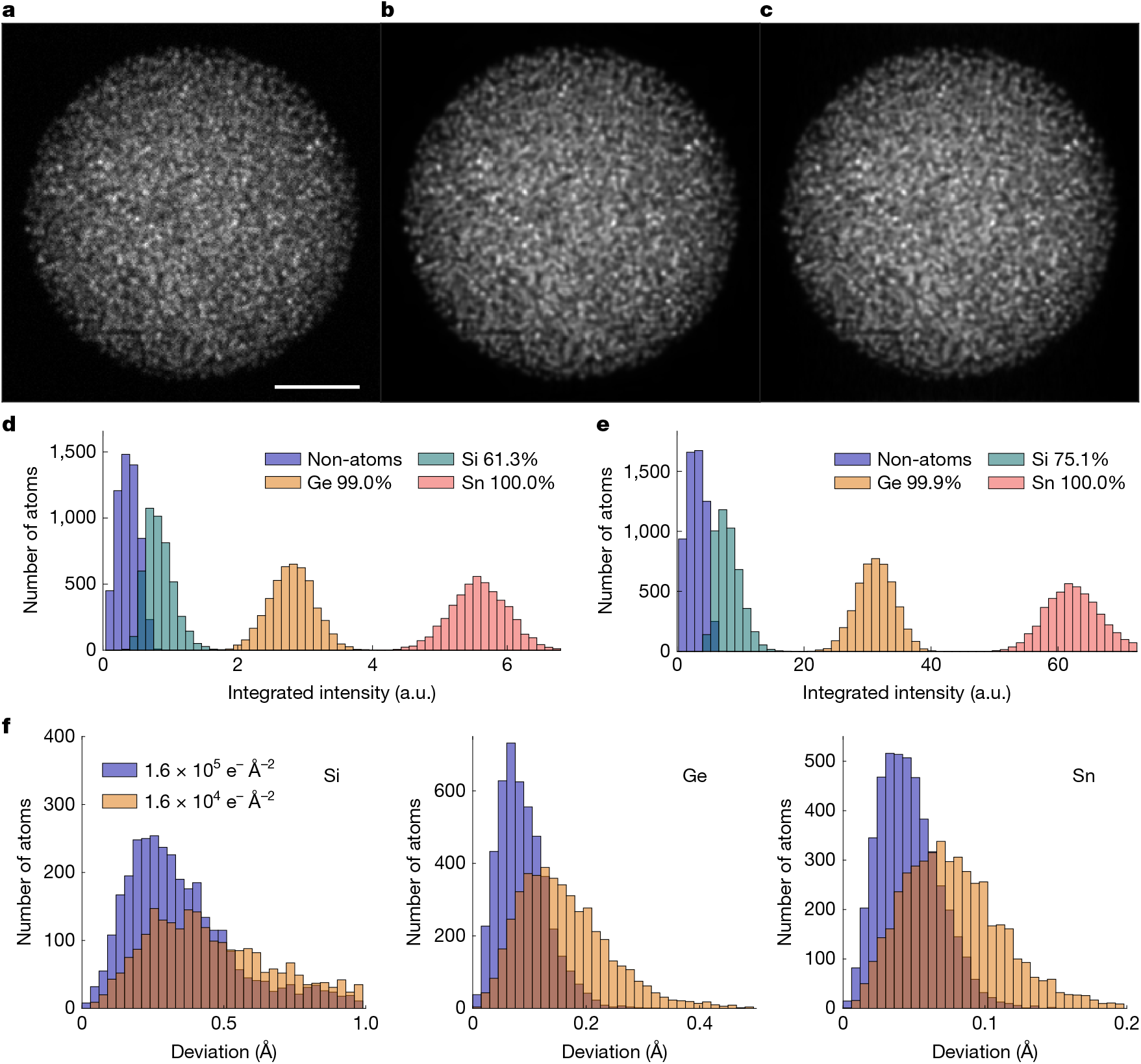
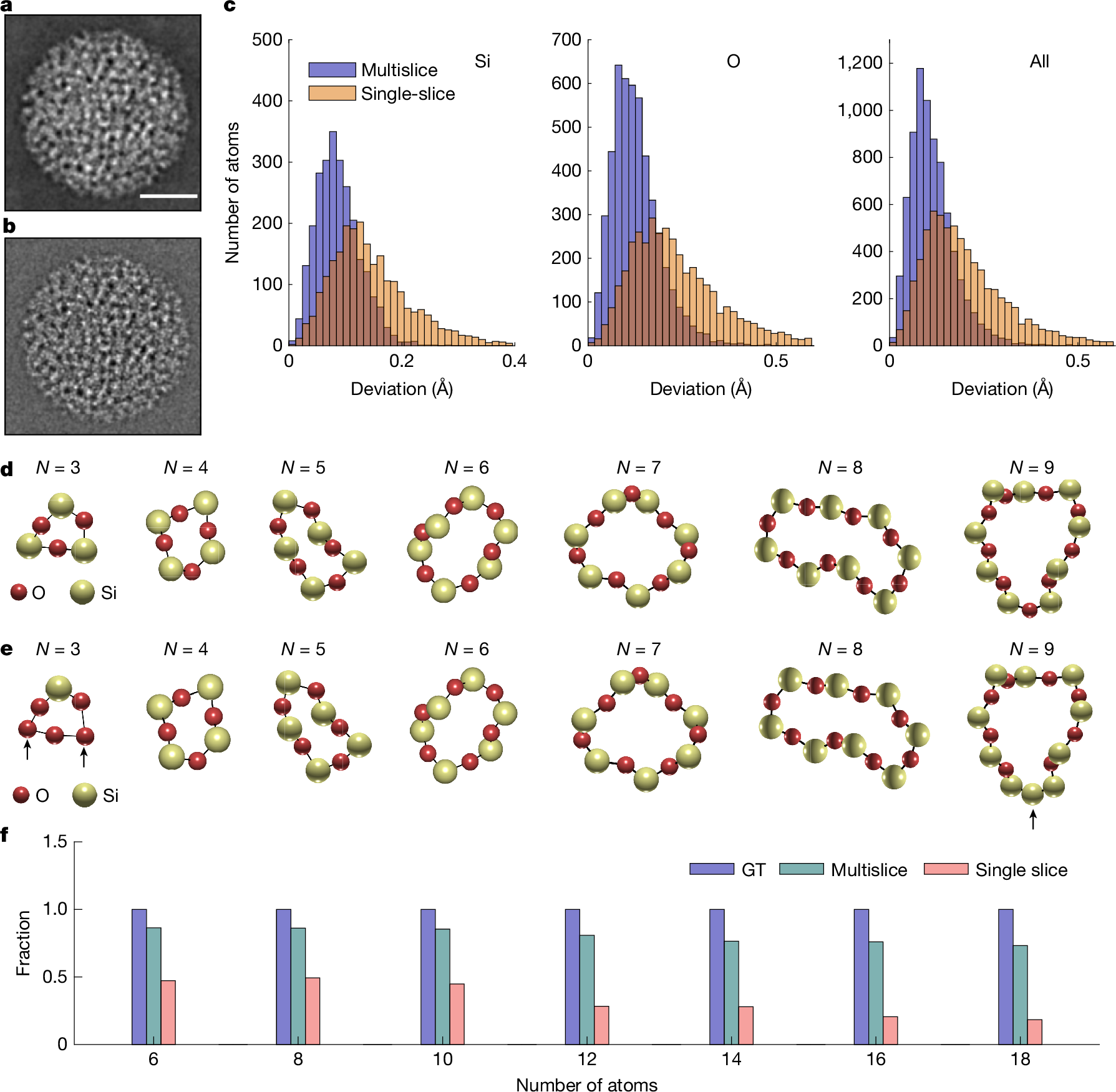
Amorphous materials—solids lacking long-range order—underpin technologies from thin-film electronics1, solar cells2 and phase-change memory3 to magnetic components4, medical devices5 and quantum technologies6,7,8. Yet the absence of periodicity fundamentally limits determination of their three-dimensional (3D) structure at atomic resolution. Despite major theoretical, experimental, and computational advances in characterizing short- and medium-range order9,10,11,12,13,14,15,16,17,18,19,20,21,22,23,24, quantitative determination of complete 3D atomic arrangements in amorphous materials remains experimentally demanding. Atomic electron tomography (AET) now provides a pathway to direct 3D atomic mapping in these materials25,26,27. Here we present a quantitative analysis of AET, showing how robust image preprocessing, denoising, projection alignment and normalization, advanced tomographic reconstruction, atom tracing, elemental classification and atomic position refinement collectively enable reliable determination of 3D atomic coordinates and elemental identities in amorphous materials. Using multislice-simulated datasets of amorphous Si, SiGeSn and CoPdPt nanoparticles under varying noise levels, our workflow outperforms an alternative approach28 in both positional precision and classification accuracy. For CoPdPt, we identify 95.1% of Co, 99.0% of Pd and 100% of Pt atoms, with corresponding 3D positional precisions of 29 pm, 12 pm and 6 pm, respectively, under realistic dose conditions. These results establish practical guidelines and quantitative benchmarks for achieving accurate AET of non-crystalline materials, and the underlying framework can be broadly applied to other tomographic imaging modalities for high-fidelity 3D reconstruction.
Access Nature and 54 other Nature Portfolio journals
Get Nature+, our best-value online-access subscription
$32.99 / 30 days
cancel any time
Subscribe to this journal
Receive 51 print issues and online access
$199.00 per year
only $3.90 per issue
Buy this article
- Purchase on SpringerLink
- Instant access to the full article PDF.
USD 39.95
Prices may be subject to local taxes which are calculated during checkout
Limit of atomic-resolution-tomography reconstruction of amorphous nanoparticles
Determining the three-dimensional atomic structure of an amorphous solid
Probing atom dynamics of excited Co-Mo-S nanocrystals in 3D
Data availability
All data supporting this study are publicly available on GitHub (github.com/AET-pAET/Supplementary-Data-Codes) and archived on Zenodo at https://doi.org/10.5281/zenodo.17445110 (ref.