Rising global hail damage potential in a warming world
Abstract
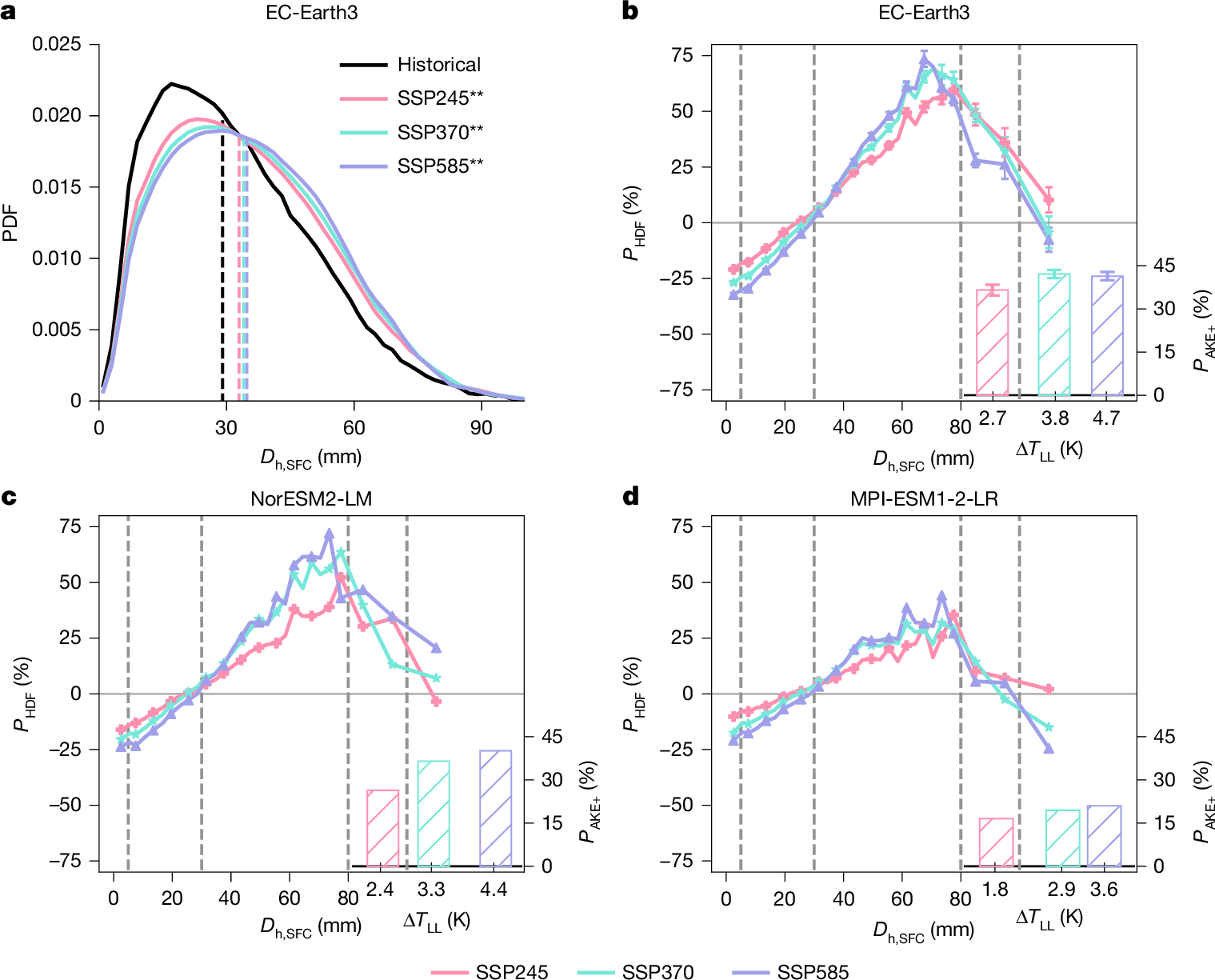
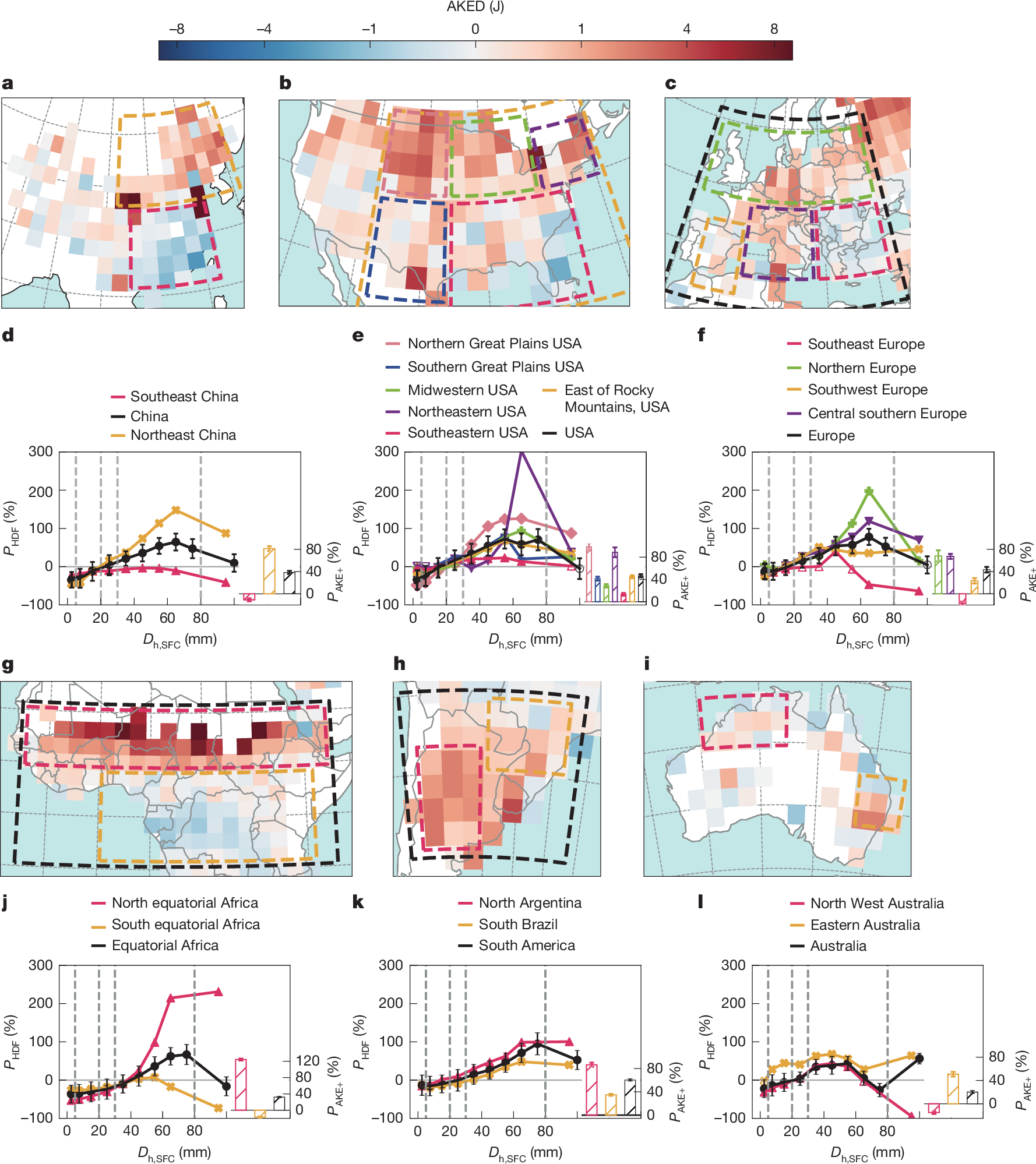
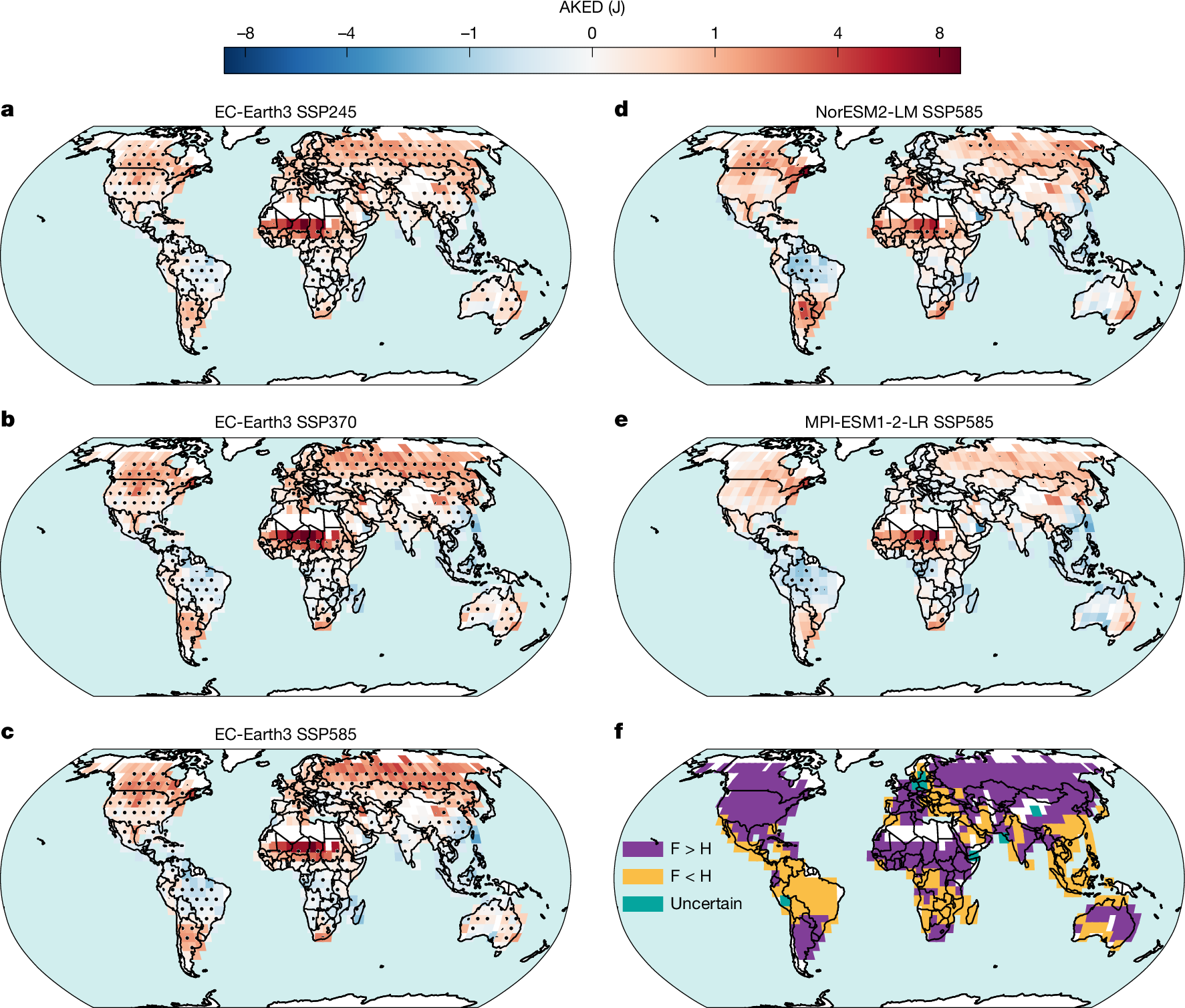
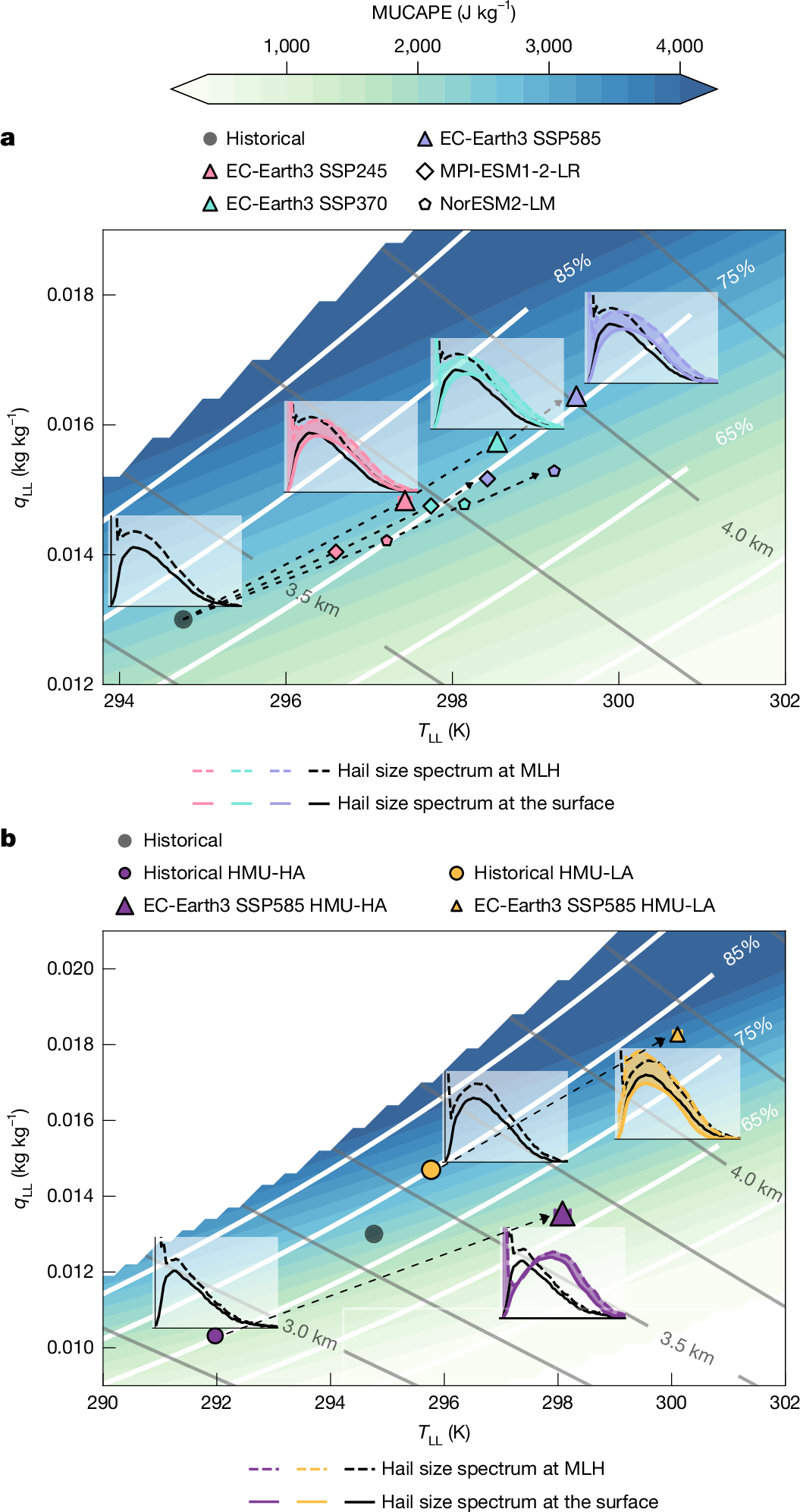
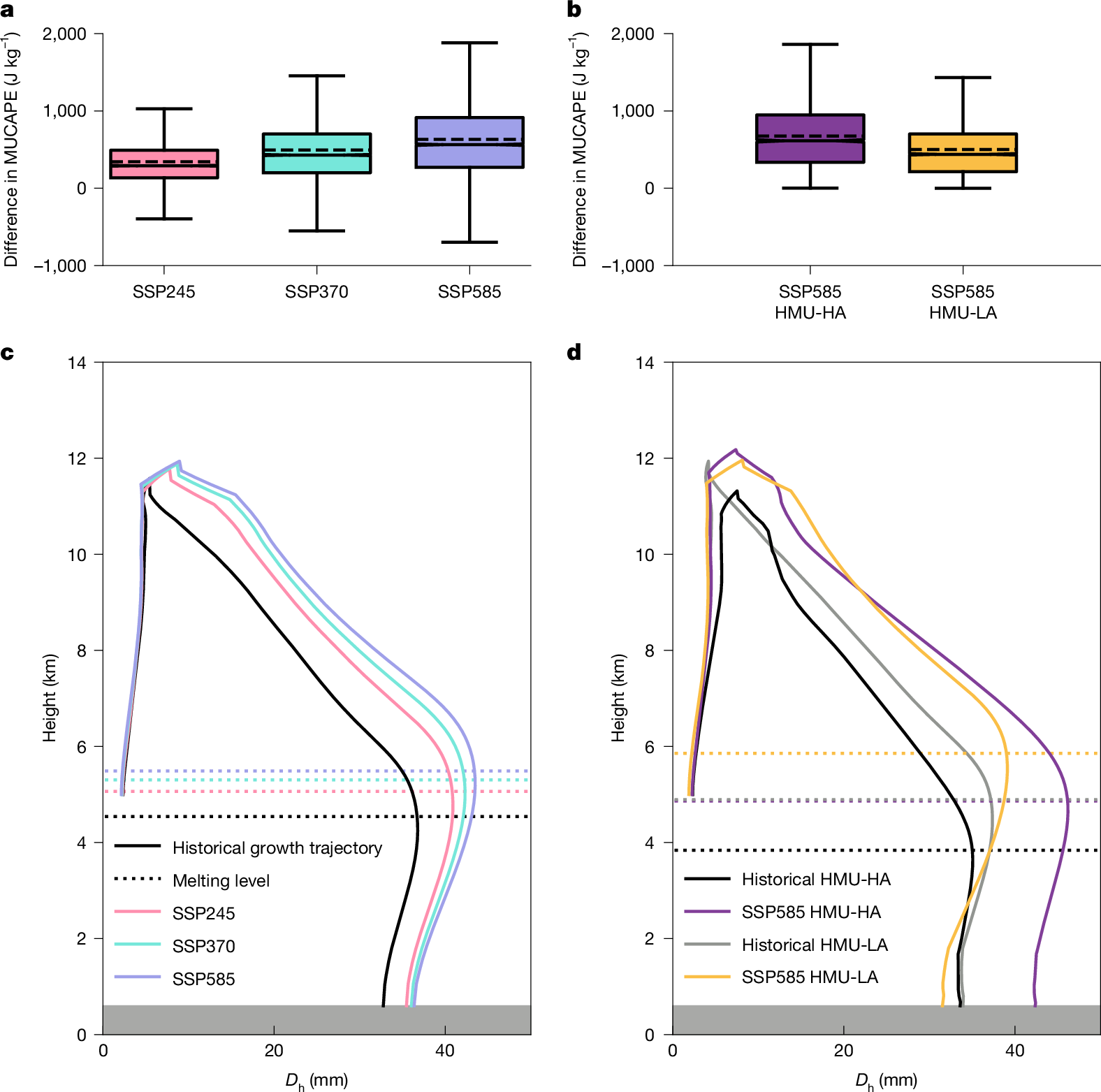
Anthropogenic climate change (ACC) is expected to modify severe convective storms and their associated hazards, including hailstorms, a primary driver of weather-related economic losses1,2,3,4. Despite some research on the response of hailstorms to ACC, most studies have focused on regional-scale changes2,3,4,5,6,7,8,9, whereas global-scale assessments of hailstone size remain scarce. Here we show a 36.5–42.1% increase in global hailstorm-induced damage potential by the late twenty-first century, with the magnitude determined by the emission scenario. Our results arise from hailstone trajectory simulations conducted under historical and future scenarios, driven by EC-Earth3 ensemble outputs10 that are cross-validated through multimodel comparisons. Globally, increased low-level temperature and specific humidity drive a shift towards larger hailstones, with the frequency of ≥30-mm-diameter hailstones rising by 37.9–51.8% and <30-mm-diameter hailstones declining by 4.2–12.3%. Regionally, the mid-high latitudes predominantly exhibit increased hail damage potential owing to strong warming and weak moistening, amplifying instability sufficiently to counteract enhanced drag and melting effects. Conversely, tropical and monsoonal regions experience reduced hail damage potential owing to weak warming, strong moistening and limited hail growth depth. Our findings highlight the non-uniform impacts of ACC on global hailstorm damage, providing critical insights for future disaster prevention and mitigation strategies.
Access Nature and 54 other Nature Portfolio journals
Get Nature+, our best-value online-access subscription
$32.99 / 30 days
cancel any time
Subscribe to this journal
Receive 52 print issues and online access
$199.00 per year
only $3.83 per issue
Buy this article
- Purchase on SpringerLink
- Instant access to the full article PDF.
USD 39.95
Prices may be subject to local taxes which are calculated during checkout
 The alternative text for this image may have been generated using AI.
 The alternative text for this image may have been generated using AI.
 The alternative text for this image may have been generated using AI.
 The alternative text for this image may have been generated using AI.
 The alternative text for this image may have been generated using AI.
Similar content being viewed by others
Contrasting trends in very large hail events and related economic losses across the globe
Hailstone size dichotomy in a warming climate
Increased hailstorms in cities through cell merger mechanism across North America and East Asia
Data availability
The ERA5 variables, including temperature, specific humidity, geopotential, pressure, U and V vectors and orography, were downloaded from the Copernicus Climate Data Store (https://cds.climate.copernicus.eu/). CMIP6 model simulations are available at https://esgf-node.llnl.gov/search/cmip6/. The hailstone observation records from the USA are obtained from https://www.ncdc.noaa.gov/stormevents/. The observations of maximum hailstone diameter (MHD) are obtained from the China Meteorological Administration (CMA). Owing to our data use agreement with CMA, the original data cannot be made publicly available; however, we provide the processed spatial distribution of MHD and the raw records are available from CMA on request ([email protected]). Other data (including near-surface hailstone size, growth duration, composite hailstone trajectory) necessary to reproduce the main results are available from figshare at https://figshare.com/s/d28e1430d2cfd3bfbbaf (ref. 66). Owing to the substantial volume of raw data (more than 3 TB) of hailstone growth trajectories, it is not feasible to provide direct access to the full dataset. We provide the raw dataset of historical scenario simulation and ensemble-mean simulation from EC-Earth3, MPI-ESM1-2-LR and NorESM2-LM for three future scenarios as a reference, available from https://doi.org/10.5281/zenodo.18152366, https://doi.org/10.5281/zenodo.18161078, https://doi.org/10.5281/zenodo.18246083 and https://doi.org/10.5281/zenodo.18168495 (refs. 67,68,69,