Projected impacts of climate change on malaria in Africa
TL;DR
Climate change could cause 123 million additional malaria cases and 532,000 deaths in Africa by 2050, primarily driven by extreme weather disruptions (79% of cases, 93% of deaths) rather than ecological factors. Most increases will occur in existing endemic areas, highlighting the need for climate-resilient control strategies.
Key Takeaways
- •Extreme weather events, not ecological changes, are the main driver of projected malaria increases, accounting for 79% of additional cases and 93% of deaths.
- •Climate change could lead to 123 million additional malaria cases and 532,000 deaths in Africa between 2024 and 2050 under current control levels.
- •Increases are concentrated in existing endemic areas rather than through range expansion, with significant regional variation in impact.
- •Ecological impacts alone show minimal overall change by 2050, but mask large local variations, with warming increasing risk in cooler regions and decreasing it in hotter areas.
- •Urgent need for climate-resilient malaria control and emergency response systems to safeguard eradication progress.
Tags
Abstract
The implications of climate change for malaria eradication this century remain poorly resolved1,2. Many studies focus on parasite and vector ecology in isolation, neglecting the interactions between climate, malaria control and the socioeconomic environment, including disruption from extreme weather3,4. Here we integrate 25 years of African data on climate, malaria burden and control, socioeconomic factors, and extreme weather. Using a geotemporal model linked to an ensemble of climate projections under the Shared Socioeconomic Pathway 2-4.5 (SSP 2-4.5) scenario5, we estimate the future impact of climate change on malaria burden in Africa, including both ecological and disruptive effects. Our findings indicate that climate change could lead to 123 million (projection range 49.5 million to 203 million) additional malaria cases and 532,000 (195,000–912,000) additional deaths in Africa between 2024 and 2050 under current control levels. Contrary to the prevailing focus on ecological mechanisms, extreme weather events emerge as the primary driver of increased risk, accounting for 79% (50–94%) of additional cases and 93% (70–100%) of additional deaths. Most increases stem from intensification in existing endemic areas rather than range expansion, with significant regional variation in impact. These results highlight the urgent need for climate-resilient malaria control strategies and robust emergency response systems to safeguard progress towards malaria eradication.
Malaria, climate variability, and interventions: modelling transmission dynamics
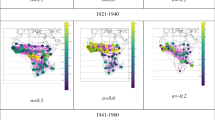
Relationships between transmission of malaria in Africa and climate factors
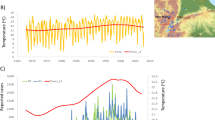
Malaria trends in Ethiopian highlands track the 2000 ‘slowdown’ in global warming
Main
In the twenty-first century, 15 years of declining malaria burden in Africa have been followed by a decade of faltering progress. Growing optimism around new control tools is being tempered by the concurrent challenges of uncertain financing and intensifying biological threats. At this critical juncture, a question of profound importance is the extent to which climate change threatens progress against the disease and the feasibility of eradication as a mid-century goal.
The link between climate and malaria is widely accepted and extensive research has elucidated different causal pathways and sought to project future impacts1,2. Such research has permeated local and global malaria policy formulation6,7,8,9, but the ongoing lack of consensus on the directionality, magnitude and geographical distribution of climate change effects hinders detailed response strategies2,10.
Climate mediates malaria vector and parasite ecology through several mechanisms. Previous studies have explored the effects of ambient temperature on Anopheles mosquito lifespan, blood meal frequency and other life history characteristics11,12, the duration of Plasmodium extrinsic incubation period13, and the combined implications for vectorial capacity and malaria transmission intensity11,12,13. Recent advances have tailored this understanding to the most important malaria vectors in Africa—members of the Anopheles gambiae complex14—and the invasive vector Anopheles stephensi15. Other work has focused on understanding the way climate affects the abundance of adult mosquitoes by influencing larval habitat and its suitability to sustain development of the larval stages16,17.
Climate change and malaria in context
As understanding of climate effects on malaria transmission ecology has developed, many studies have extrapolated those mechanisms under future climate scenarios to predict how malaria may respond to climate change3. Some studies have incorporated temperature effects only18,19, whereas others have used more comprehensive empirical or mechanistic models to capture temperature, rainfall and humidity effects on both larval and adult mosquito stages4,20,21. Most commonly, these efforts have aimed to predict changes in the geographical (or seasonal) boundaries of transmission21,22,23. However, many areas of the world are already suitable for malaria transmission yet have none, whereas within existing boundaries transmission can vary by several orders of magnitude. Understanding boundary changes therefore provides only partial insight into climate change impacts on malaria.
Other studies have sought to use mechanistic models to predict climate change impacts on transmission in absolute terms, on the basis of either extrapolated parametrizations from laboratory or field observations20,21, or calibration to local observations24,25. However, such models show limited ability to reproduce historical endemicity26 or observed patterns of malaria infection prevalence across Africa, casting doubt on their reliability for projecting future changes in those patterns17,20,22.
Nearly all existing projections share a central limitation: although they explore climate effects in isolation, they do not adequately account for non-climate determinants of malaria trends. Rising drug resistance in the 1990s contributed to increasing malaria trends in many locations, including those studied intensively for climate change effects23,27. Subsequently, aggressive scale up of effective interventions between 2000 and 2015 almost halved mean infection prevalence across the continent, albeit unevenly28. This, along with rapid urbanization and socioeconomic development, has reshaped the modern-day landscape of malaria risk, driven long-term changes independently of climate trends and mean that identical climate conditions can host very different levels of malaria transmission29,30. Failing to account for these factors prevents an accurate assessment of the role of climate—and, by extension, climate change—in shaping future malaria risk.
The built environment and malaria control efforts not only mediate transmission independently of climate but also provide additional pathways by which weather and climate can impact malaria. Extreme weather events such as floods and cyclones damage homes and infrastructure, disrupting access to healthcare, protective housing and malaria control. Malaria surges linked to recent extreme weather events in Africa and Asia have been documented widely31,32, including causal studies on the impact of disrupted malaria control, even after substantial emergency interventions31. In Africa, climate change is predicted to lead to more frequent and severe floods, and more severe southern Indian Ocean cyclones33. Although some attention has been given to vector-borne disease and extreme weather in localized studies34, previous climate–malaria work has focused almost exclusively on ecological mechanisms. The disruptive effects that intensifying extreme weather events might have on malaria, and vector-borne diseases more broadly3, and the control of such diseases across Africa has not previously been assessed quantitatively.
Projecting climate impacts on malaria
Here we provide projections of how both ecological and disruptive climate-change effects might affect malaria in Africa. Crucially, we first characterize the climate–malaria relationship in the context of the other key determinants of malaria risk, based on 25 years of comprehensive data on malaria infection prevalence, intervention coverage and socioeconomic conditions. A schematic overview of our analytical framework is shown in Extended Data Fig. 1. Bias-corrected and downscaled Coupled Model Intercomparison Project Phase 6 (CMIP6) member global climate model (GCM) outputs obtained from the NASA Earth Exchange Global Daily Downscaled Projections provided future projections of climatic variables to 2050 (ref. 35), and were calibrated to observed climate data36,37,38 from the co-observed 2000–2014 period, generating consistent time-series of climatic variables from 2000–2050 at monthly time-steps and 5 × 5 km spatial resolution. Between-GCM uncertainty and variability were accounted for using an ensemble of CMIP6 members—14 models for evaluating ecological impacts, and a tractable subset of three for disruptive impacts. We focused analysis on the ‘middle of the road’ scenario SSP 2-4.5, designed to be broadly consistent with current international pledges on reduced greenhouse gas emissions5.
Ecologically driven malaria impacts were assessed by first using mechanistic models to transform the processed climate data into two indices representing the climate–malaria interface: (1) the effects of temperature on mosquito and parasite lifecycles and their interaction and (2) the interaction of rainfall, humidity and temperature to determine the relative availability of transient larval habitat for mosquito oviposition and larval development. Use of GCM outputs with monthly resolved projections enabled appropriate propagation of changing regimes of seasonal, inter-annual and inter-decadal climate variation. Unlike previous seasonal models18 focusing only on temperature effects, this approach allows seasonality to be characterized by the intersection of temporally varying temperature, precipitation and humidity conditions. Second, for the period of observational record in the training data (2000–2022), the two climatic indices were used as geotemporal predictor variables, along with gridded data on mosquito relative species abundance39, permanent larval habitat availability, geotemporal estimates of vector control coverage40, seasonal malaria chemoprevention (SMC), antimalarial drug treatment41 and improved housing42 in a hierarchical Bayesian geotemporal model fitted to 49,994 geo-located observations of malaria infection prevalence (Plasmodium falciparum parasite rate (PfPR): age- and diagnostic-standardized parasitaemia rates in 2- to 10-year-old children, henceforth PfPR2–10) collated across Africa by the Malaria Atlas Project41. This framework extended an established approach28 and estimated empirically the relative and absolute effects of each predictor variable, including their interactions, on malaria transmission. Third, holding malaria control coverage and socioeconomic metrics at present-day levels, the fitted model was used to generate both SSP 2-4.5 and counterfactual (that is, projecting present-day conditions with no future climate change) PfPR2–10 scenarios for each climate ensemble member from 2024 to 2050, which were then differenced to generate estimates of climate change impact (see detailed scenario definitions in Extended Data Table 1).
Disruption-driven malaria impacts were assessed by first simulating plausible scenarios of flooding and cyclone events in sub-Saharan Africa consistent with both past observations43,44 and GCM-projected future climate using statistical models calibrated and validated to historical events. For fluvial and pluvial flooding, the frequency, duration and extent of observed flood events were associated with a range of climate variables to generate a set of geotemporal catalogues of simulated future flood events under both counterfactual (without future climate change) and SSP 2-4.5 conditions to 2050. Similarly, the statistical relationship between climate variables and past Indian Ocean cyclone intensity and track morphology was characterized using methodology and datasets from a recently updated storms model45 that was also then projected to generate SSP 2-4.5 and counterfactual event catalogues to 2050.
Although evidence exists on the link between extreme weather events and vector-borne disease46,47, including malaria, impacts have almost never been measured directly. We assembled both qualitative and quantitative records of past extreme weather events in malaria-endemic settings that detailed the type and magnitude of damage and disruption experienced, and supplemented these with insights from 34 stakeholder interviews, capturing first-hand accounts of malaria impacts on the ground, including from representatives of humanitarian response agencies, national malaria programmes and global health agencies. This mixed-methods approach identified four primary pathways by which extreme weather events can impact malaria: by damage or disruption to the protective effects of (1) improved housing, (2) indoor vector control tools or (3) access to antimalarial treatment, or from changes to Anopheles larval habitat availability due to flood water (Extended Data Table 2). For (1)–(3), we used the compiled evidence (Extended Data Table 3) to define plausible levels of disruption by event type, duration and intensity—distinguishing between acute disruption in the immediate aftermath, and a period of persisting disruption before return to pre-event conditions (see Extended Data Fig. 2 for a schematic overview of our approach). To reflect the inherent variability and uncertainty in these disruption parameters, we also generated ranges spanning 50% to 150% of the central consensus values. A broad uncertainty range was considered appropriate because the scarcity of observational data precluded a more formal quantification of variation in these disruption parameters. These uncertainty ranges were propagated into all downstream modelling steps and the final results. By combining the disruption parameters with the simulated extreme events, we generated modified versions of the geotemporal data layers for vector control coverage, antimalarial drug treatment and improved housing that incorporated disruptions under both SSP 2-4.5 and counterfactual scenarios to 2050. Larval habitat impacts were captured by the habitat suitability model described earlier. The fitted hierarchical Bayesian geotemporal model was then used to reproject PfPR