Spatiotemporal transcriptome atlas of human embryos after gastrulation
Abstract
The comprehensive spatiotemporal atlas of gene expression during early human embryonic development is critical for insights into embryogenesis1, organogenesis2 and disease origins3,4. Here, leveraging Stereo-seq technology, we generated spatial transcriptomic profiles across 77 sagittal sections of 13 whole-human embryos ranging from Carnegie stage 12 to 23, integrated with single-nucleus RNA sequencing to elucidate gene expression patterns within defined cellular contexts, revealing the cellular heterogeneity that drives organ-specific differentiation. Our study has established a regulatory profile for the development of 50 organs and 198 substructures, and identified potential tissue-identity regulators. Of note, it uncovered previously uncharacterized gene functions in cardiac and brain development. The atlas not only substantiates and refines the current understanding of human organ development but also highlights key organs susceptible to genetic disorders. Furthermore, we characterized the allelic gene expression within specific organs at different developmental stages. This work presents a comprehensive compilation of genome-wide gene expression profiles for each spatially defined cell population, which can be visualized as a spatial display of the embryonic transcriptional landscape. These results offer the most thorough delineation to data of the spatiotemporal transcriptomic dynamics of human organogenesis.
Access Nature and 54 other Nature Portfolio journals
Get Nature+, our best-value online-access subscription
$32.99 / 30 days
cancel any time
Subscribe to this journal
Receive 52 print issues and online access
$199.00 per year
only $3.83 per issue
Buy this article
- Purchase on SpringerLink
- Instant access to the full article PDF.
USD 39.95
Prices may be subject to local taxes which are calculated during checkout
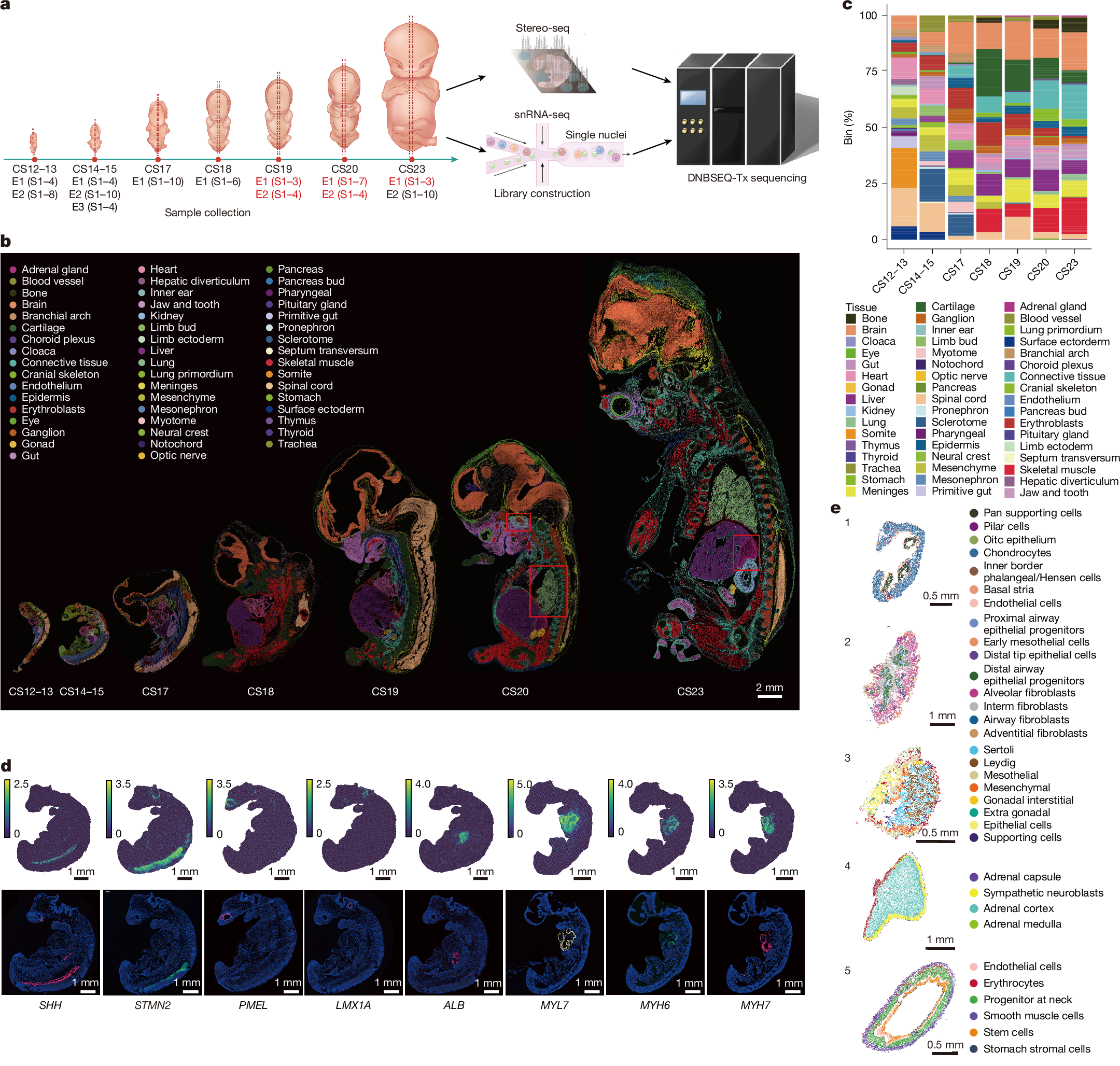 The alternative text for this image may have been generated using AI.
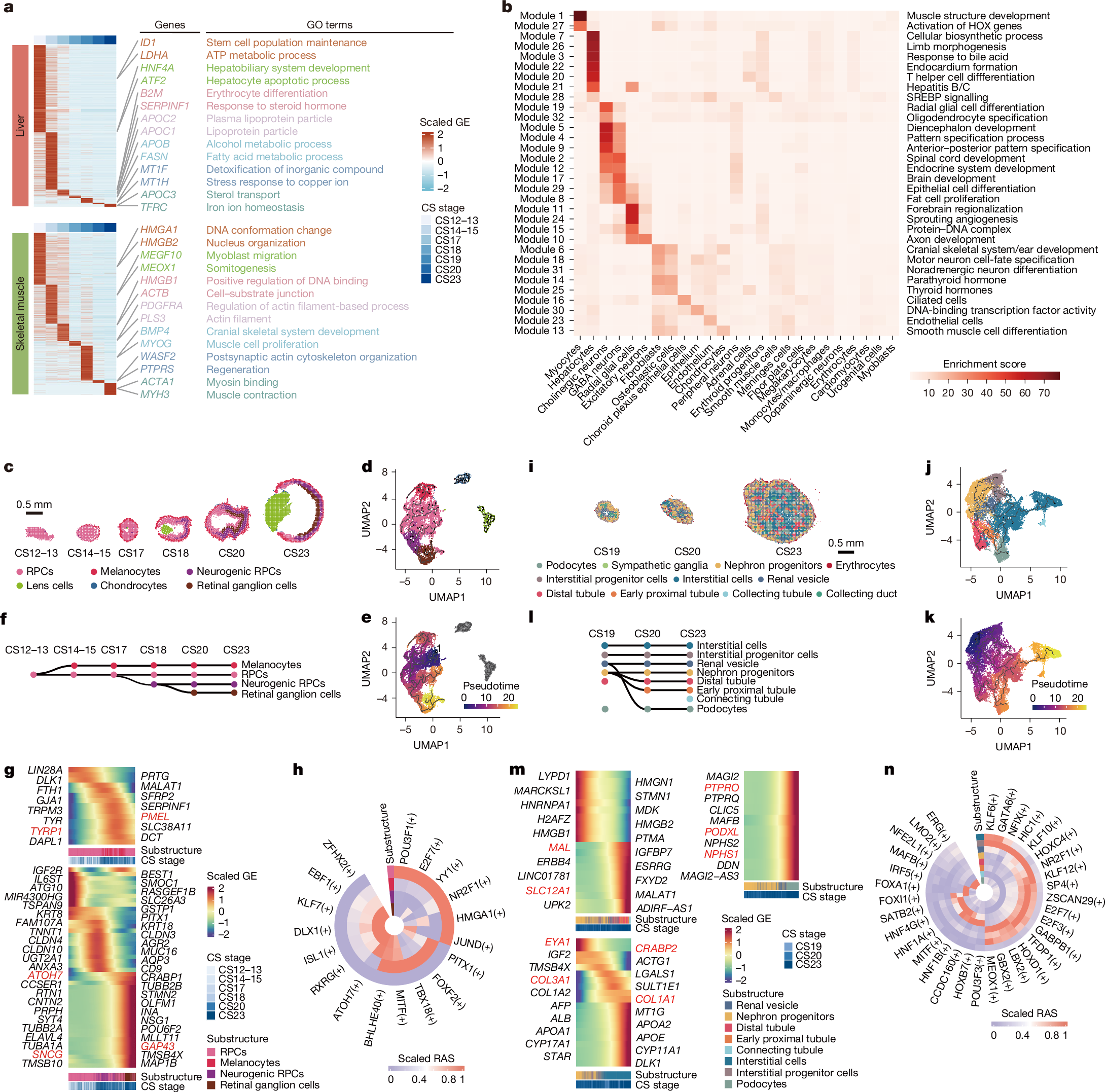 The alternative text for this image may have been generated using AI.
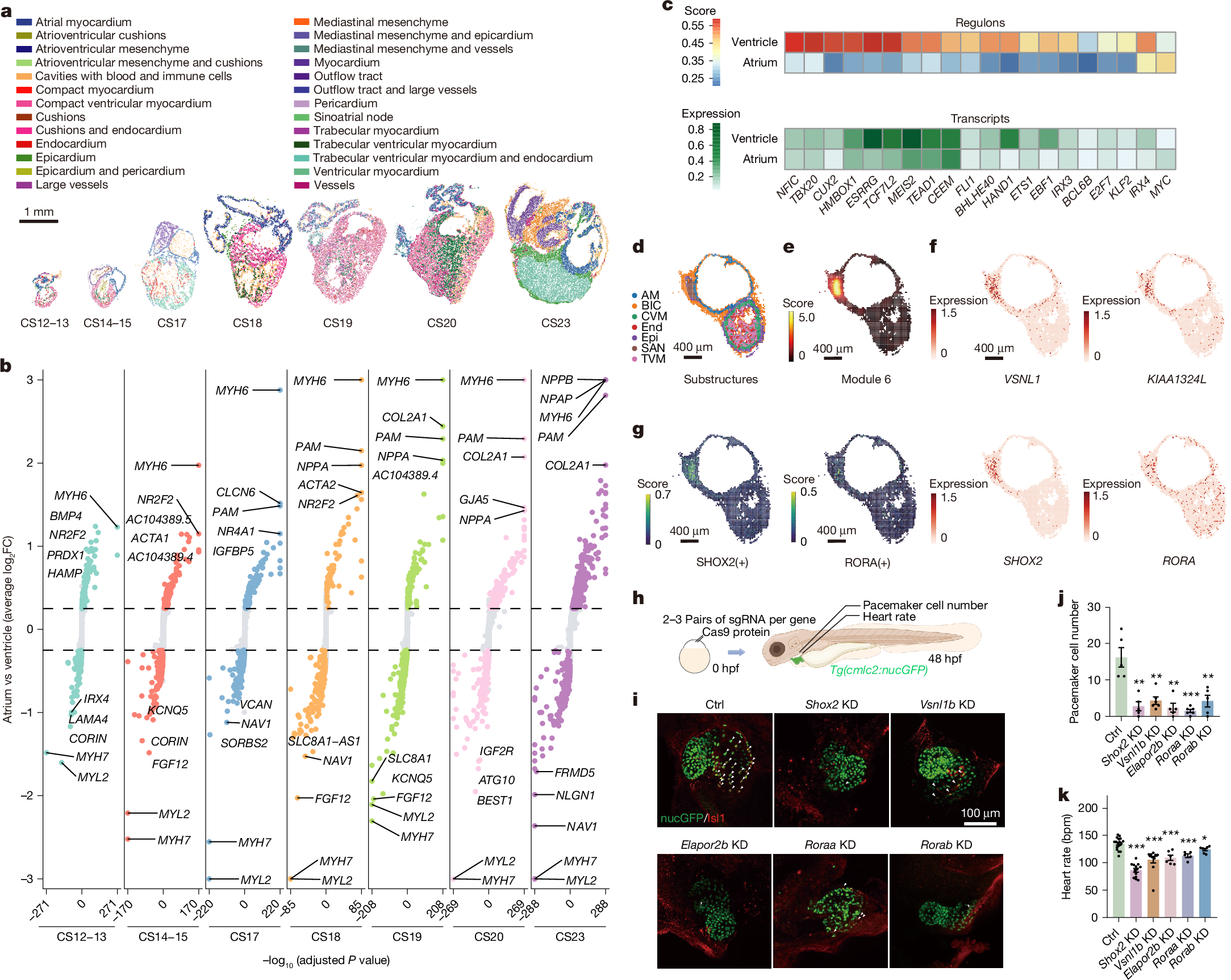 The alternative text for this image may have been generated using AI.
 The alternative text for this image may have been generated using AI.
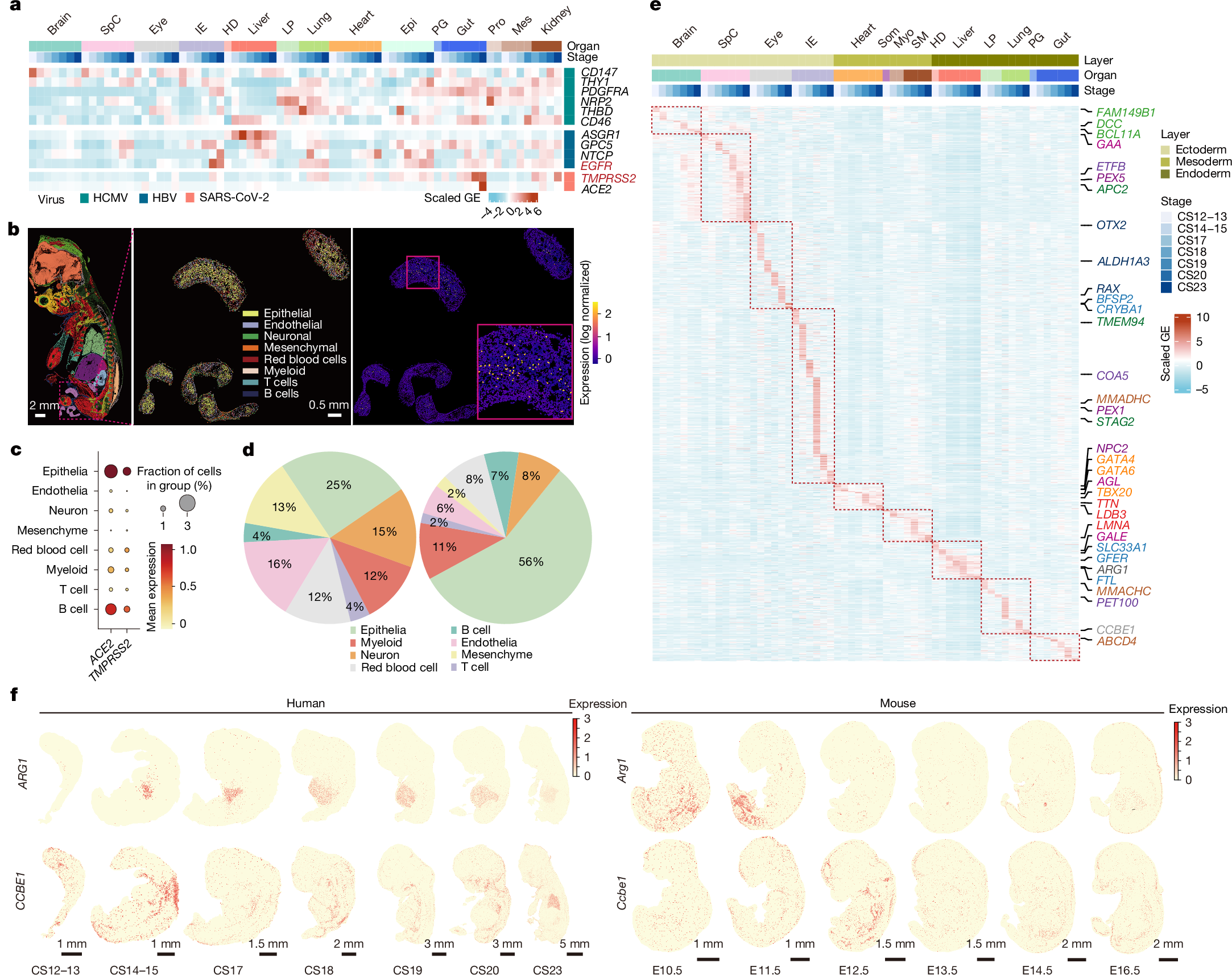 The alternative text for this image may have been generated using AI.
Similar content being viewed by others

A single-cell transcriptome atlas profiles early organogenesis in human embryos
Bridging the dimensional gap from planar spatial transcriptomics to 3D cell atlases
Data availability
The dataset resource for an interactive survey is accessible to the public (https://db.genomics.cn/hesta). The data that support the findings of this study have been deposited into the Gene Expression Omnibus (GEO), Genome Sequence Archive in National Genomics Data Center (GSA-Human) and CNGB Sequence Archive (CNSA) of China National GeneBank DataBase (CNGBdb). All processed data generated by Stereo-seq have been deposited to the GEO (https://www.ncbi.nlm.nih.gov/geo/query/acc.cgi?acc=GSE326326, accession code GSE326326) and the CNGB Nucleotide Sequence Archive (https://db.cngb.org/stomics/project/STT0000025/, accession code STT0000025). All processed data generated by snRNA-seq have been deposited to the GEO (https://www.ncbi.nlm.nih.gov/geo/query/acc.cgi?acc=GSE325829, accession code GSE325829) and the CNGB Nucleotide Sequence Archive (https://db.cngb.org/search/project/CNP0004028/, accession code CNP0004028). All raw data generated by Stereo-seq have been deposited to the GSA-Human (https://ngdc.cncb.ac.cn/gsa-human/browse, accession code HRA017263) and the CNGB Nucleotide Sequence Archive (https://db.cngb.org/stomics/project/STT0000025/, accession code STT0000025). All raw data generated by snRNA-seq have been deposited to the GSA-Human (https://ngdc.cncb.ac.cn/gsa-human/browse, accession code HRA017541). All raw data generated by whole-genome sequencing have been deposited to the GSA-Human (https://ngdc.cncb.ac.cn/gsa-human/browse, accession code HRA004300) and the CNGB Nucleotide Sequence Archive (https://db.cngb.org/search/project/CNP0004028/, accession code CNP0004028). All raw data generated by Nanopore and PacBio have been deposited to the GSA-Human (https://ngdc.cncb.ac.cn/gsa-human/, accession code HRA004299) and the CNGB Nucleotide Sequence Archive (https://db.cngb.org/search/project/CNP0004028/, accession code CNP0004028). The published datasets analysed for this study were retrieved from the GEO repository (GSE155121 and GSE157329), UCSC Cell Browser (https://cells.ucsc.edu/?ds=hoc), Gut Cell Survey (https://www.gutcellatlas.org/) and STOmics DB (https://db.cngb.org/stomics/mosta/). Source data are provided with this paper.
Code availability
The Python and R codes used to process and analyse the Stereo-seq data are available on GitHub (https://github.com/Yuejiao2025/HESTA). These scripts orchestrate the use of established bioinformatics tools (for example, cell2location and scvi-tools) and are provided for reproducibility. They are not central to the conceptual conclusions of the paper.
References
Cao, J. et al. A human cell atlas of fetal gene expression. Science 370, eaba7721 (2020).
Xu, Y. et al. A single-cell transcriptome atlas profiles early organogenesis in human embryos. Nat. Cell Biol. 25, 604–615 (2023).