The oldest articulated bony fish from the early Silurian period
TL;DR
Scientists discovered the oldest articulated bony fish from the early Silurian period, about 436 million years ago, in Chongqing, China. This tiny fish shows a mix of primitive and advanced features, suggesting early bony fish diversity was greater than previously thought.
Key Takeaways
- •The fossil is the oldest articulated osteichthyan (bony fish) from the early Silurian, dating to approximately 436 million years ago.
- •It exhibits a combination of plesiomorphic traits (e.g., lack of lepidotrichia, presence of fin spines) and features common in actinopterygians (e.g., single dorsal fin, caudal fulcra).
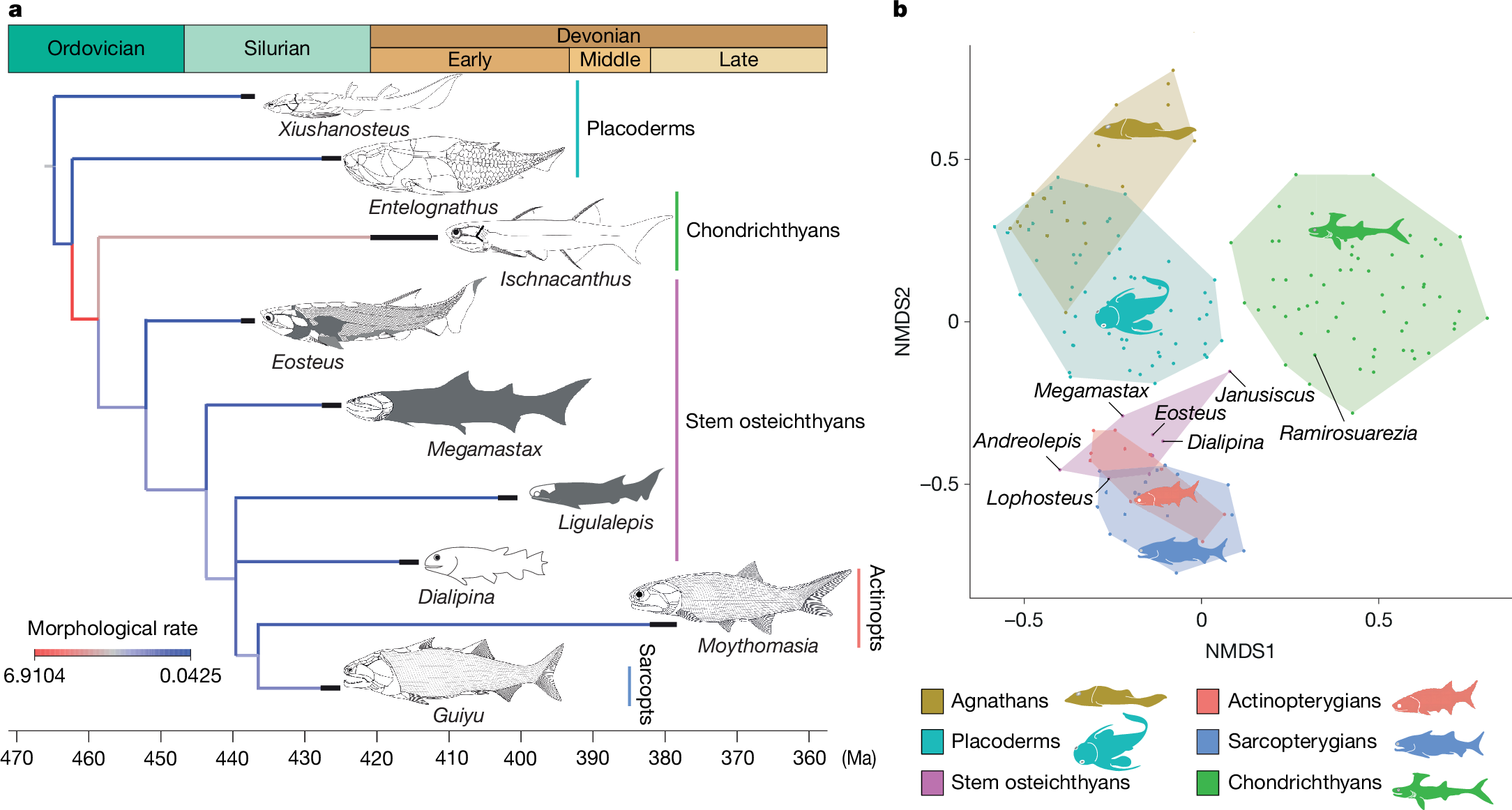
- •Phylogenetic analyses place it on the osteichthyan stem, increasing Silurian diversity and supporting a more extensive early radiation of bony fishes.
- •The discovery implies greater morphological disparity among early osteichthyans than previously recognized, reshaping understanding of jawed vertebrate evolution.
Tags
Abstract
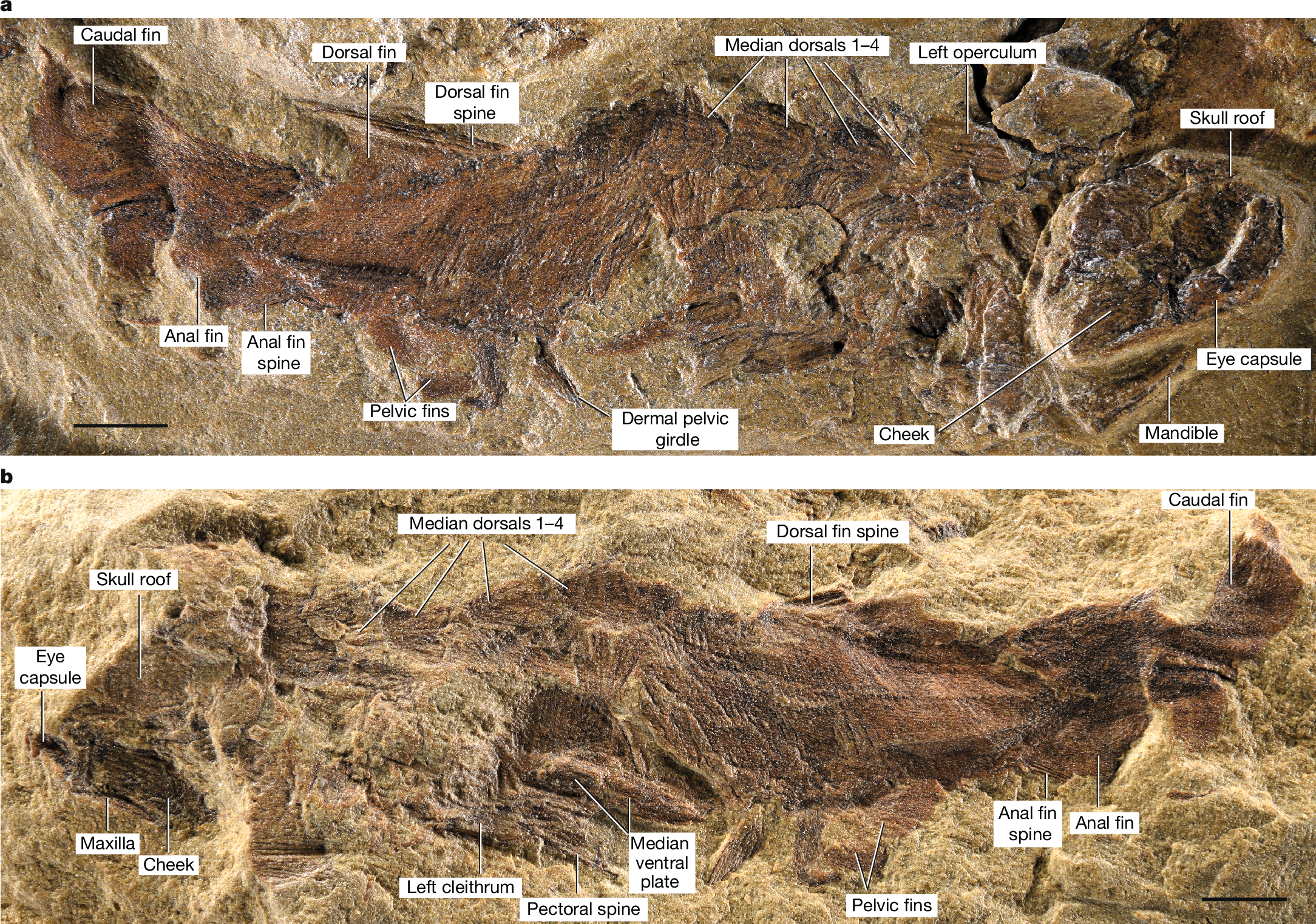
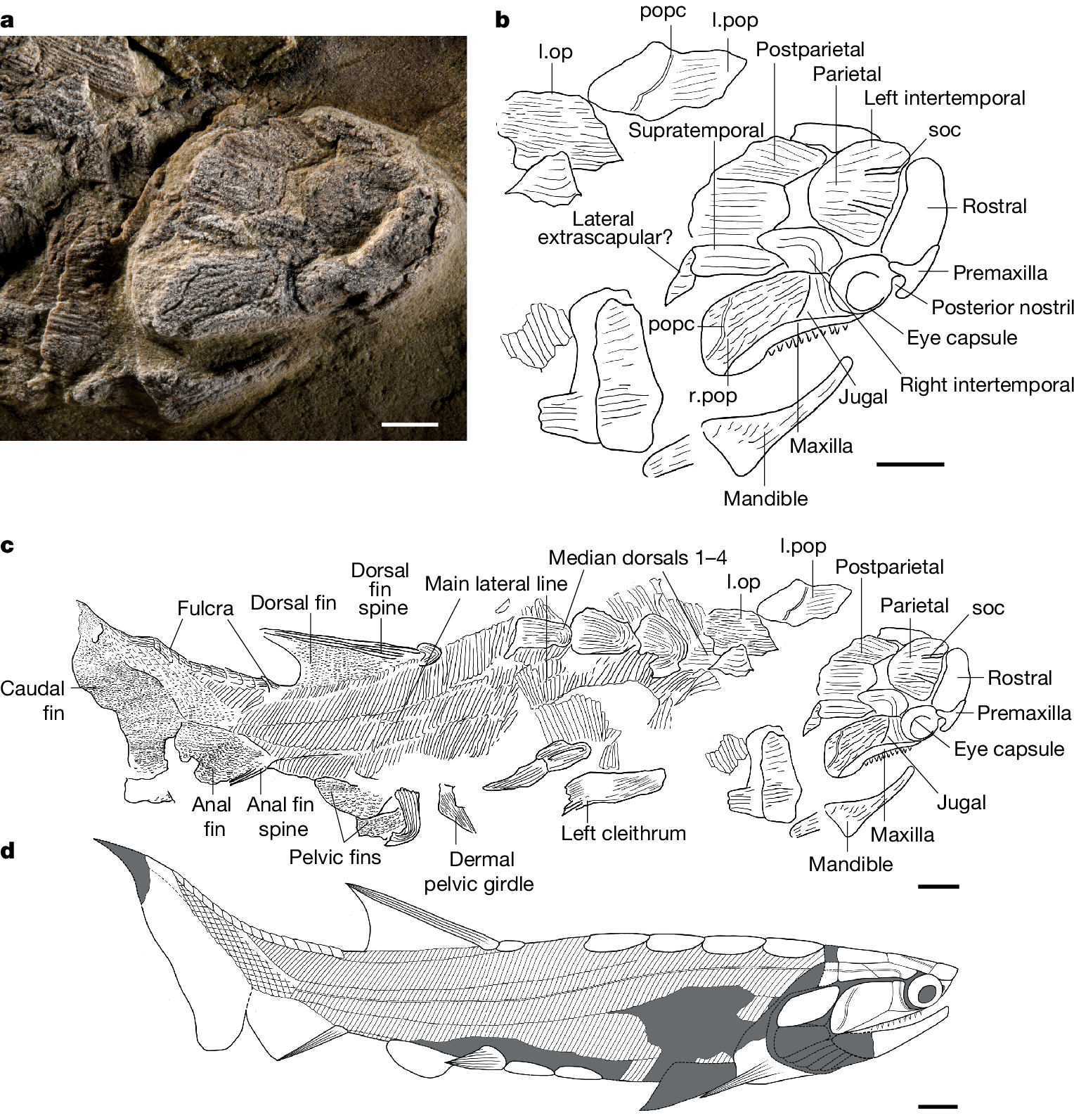
Osteichthyans, comprising sarcopterygians and actinopterygians, dominate modern vertebrate biodiversity1,2,3, yet their pre-Devonian fossil record remains scarce and fragmentary4,5. The oldest articulated sarcopterygian6 and stem osteichthyan7 date to the late Silurian, whereas undisputed actinopterygian fossils in articulation appear only in the Middle Devonian8. Here we report an articulated, near-complete osteichthyan from the early Silurian Chongqing Lagerstätte (approximately 436 million years ago)9,10,11, representing the oldest osteichthyan occurrence including microfossils. This tiny fish exhibits a fusiform, generalized osteichthyan body outline, with plesiomorphic osteichthyan characters, including the lack of lepidotrichia and the presence of serial median dorsal plates, pectoral and dorsal fin spines and an anal fin spine reported previously exclusively in stem chondrichthyans12 and one placoderm13. It also displays features, such as a single dorsal fin and caudal fulcra, seen commonly in actinopterygians. Bayesian inference and the 50% majority rule consensus of the maximum-parsimony analysis place the new fish on the osteichthyan stem, whereas the strict consensus leaves its position unresolved within osteichthyans. This discovery increases Silurian osteichthyan diversity and further populates the osteichthyan stem group. The morphological disparity among early osteichthyans implies a more extensive Silurian to Early Devonian radiation of bony fishes than previous lines of evidence suggested.
Access Nature and 54 other Nature Portfolio journals
Get Nature+, our best-value online-access subscription
$32.99 / 30 days
cancel any time
Subscribe to this journal
Receive 51 print issues and online access
$199.00 per year
only $3.90 per issue
Buy this article
- Purchase on SpringerLink
- Instant access to the full article PDF.
USD 39.95
Prices may be subject to local taxes which are calculated during checkout
Data availability
All data analysed in this paper, including the phylogenetic datasets, are available as part of the Article, Extended Data Figs. 1–8 and the Supplementary Information. Supplementary Data 1–7 are available at Figshare (https://doi.org/10.6084/m9.figshare.28881827)53. The time ranges for each fossil taxa derived from the DEEPBONE database (www.deepbone.org). The nomenclature described in this publication has been registered at ZooBank (https://zoobank.org/References/4631593F-F077-484A-B7F6-32DFEB92E22C). All specimens described in this study are archived and available on request from the IVPP, Chinese Academy of Sciences, Beijing, China.
References
Brazeau, M. D. & Friedman, M. The origin and early phylogenetic history of jawed vertebrates. Nature 520, 490–497 (2015).
Friedman, M. & Brazeau, M. D. A reappraisal of the origin and basal radiation of the Osteichthyes. J. Vertebr. Paleontol. 30, 36–56 (2010).
Friedman, M. & Sallan, L. C. Five hundred million years of extinction and recovery: a Phanerozoic survey of large-scale diversity patterns in fishes. Palaeontology 55, 707–742 (2012).
Botella, H. et al. Jaws and teeth of the earliest bony fishes. Nature 448, 583–586 (2007).
Chen, D.-L. et al. The stem osteichthyan Andreolepis and the origin of tooth replacement. Nature 539, 237–241 (2016).
Zhu, M. et al. The oldest articulated osteichthyan reveals mosaic gnathostome characters. Nature 458, 469–474 (2009).