Pesticide residues alter taxonomic and functional biodiversity in soils
TL;DR
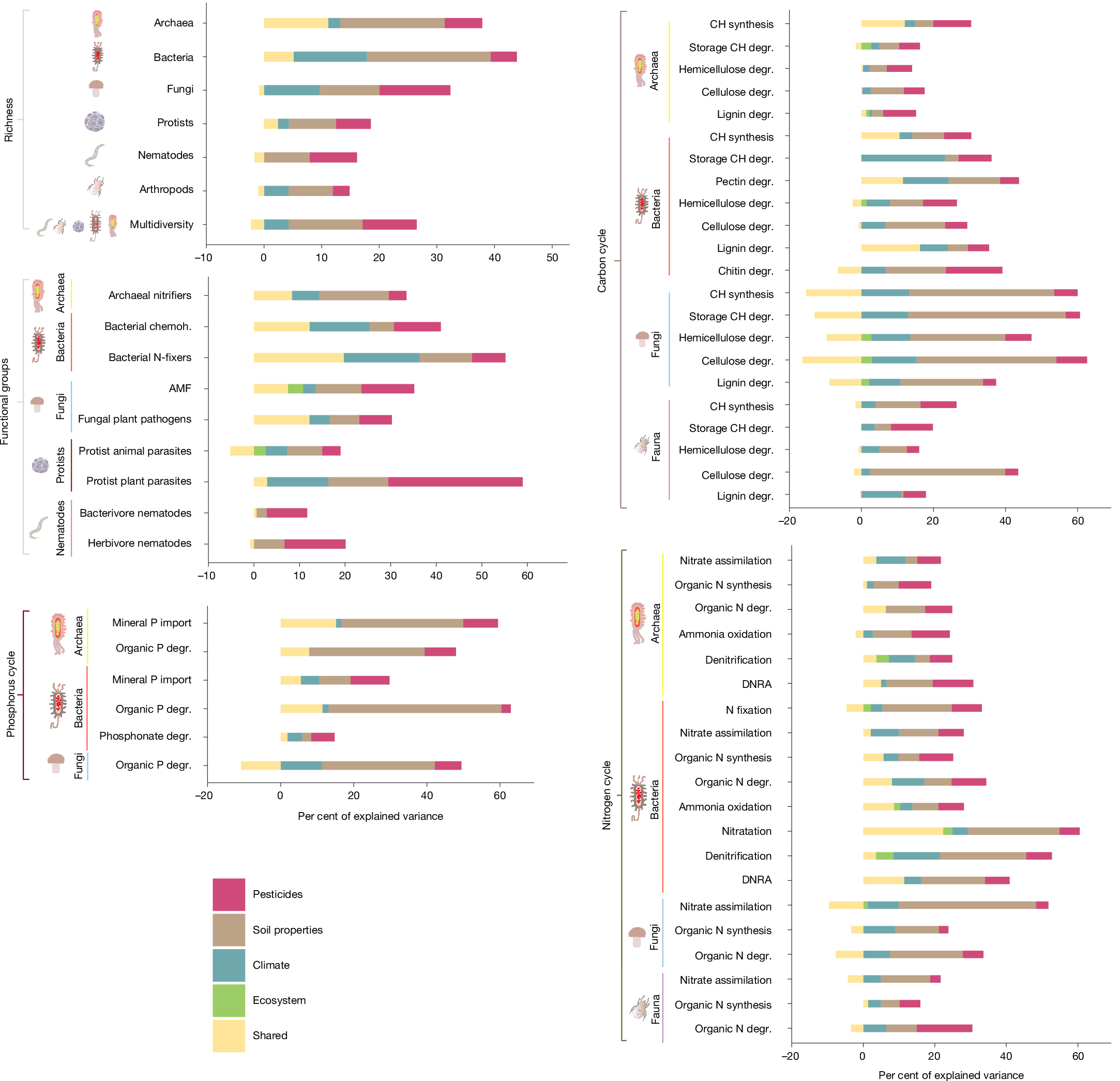
Pesticide residues, found in 70% of 373 European sites, are the second strongest driver of soil biodiversity after soil properties, altering microbial functions and suppressing beneficial taxa like arbuscular mycorrhizal fungi.
Key Takeaways
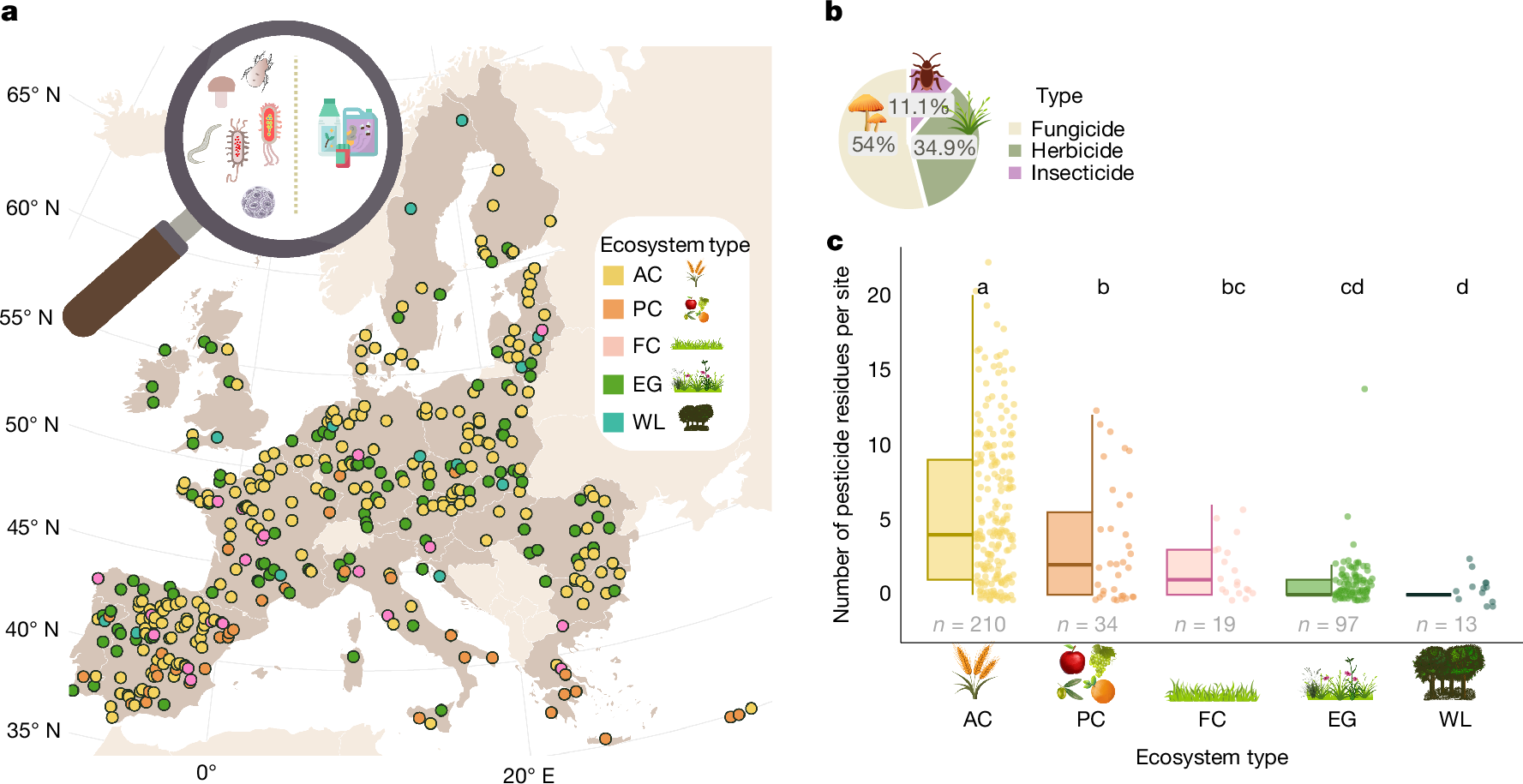
- •Pesticide residues were detected in 70% of sites across 26 European countries, making them the second strongest driver of soil biodiversity patterns after soil properties.
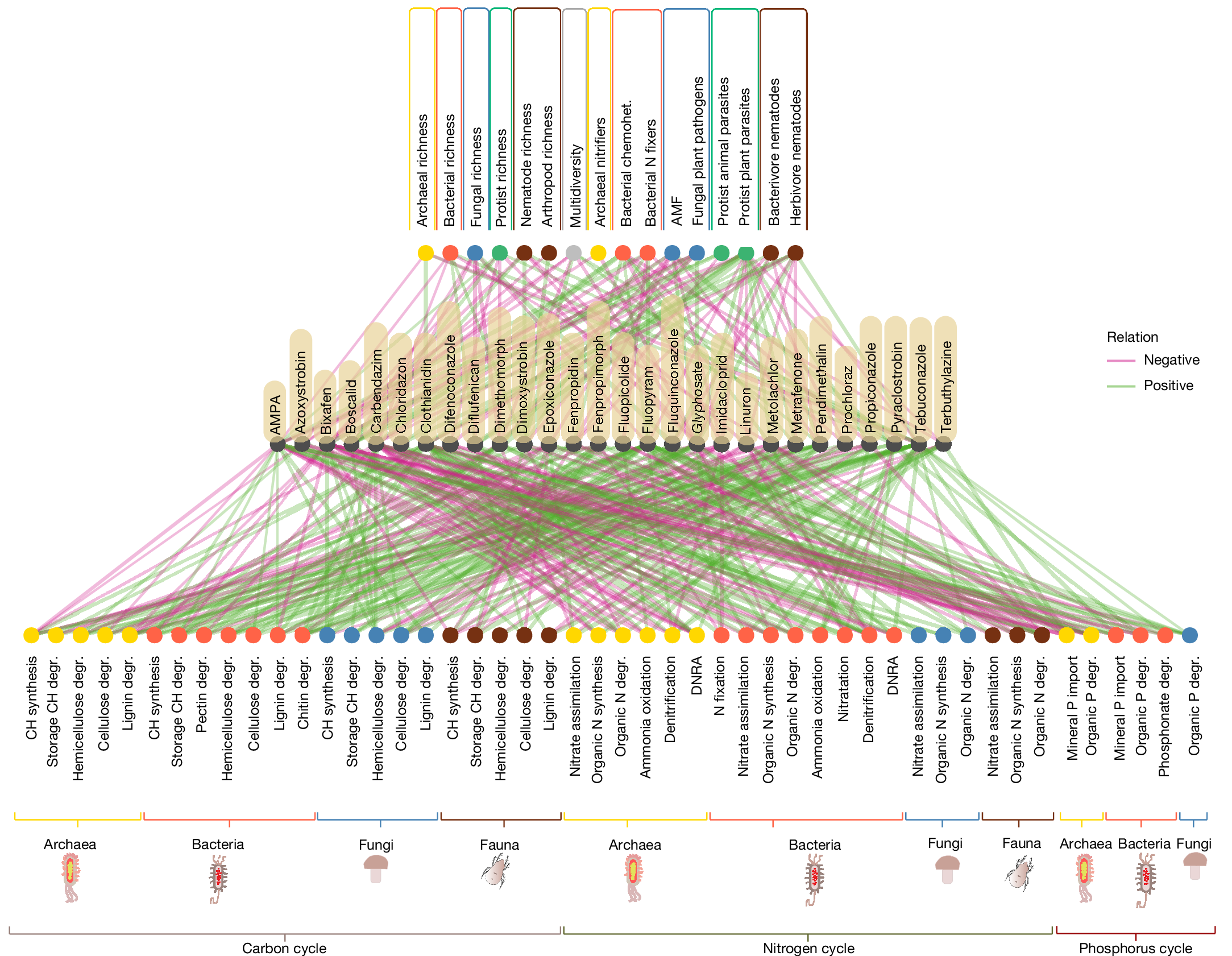
- •Pesticides cause organism- and function-specific effects, altering microbial functions such as phosphorus and nitrogen cycling and suppressing beneficial taxa like arbuscular mycorrhizal fungi and bacterivore nematodes.
- •The study highlights the need to integrate functional and taxonomic characteristics into future risk assessments to protect soil biodiversity and ecosystem functioning.
Tags
Abstract
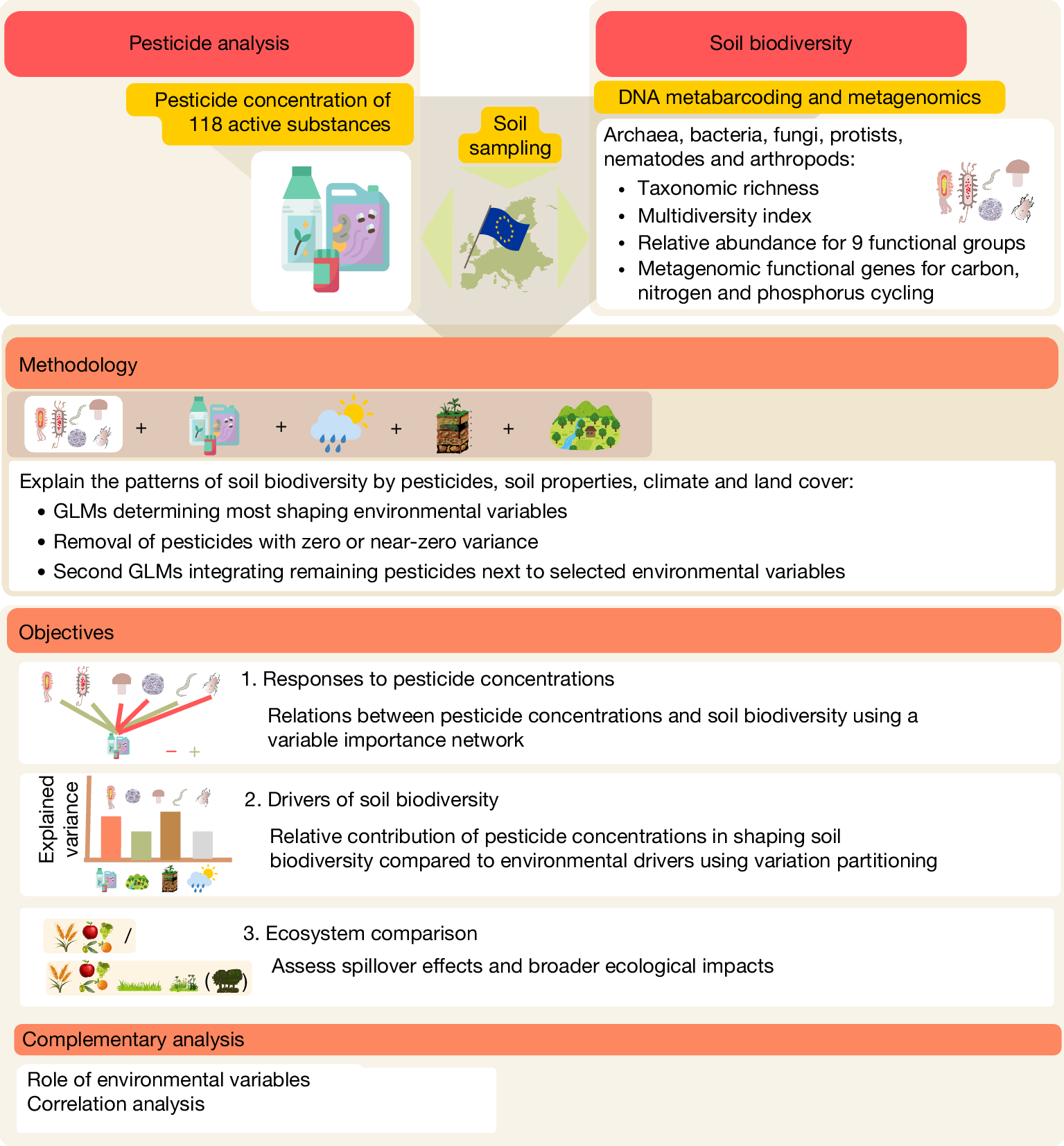
Pesticides are widely distributed in soils1,2,3, yet their effects on soil biodiversity remain poorly understood4,5,6,7. Here we examined the effects of 63 pesticides on soil archaea, bacteria, fungi, protists, nematodes, arthropods and key functional gene groups across 373 sites spanning woodlands, grasslands and croplands in 26 European countries. Pesticide residues were detected in 70% of sites and emerged as the second strongest driver of soil biodiversity patterns after soil properties. Our analysis further revealed organism- and function-specific patterns, emphasizing complex and widespread non-target effects on soil biodiversity. Pesticides altered microbial functions, including phosphorus and nitrogen cycling, and suppressed beneficial taxa, including arbuscular mycorrhizal fungi and bacterivore nematodes. Our findings highlight the need to integrate functional and taxonomic characteristics into future risk assessment methodology to safeguard soil biodiversity, a cornerstone of ecosystem functioning.
Access Nature and 54 other Nature Portfolio journals
Get Nature+, our best-value online-access subscription
$32.99 / 30 days
cancel any time
Subscribe to this journal
Receive 51 print issues and online access
$199.00 per year
only $3.90 per issue
Buy this article
- Purchase on SpringerLink
- Instant access to the full article PDF.
USD 39.95
Prices may be subject to local taxes which are calculated during checkout
Global variation in plant-beneficial bacteria in soil under pesticide stress
The soil microbiome as an indicator of ecosystem multifunctionality in European soils
Soil biodiversity effects on ecosystems
Data availability
Pesticide data supporting this study are available from European Soil Data Centre (ESDAC) (https://esdac.jrc.ec.europa.eu/content/pesticides-and-soil-biodiversity), subject to registration and a data sharing agreement, owing to the confidential nature of the measurements. The Pesticide Properties Database is accessible at https://sitem.herts.ac.uk/aeru/ppdb/. The database from the Herbicide Resistance Action Committee (HRAC) is accessible at https://hracglobal.com/files/2024-HRAC-GLOBAL-HERBICIDE-MOA-CLASSIFICATION-POSTERold.pdf, the database from the Fungicide Resistance Action Committee (FRAC) is accessible at https://www.frac.info/fungicide-resistance-management/by-frac-mode-of-action-group/#open-tour, and the one from Insecticide Resistance Action Committee (IRAC) is accessible at https://irac-online.org/mode-of-action/. The raw data (DNA sequences) generated in this study have been deposited in the Sequence Read Archive (SRA) database under BioProject ID PRJNA1118194 for archaeal 16S data, BioProject ID PRJNA952168 for bacterial 16S and fungal ITS data, BioProject ID PRJNA985135 for eukaryotic 18S data and BioProject ID PRJNA1032917 for metagenomic data. The Global database of soil nematodes is available at https://github.com/hooge104/2020_global_nematode_dataset/blob/master/data/nematode_full_dataset_wBiome.csv. The sampling site environmental metadata used in this study are available from ESDAC (https://esdac.jrc.ec.europa.eu/content/soil-biodiversity-dna-eukaryotes).
Code availability
All R scripts relating pesticide analysis to soil biodiversity are available from ESDAC (https://esdac.jrc.ec.europa.eu/content/pesticides-and-soil-biodiversity).
References
Vieira, D. et al. Pesticides Residues in European Agricultural Soils - Results from LUCAS 2018 Soil Module (European Union, 2023).
Riedo, J. et al. Concerted evaluation of pesticides in soils of extensive grassland sites and organic and conventional vegetable fields facilitates the identification of major input processes. Environ. Sci. Technol. 56, 13686–13695 (2022).
Liu, Y.-R. et al. Soil contamination in nearby natural areas mirrors that in urban greenspaces worldwide. Nat. Commun. 14, 1706 (2023).