A hidden diversity of ceratopsian dinosaurs in Late Cretaceous Europe
TL;DR
New analysis of Ajkaceratops confirms it as a ceratopsian, revealing that some 'rhabdodontid' dinosaurs in Late Cretaceous Europe were actually horned dinosaurs, indicating a hidden diversity and challenging previous views of European dinosaur evolution.
Key Takeaways
- •Ajkaceratops from Hungary is confirmed as a ceratopsian, providing the first definite evidence of horned dinosaurs in Late Cretaceous Europe.
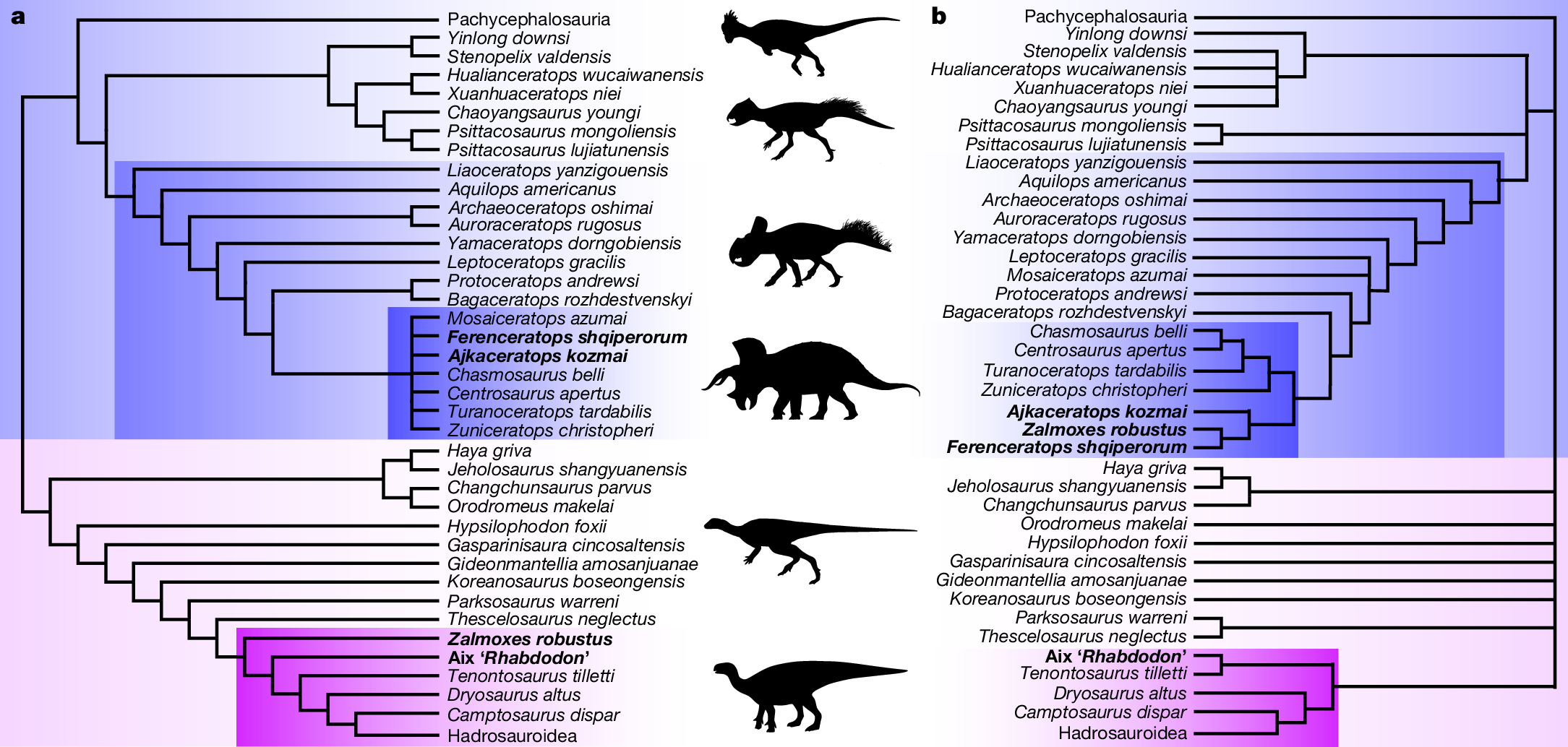
- •Some taxa previously classified as 'rhabdodontid' iguanodontians are actually ceratopsians, suggesting a previously unrecognized diversity of European horned dinosaurs.
- •The co-occurrence of iguanodontians and ceratopsians in Europe indicates greater similarity to other Laurasian ecosystems than previously thought.
- •These findings challenge conventional understanding of ornithischian dinosaur evolution and necessitate a re-evaluation of Late Cretaceous European herbivorous dinosaur assemblages.
Tags
Abstract
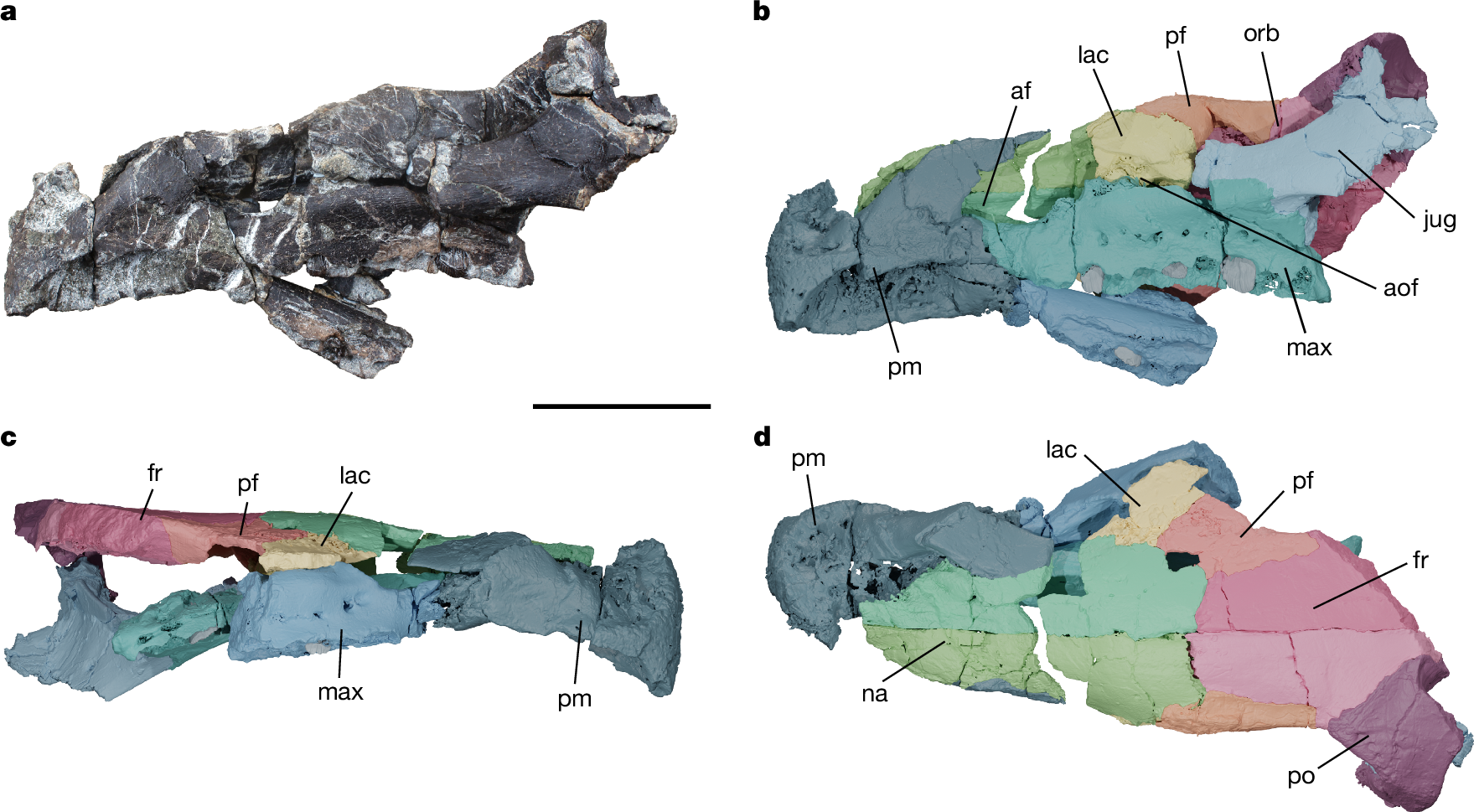
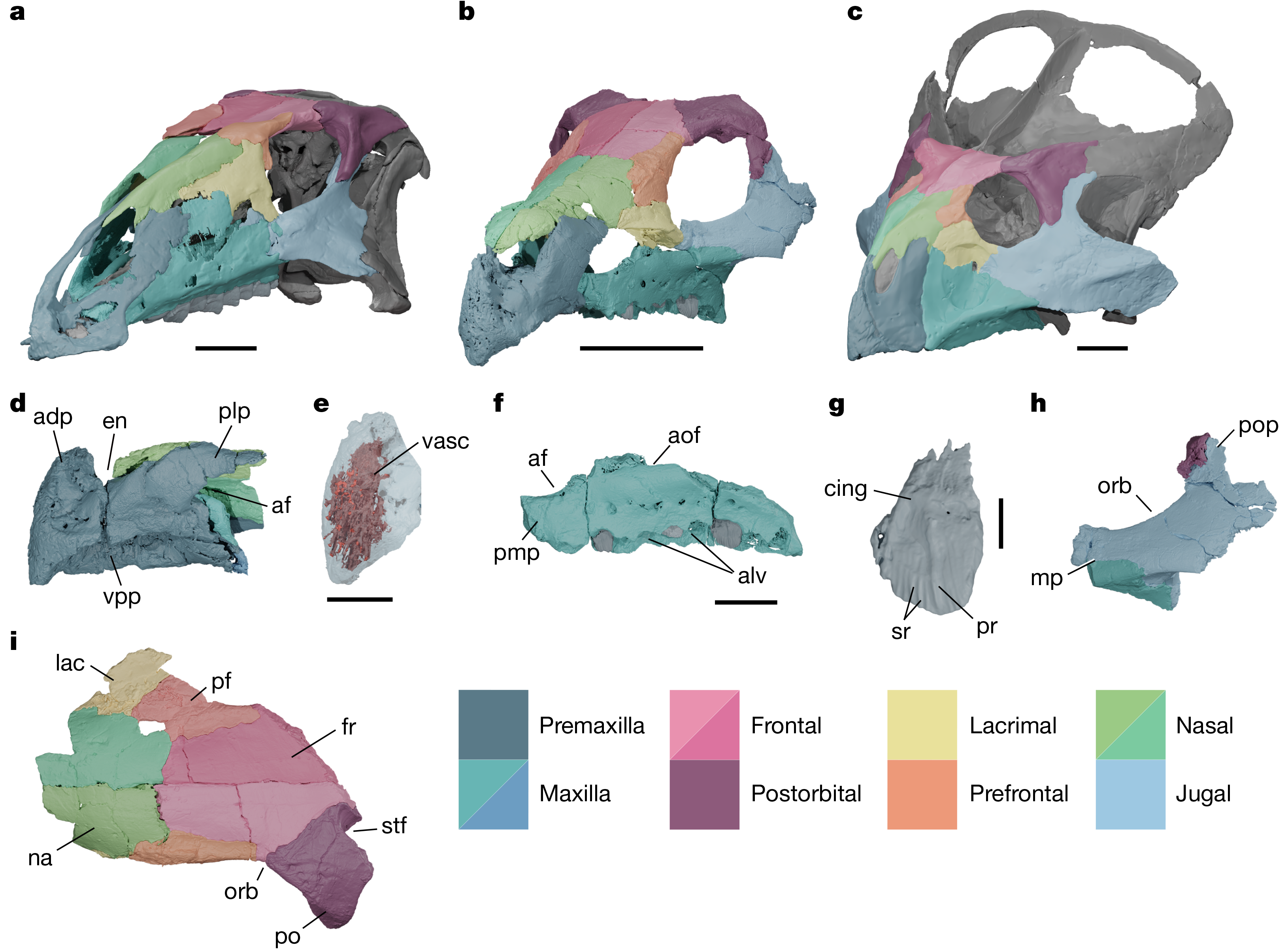
Late Cretaceous Europe was an archipelago with a dinosaur fauna characterized by island effects such as low diversity, relictualism and insular dwarfism1. Its dinosaur communities include a unique mix of groups with typical Laurasian or Gondwanan affinities and distinctive endemics1. Chief among the latter are rhabdodontids, considered to be early-branching iguanodontians characterized by unusual dental and postcranial features and known from abundant but very incomplete fossil remains2,3. By contrast, unequivocal evidence of horned dinosaurs (ceratopsians) is puzzlingly absent4, despite their ubiquitous occurrence in contemporary ecosystems of Asia and North America. Ajkaceratops from the Late Cretaceous of Hungary was described as the first definite ceratopsian from Europe5, but this identification has been strongly disputed4. Here we describe new material of Ajkaceratops and conduct phylogenetic analyses that support its ceratopsian affinities. Our results unexpectedly demonstrate that some ‘rhabdodontid’ taxa are not, in fact, iguanodontians but actually ceratopsians. This suggests a substantial but previously hidden diversity and evolutionary history of European horned dinosaurs, and co-occurrence of iguanodontians and ceratopsians indicates greater similarity than previously appreciated to other Laurasian ecosystems. Our results challenge conventional understanding of ornithischian dinosaur evolution and indicate the need for a fundamental re-evaluation of the Late Cretaceous herbivorous dinosaur assemblages of Europe.
Access Nature and 54 other Nature Portfolio journals
Get Nature+, our best-value online-access subscription
$32.99 / 30 days
cancel any time
Subscribe to this journal
Receive 51 print issues and online access
$199.00 per year
only $3.90 per issue
Buy this article
- Purchase on SpringerLink
- Instant access to the full article PDF.
USD 39.95
Prices may be subject to local taxes which are calculated during checkout
Exploring the diversity and disparity of rhabdodontomorph ornithopods from the Late Cretaceous European archipelago
First titanosaur dinosaur nesting site from the Late Cretaceous of Brazil
A fast-growing basal troodontid (Dinosauria: Theropoda) from the latest Cretaceous of Europe
Data availability
Raw μCT of MTM 2025.1.1 has been reposited in Zenodo60 (https://doi.org/10.5281/zenodo.17098636). All other data, including phylogenetic matrices, are available in the Supplementary Information.
References
Csiki-Sava, Z., Buffetaut, E., Ősi, A., Pereda-Suberbiola, X. & Brusatte, S. L. Island life in the Cretaceous — faunal composition, biogeography, evolution, and extinction of land-living vertebrates on the Late Cretaceous European archipelago. Zookeys 469, 1–161 (2015).
Weishampel, D. B., Jianu, C.-M., Csiki, Z. & Norman, D. B. Osteology and phylogeny of Zalmoxes (n. g.), an unusual euornithopod dinosaur from the latest Cretaceous of Romania. J. Syst. Palaeontol. 1, 65–123 (2003).
Augustin, F., Ősi, A. & Csiki-Sava, Z. The Rhabdodontidae (Dinosauria, Ornithischia), an enigmatic dinosaur group endemic to the Late Cretaceous European Archipelago. Fossil Rec. 26, 171–189 (2023).
Czepiński, Ł & Madzia, D. Osteology, phylogenetic affinities, and palaeobiogeographic significance of the bizarre ornithischian dinosaur Ajkaceratops kozmai from the Late Cretaceous European archipelago. Zoo. J. Linn. Soc. 202, 1–25 (2024).
Ősi, A., Butler, R. J. & Weishampel, D. B. A Late Cretaceous ceratopsian dinosaur from Europe with Asian affinities. Nature 465, 466–468 (2010).