Cavity-driven attractive interactions in quantum materials
Abstract
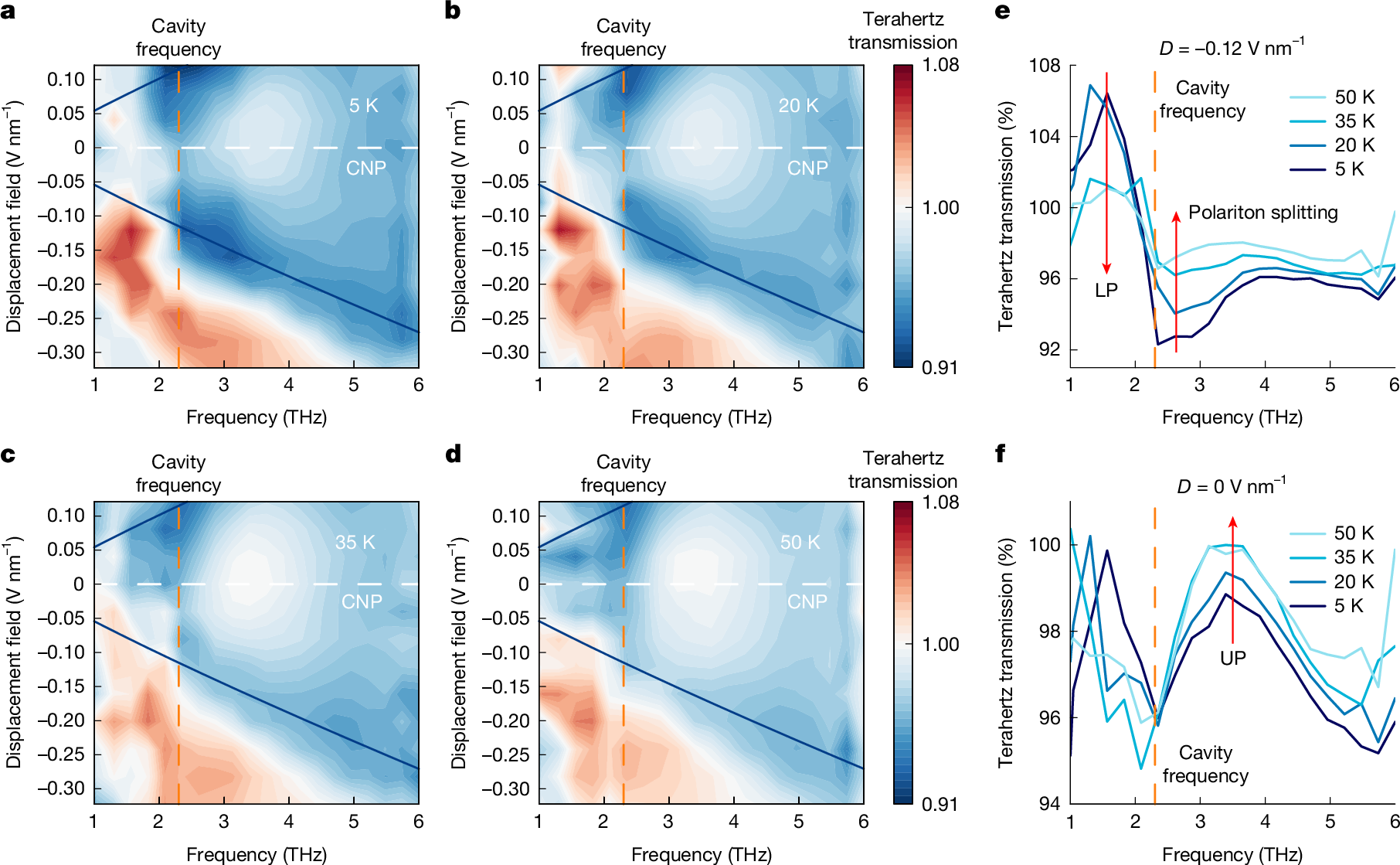
Many-body phenomena in quantum materials emerge from the interplay among a broad continuum of electronic states and controlling these interactions is critical for engineering new phases. One promising approach exploits light confined within optical cavities to tailor electronic properties1. Here we demonstrate that terahertz cavity photons can mediate attractive interactions in a tunable van der Waals (vdW) material and reorganize a continuum of electron–hole transitions into an exciton-like state. We introduce a broadband, sub-wavelength time-domain microscope that integrates exfoliated, dual-gated 2D quantum materials into a terahertz cavity. This approach enables the spectroscopic measurement of the field-tunable bandgap of bilayer graphene2 (BLG) in the terahertz range and, at resonance, reveals ultrastrong coupling3 (USC) with an effective interaction strength exceeding g/ωc ≈ 40% of the bare photon energy. Crucially, we identify a cavity-induced resonance emerging from the interband continuum that resembles Coulomb-bound excitons and remains stable across a broad temperature range. Our findings propose an experimental platform for designing and investigating hybrid light–matter phases in 2D quantum matter.
Access Nature and 54 other Nature Portfolio journals
Get Nature+, our best-value online-access subscription
$32.99 / 30 days
cancel any time
Subscribe to this journal
Receive 52 print issues and online access
$199.00 per year
only $3.83 per issue
Buy this article
- Purchase on SpringerLink
- Instant access to the full article PDF.
USD 39.95
Prices may be subject to local taxes which are calculated during checkout
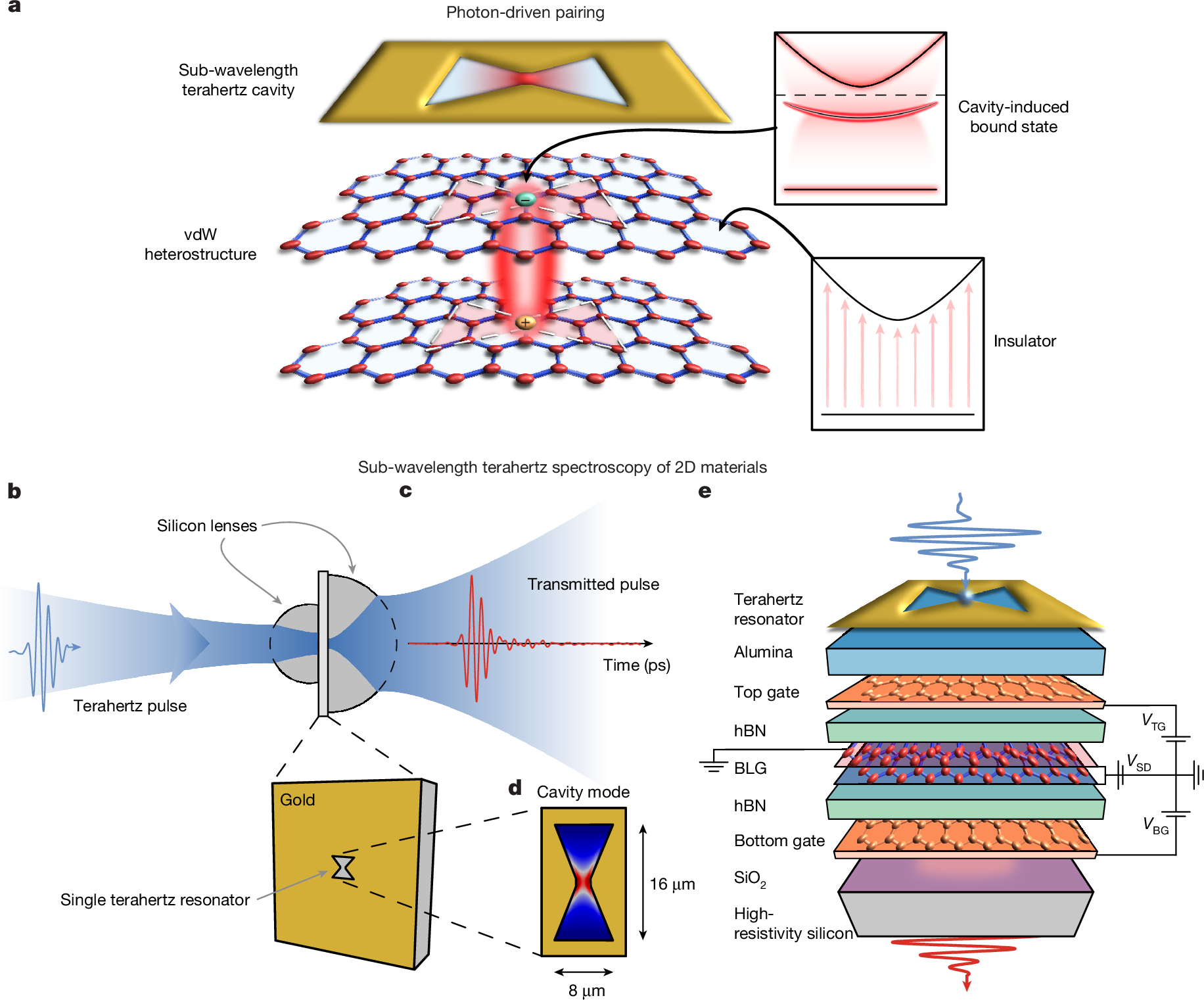 The alternative text for this image may have been generated using AI.
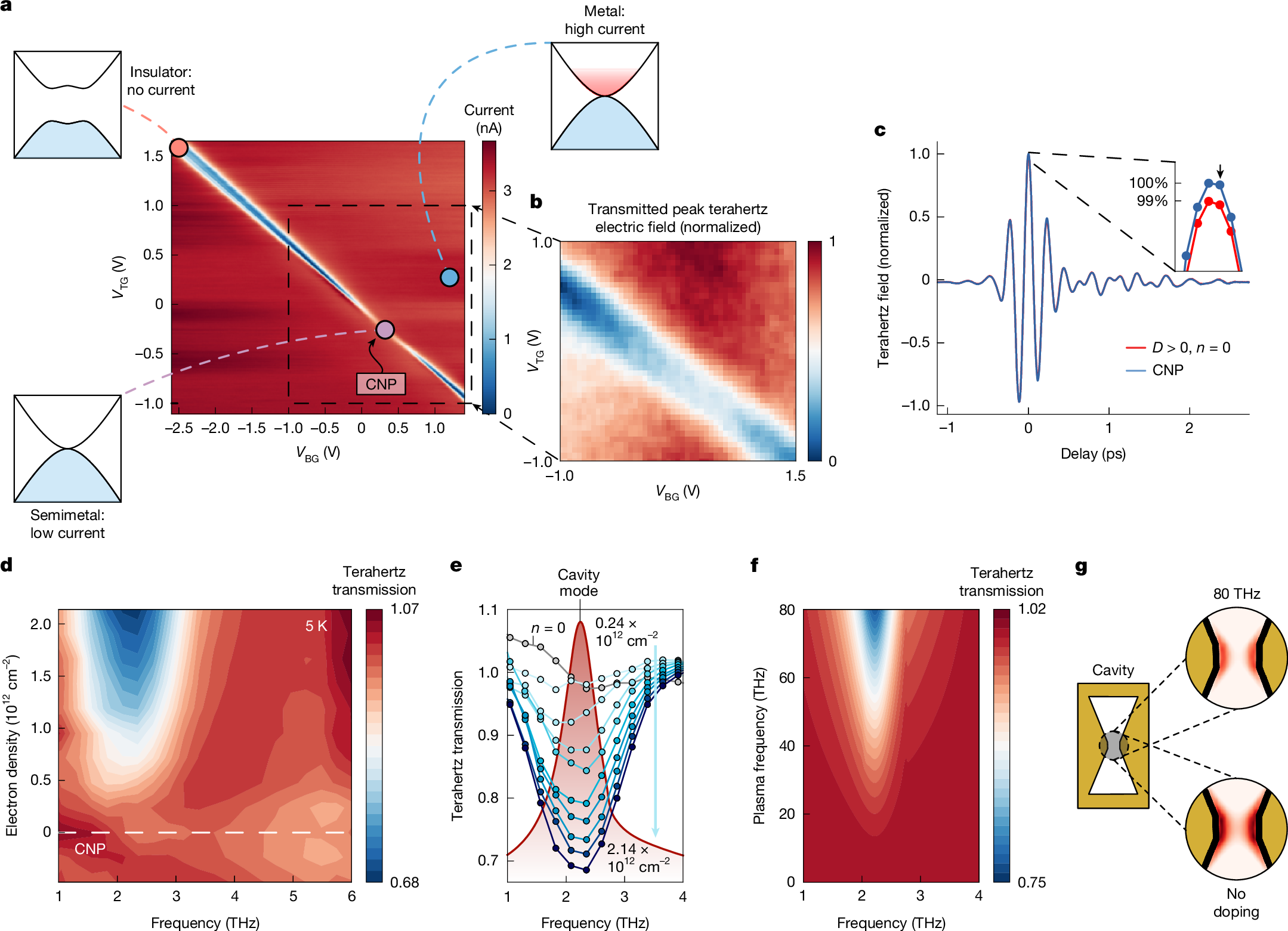 The alternative text for this image may have been generated using AI.
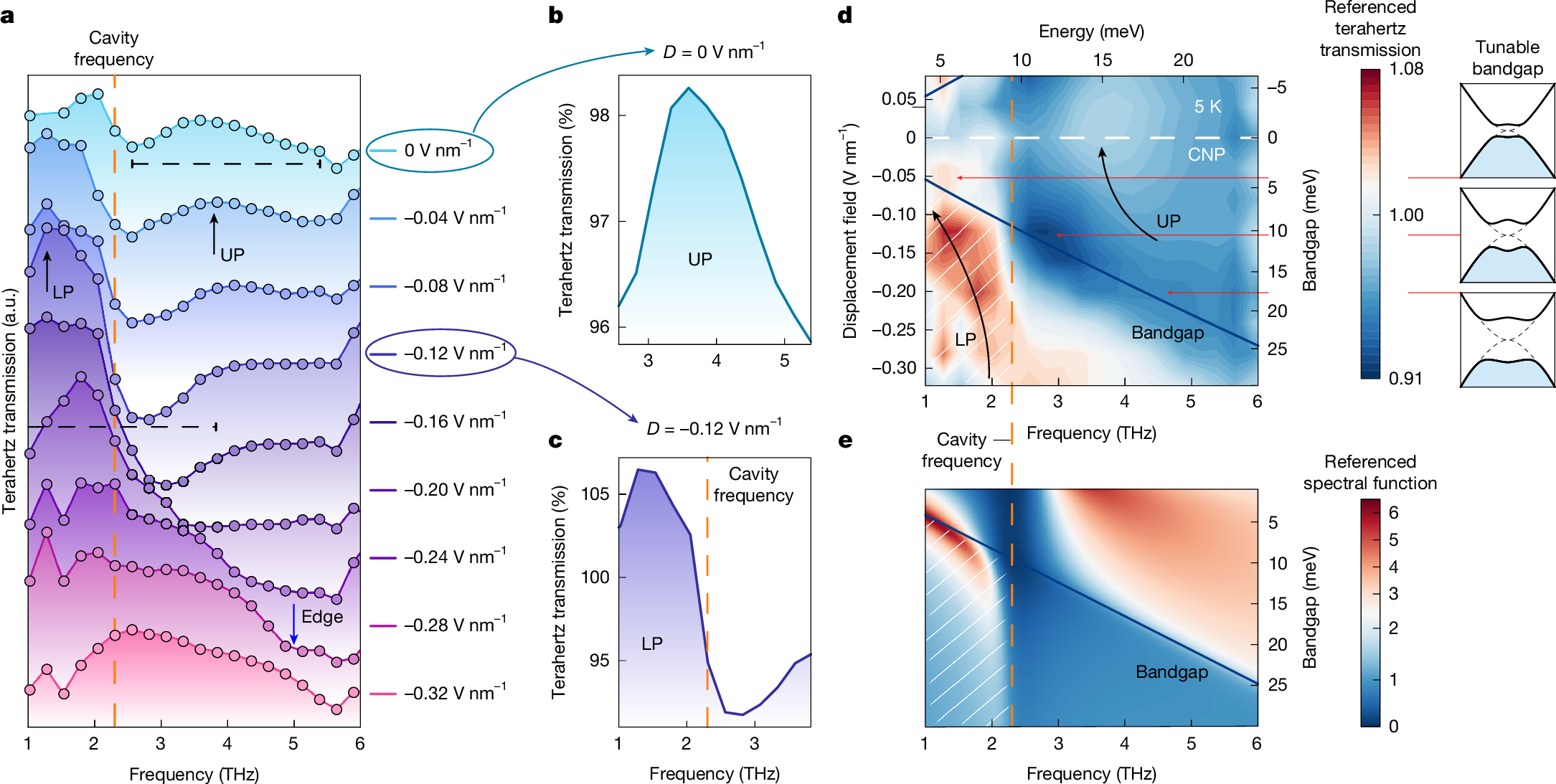 The alternative text for this image may have been generated using AI.
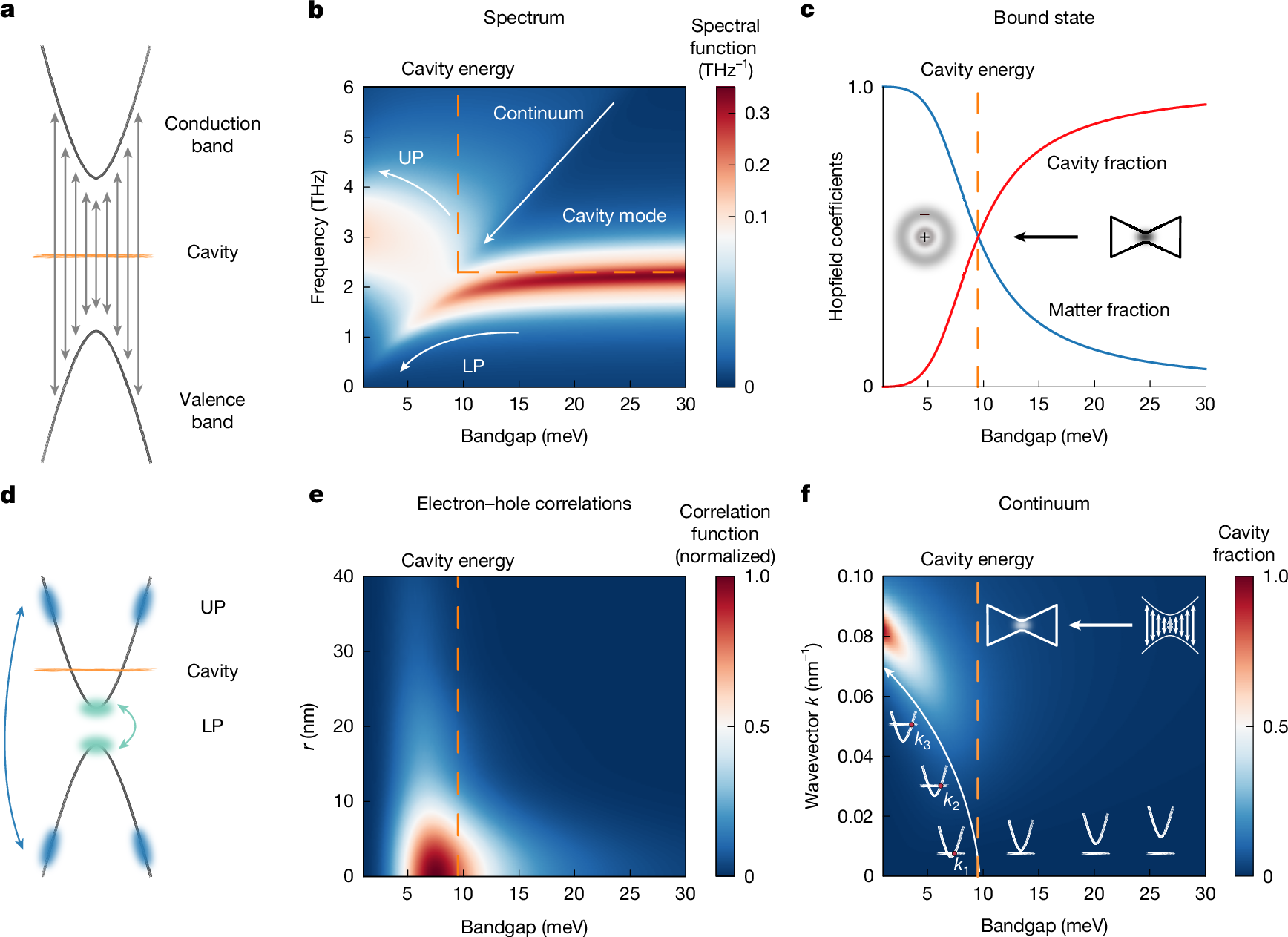 The alternative text for this image may have been generated using AI.
 The alternative text for this image may have been generated using AI.
Similar content being viewed by others
Cavity-mediated thermal control of metal-to-insulator transition in 1T-TaS2
Electro-optic cavities for in-situ measurement of cavity fields
Purcell enhancement of directional edge photocurrent in a van der Waals self-cavity
Data availability
The numerical simulations and measurement datasets underlying the figures in this paper are available from the corresponding author on request. The raw data that support the findings of this article are also available in the ETH Research Collection (https://doi.org/10.3929/ethz-c-000797558).
Code availability
The code used in the theoretical part of this study is available from the corresponding author on request and in the ETH Research Collection (http://doi.org/10.5905/ethz-1007-932).
References
Lu, I.-T. et al. Cavity engineering of solid-state materials without external driving. Adv. Opt. Photonics 17, 441–525 (2025).
Zhang, Y. et al. Direct observation of a widely tunable bandgap in bilayer graphene. Nature 459, 820–823 (2009).
Kockum, A. F., Miranowicz, A., De Liberato, S., Savasta, S. & Nori, F. Ultrastrong coupling between light and matter. Nat. Rev. Phys. 1, 19–40 (2019).
Disa, A. S., Nova, T. F. & Cavalleri, A. Engineering crystal structures with light. Nat. Phys. 17, 1087–1092 (2021).
Lu, I. et al. Cavity-enhanced superconductivity in MgB2 from first-principles quantum electrodynamics (QEDFT). Proc. Natl Acad. Sci. USA 121, e2415061121 (2024).