Enantioselective hydrogen atom relay via non-covalent catalyst assembly
Abstract
Most biological functions are regulated by chiral molecules1 that contain at least one tertiary stereogenic carbon, i.e., a carbon with one C(sp3)–H bond. Hydrogen Atom Transfer (HAT)2 is a straightforward strategy to either edit3 or introduce tertiary stereocenters in multiple synthetically useful transformations,4 especially when coupled with photoredox catalysis.5,6 However, traditional de novo designs of chiral HAT catalysts that provide sufficient enantiocontrol over short-lived open-shell intermediates,7 have represented a major hurdle for the development of enantioselective HAT reactions. Here, we describe a distinct approach in which chiral HAT catalysts are obtained in situ by non-covalent self-assembly of privileged chiral phosphoric acids and commercial 2-mercaptopyridines. The phosphoric acid serves as a modular interchangeable chiral element that renders the achiral thiol effectively chiral, thereby allowing for a previously inaccessible combinatorial space of chiral HAT catalysts. This platform enabled the photochemical deracemization of 2-aryl pyrrolidines, a prevalent scaffold in active pharmaceutical ingredients. Optical enrichment occurs via enantioselective hydrogen atom relay, in which a single chiral assembly orchestrates hydrogen atom abstraction and delivery. This conceptual approach of relaying chiral information via non-covalent assembly paves the way for the discovery of numerous asymmetric radical transformations.
Access Nature and 54 other Nature Portfolio journals
Get Nature+, our best-value online-access subscription
$32.99 / 30 days
cancel any time
Subscribe to this journal
Receive 52 print issues and online access
$199.00 per year
only $3.83 per issue
Prices may be subject to local taxes which are calculated during checkout
Chiral phosphoric acid-catalyzed asymmetric epoxidation of alkenyl aza-heteroarenes using hydrogen peroxide
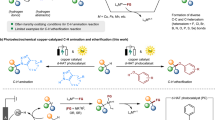
Copper-catalyzed C(sp3)−H amination and etherification of unactivated hydrocarbons via photoelectrochemical pathway
Author information
Authors and Affiliations
Laboratory of Asymmetric Catalysis and Synthesis, Institute of Chemical Sciences and Engineering, Ecole Polytechnique Fédérale de Lausanne, Lausanne, Switzerland
Navadheer Yalamanchili, Jules Hugo Alexandre, Robert L. Anderson & Giuseppe Zuccarello
- Navadheer Yalamanchili
Search author on:PubMed Google Scholar
- Jules Hugo Alexandre
Search author on:PubMed Google Scholar
- Robert L. Anderson
Search author on:PubMed Google Scholar
- Giuseppe Zuccarello
Search author on:PubMed Google Scholar
Corresponding author
Correspondence to Giuseppe Zuccarello.
Supplementary information
Supplementary Information (download PDF )
This Supplementary Information file contains the following sections: Materials and Methods; Preparation of Chiral Phosphoric Acid (S)-CPA-5; Preparation of Racemic 2-Aryl pyrrolidines; Effect of Reaction Parameters; Photochemical Deracemization of 2-Aryl pyrrolidines; Removal of the Urea Protecting Group; Assignments of Absolute Configuration; Mechanistic Studies; Investigation of other amine derivatives; References; and NMR Spectra.