Experimental randomness amplification
Abstract
Realistic quantum information processing devices are inherently imperfect, leading to computational errors that require quantum error correction. Likewise, random bits generated by such devices are flawed and must be enhanced to be usable for applications such as generating cryptographic keys. This enhancement of randomness quality is achieved through a protocol known as randomness amplification1. Here we report on an experiment that implements such a protocol. Randomness amplification is device-independent, making no assumptions about the internal workings of the quantum devices. It requires executing a loophole-free Bell test2,3,4 within a specific parameter regime that involves both a high Bell violation and a high repetition rate. The experimental demonstration is made possible by a combination of theoretical advances, which allow for protocols with an experimentally realistic parameter regime, and experimental progress that achieves this regime with superconducting circuits. Crucially, randomness amplification has been proven to be impossible by purely classical means5. This experiment therefore demonstrates a definitive quantum advantage—leveraging quantum technology to accomplish a task unattainable by classical information processing.
Access Nature and 54 other Nature Portfolio journals
Get Nature+, our best-value online-access subscription
$32.99 / 30 days
cancel any time
Subscribe to this journal
Receive 52 print issues and online access
$199.00 per year
only $3.83 per issue
Buy this article
- Purchase on SpringerLink
- Instant access to the full article PDF.
USD 39.95
Prices may be subject to local taxes which are calculated during checkout
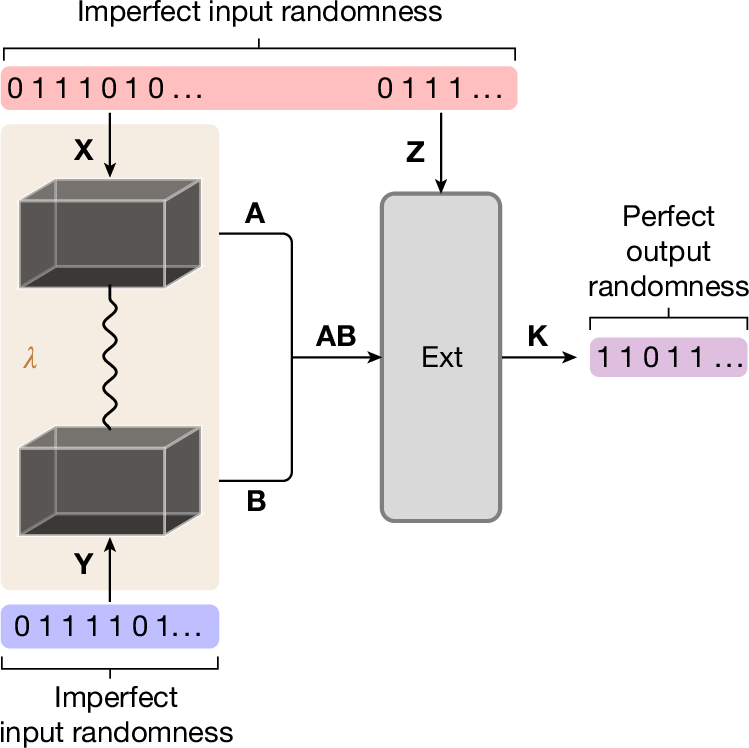 The alternative text for this image may have been generated using AI.
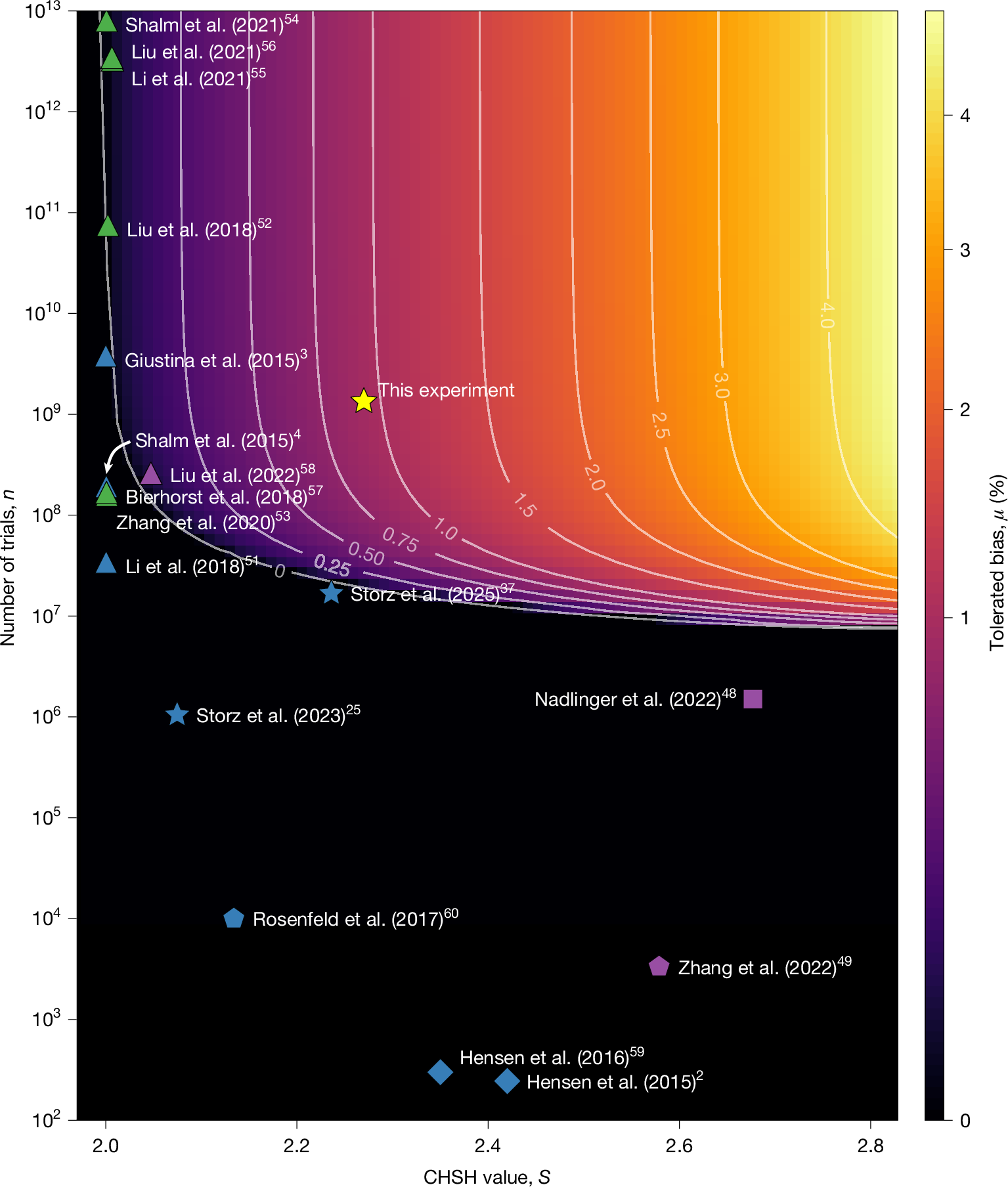 The alternative text for this image may have been generated using AI.
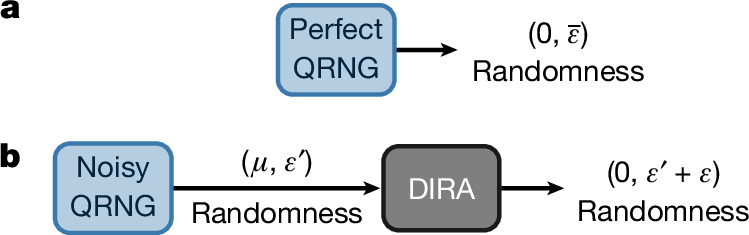 The alternative text for this image may have been generated using AI.
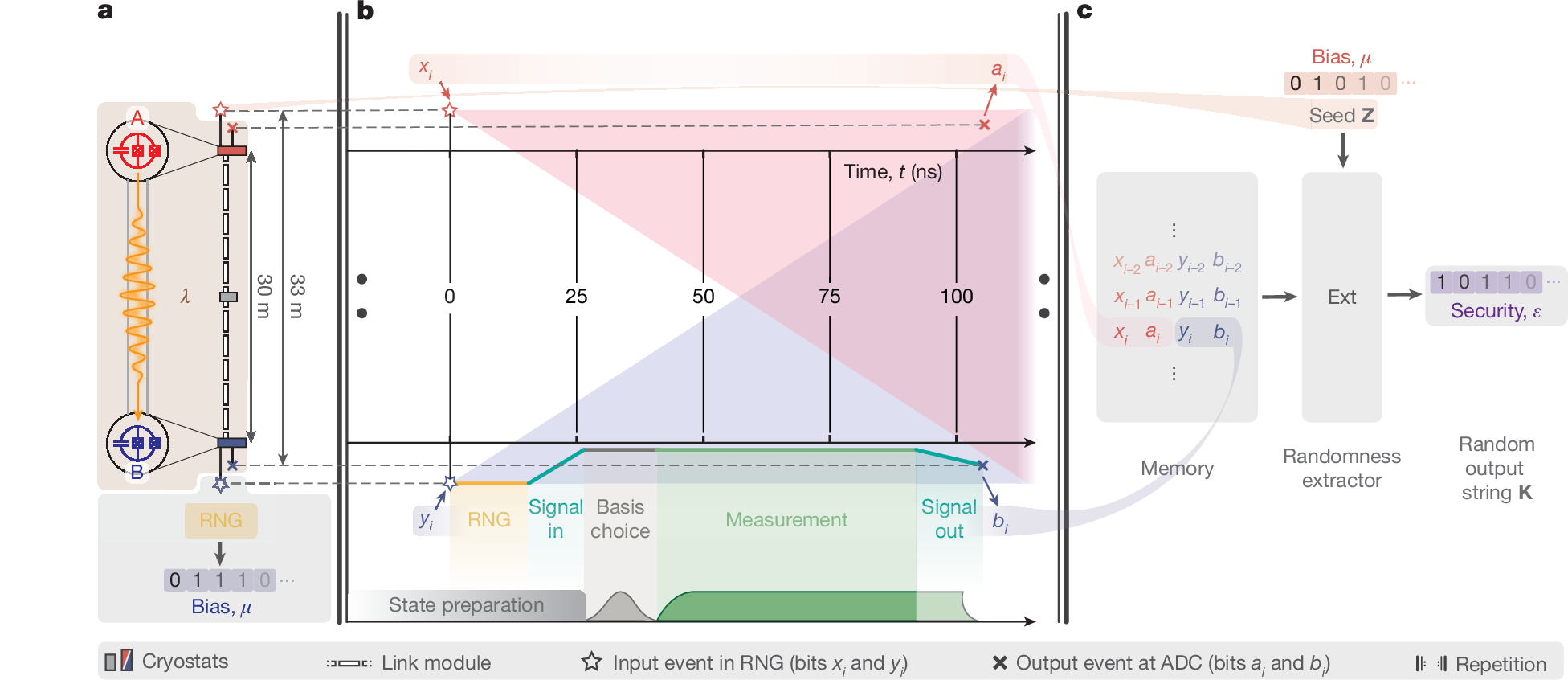 The alternative text for this image may have been generated using AI.
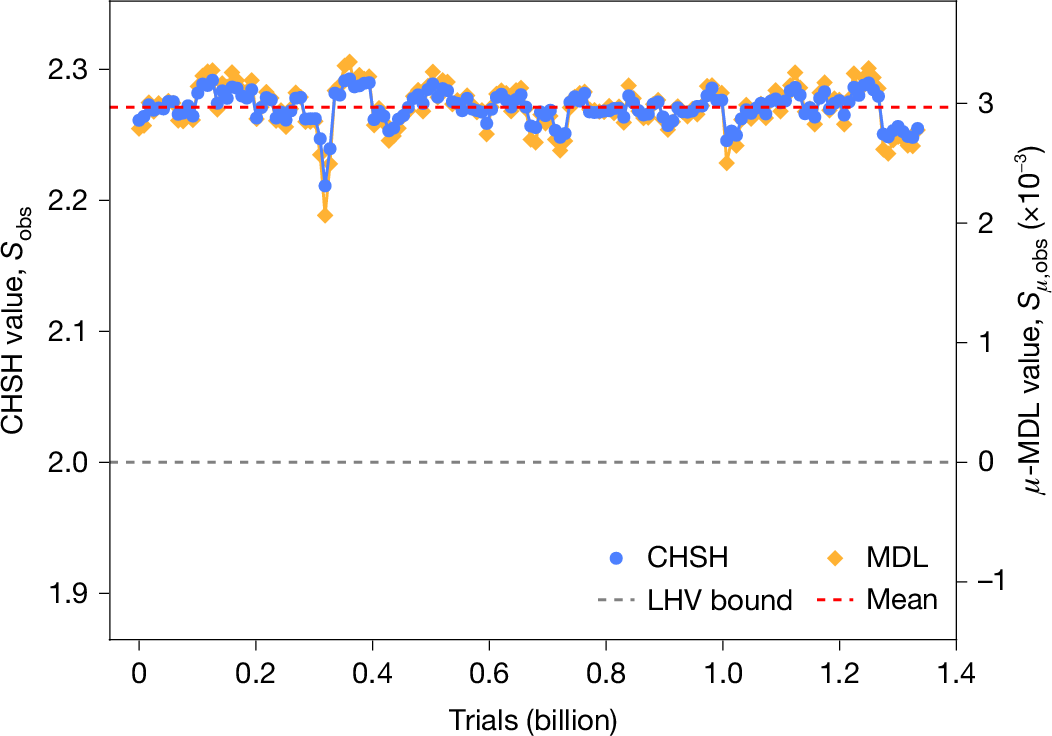 The alternative text for this image may have been generated using AI.
Similar content being viewed by others
Classically verifiable quantum advantage from a computational Bell test
Experimental quantum key distribution certified by Bell's theorem
Certified randomness using a trapped-ion quantum processor
Data availability
The data that support the findings of this study have been deposited in the ETH Zurich Research Collection and are publicly available at https://doi.org/10.3929/ethz-c-000797430.
Code availability
The code used for randomness extraction and data analysis has been deposited in the ETH Zurich Research Collection and is publicly available at https://doi.org/10.3929/ethz-c-000797430.
References
Colbeck, R. & Renner, R. Free randomness can be amplified. Nat. Phys. 8, 450–454 (2012).
Hensen, B. et al. Loophole-free Bell inequality violation using electron spins separated by 1.3 kilometres. Nature 526, 682–686 (2015).
Giustina, M. et al. Significant-loophole-free test of Bell’s theorem with entangled photons. Phys. Rev. Lett. 115, 250401 (2015).
Shalm, L. K. et al. Strong loophole-free test of local realism. Phys. Rev. Lett. 115, 250402 (2015).