Redesigning algorithms to intervene on social norm misperceptions during a national election
Abstract
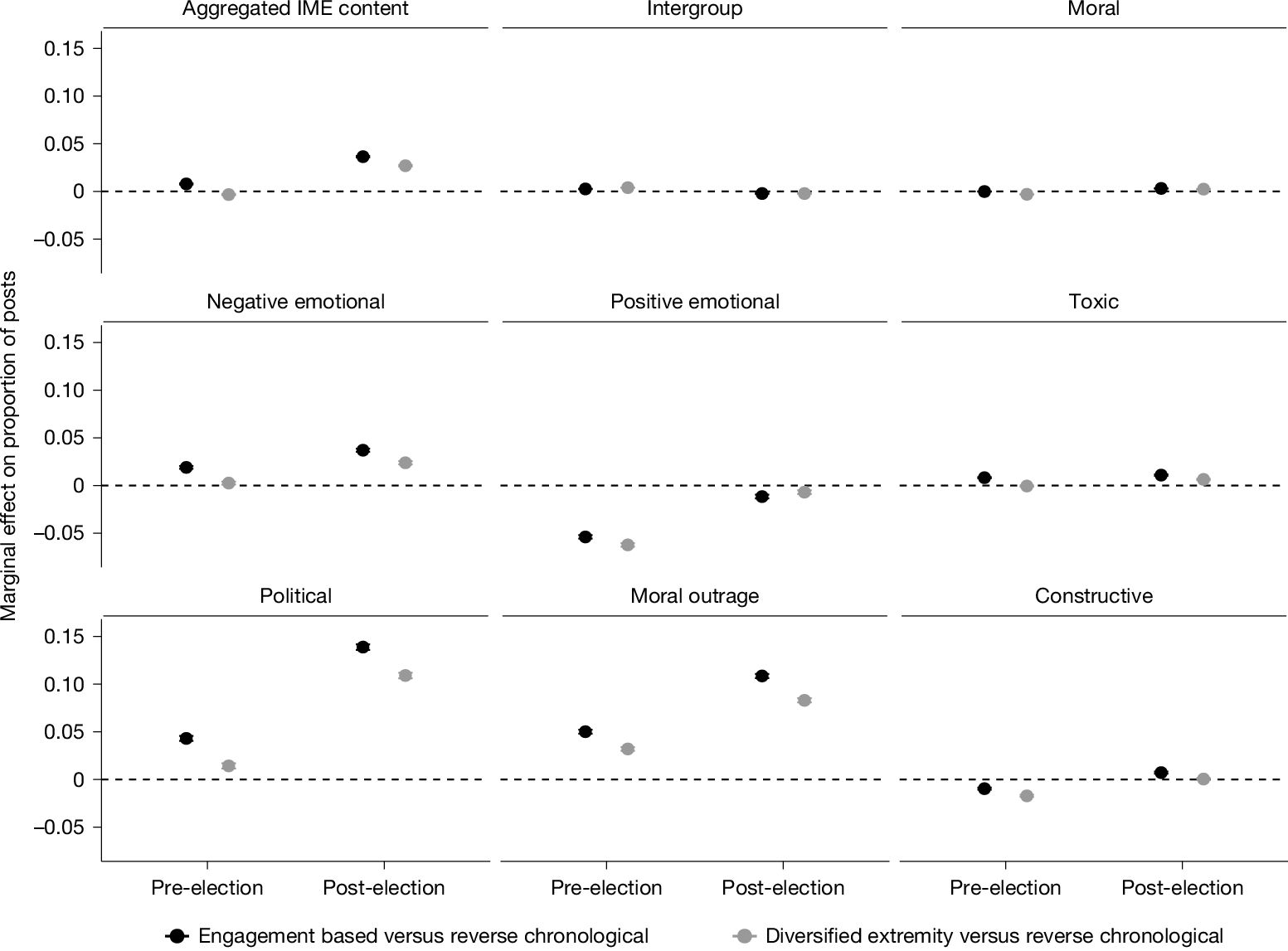
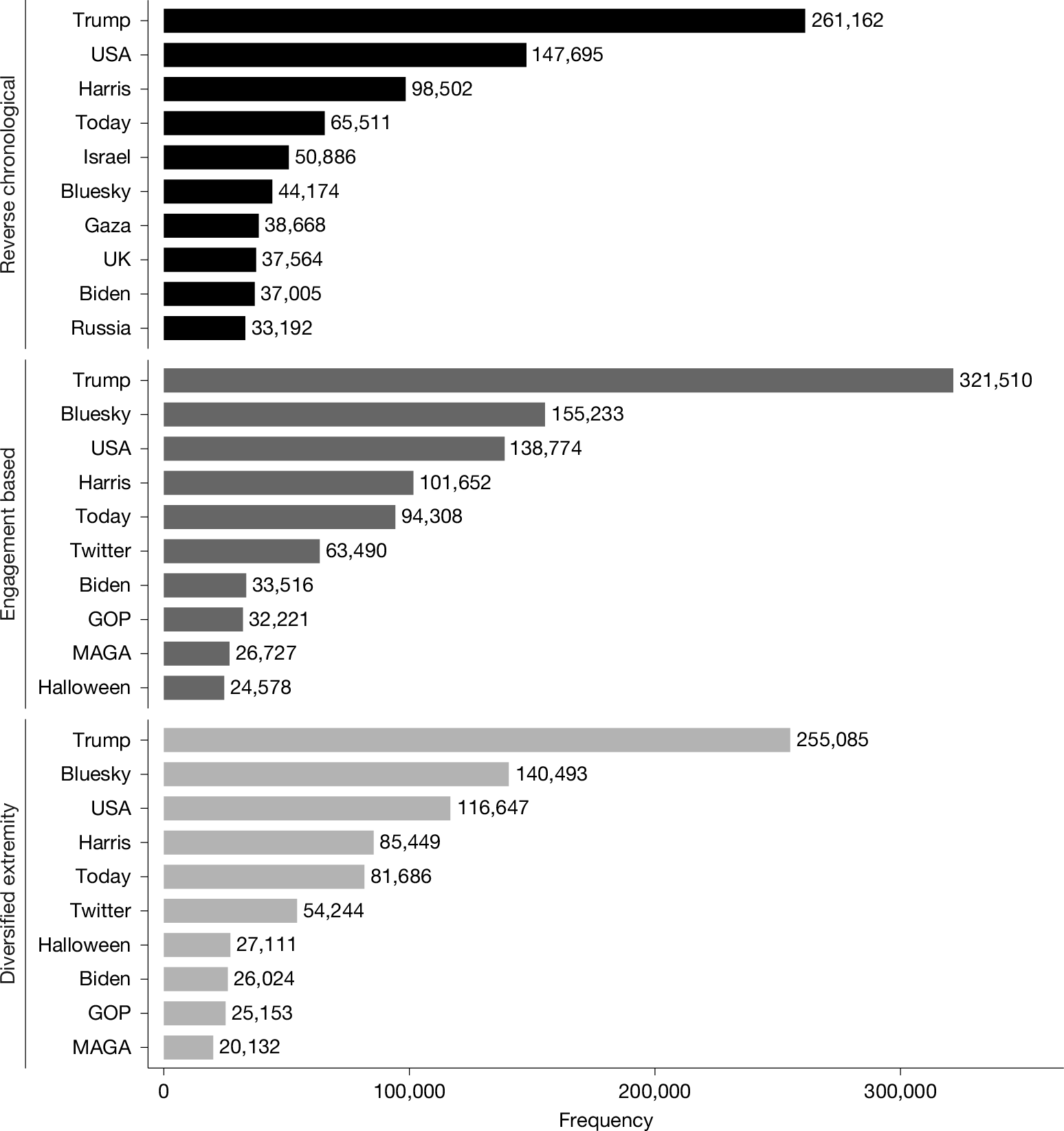
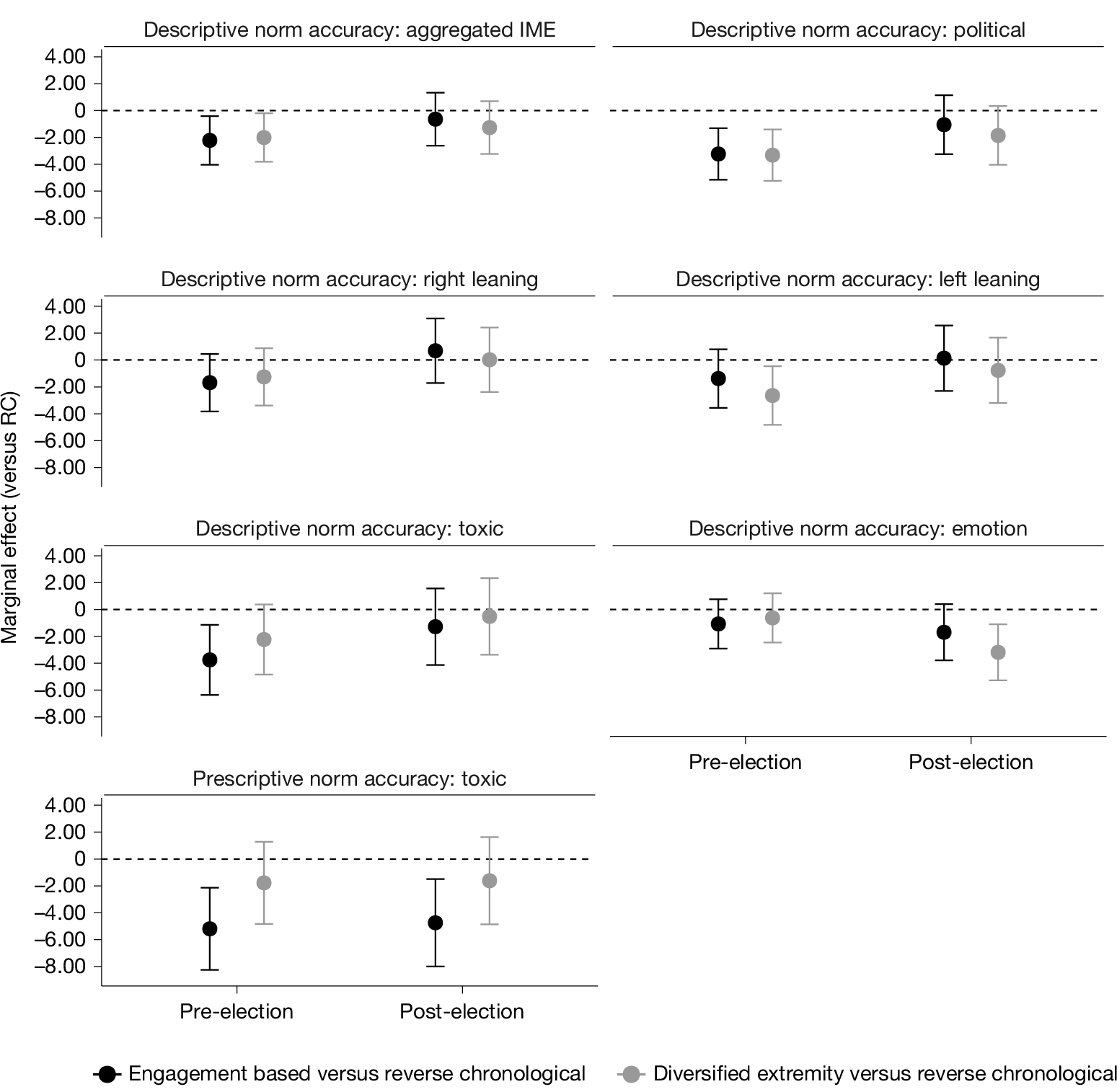
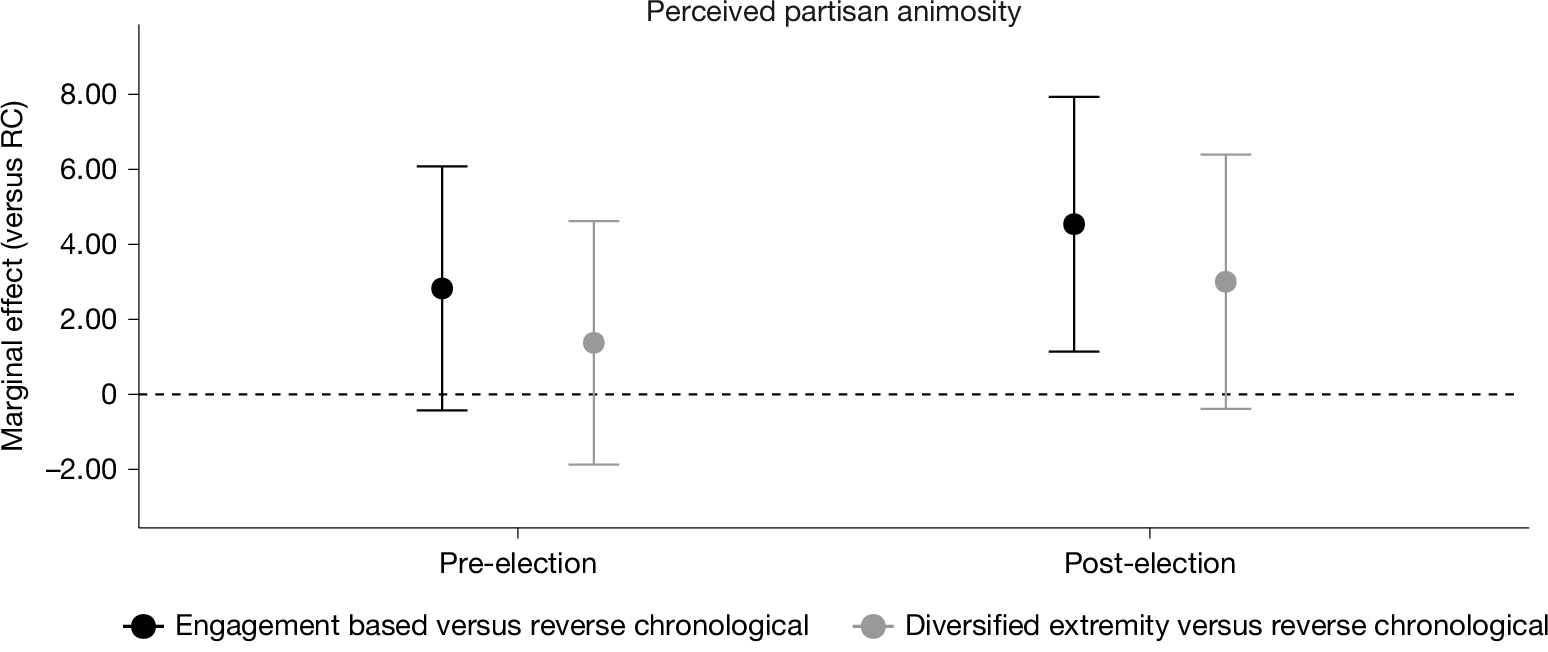
For the first time in history, civic discourse commonly occurs in digital environments in which algorithms influence exposure to social information1,2. It is increasingly important to understand whether and how these algorithms affect political discourse3,4,5. Here we built custom feed-ranking algorithms with full control over their features, and randomly assigned 2,000 participants to use them for 8 weeks (before and after the 2024 US presidential election). We tested whether an engagement-based algorithm (used on major social media platforms6,7) amplifies intergroup, moralized and emotional (IME) information in ways that skew perceptions of social norms around political dialogue5,8, and whether it increased engagement with IME content and perceptions of partisan animosity (compared with a reverse-chronological feed9,10). We also developed and tested a ‘diversified extremity’ algorithm to reduce the influence of extreme users11,12,13 to improve the accuracy of social norm perception14,15,16 and reduce perceptions of partisan animosity. We found that engagement-based feeds amplified IME and toxic content relative to reverse-chronological feeds, with the largest increases in moral outrage and political content. Engagement-based feeds also reduced prescriptive norm perception accuracy (albeit in an unexpected direction) and increased perceived partisan animosity. However, they did not significantly alter users’ own engagement behaviours. The diversified extremity algorithm reduced IME and toxic content exposure, improved prescriptive norm accuracy, yet maintained comparable platform enjoyment—suggesting that reducing the influence of extreme users can curb algorithmic distortions without diminishing user experience.
protocol registration The Stage 1 protocol for this Registered Report was accepted in principle on 17 September 2024. The protocol, as accepted by the journal, can be found at https://osf.io/c9a3m.
Access Nature and 54 other Nature Portfolio journals
Get Nature+, our best-value online-access subscription
$32.99 / 30 days
cancel any time
Subscribe to this journal
Receive 52 print issues and online access
$199.00 per year
only $3.83 per issue
Buy this article
- Purchase on SpringerLink
- Instant access to the full article PDF.
USD 39.95
Prices may be subject to local taxes which are calculated during checkout
 The alternative text for this image may have been generated using AI.
 The alternative text for this image may have been generated using AI.
 The alternative text for this image may have been generated using AI.
 The alternative text for this image may have been generated using AI.
Similar content being viewed by others
Systematic partisan content skews in TikTok during the 2024 US elections
Examining spread of emotional political content among Democratic and Republican candidates during the 2018 US mid-term elections
Interventions to reduce partisan animosity
Data availability
All raw data and materials are available at the Open Science Framework (https://osf.io/k2crm/) and GitHub (http://github.com/METResearchGroup/bluesky-research).
Code availability
All code for our data collection, storage and custom-feed ranking algorithms is available at our GitHub (http://github.com/METResearchGroup/bluesky-research). R scripts for the power analysis and data analyses are available at the Open Science Framework (https://osf.io/k2crm/).
References
Shmargad, Y. & Klar, S. Sorting the news: how ranking by popularity polarizes our politics. Polit. Commun. 37, 423–446 (2020).